Three SDRs. $180,000 in base salaries. And a pipeline that kept missing targets.
This is a real AI SDR case study from a demand generation agency we worked with through the first half of 2025. They ran outbound calling campaigns for SaaS clients, booking qualified demos for in-house closers. The model worked. The economics didn't.
Their three SDRs made about 120 combined calls per day. Connect rate was around 8%. Cost per booked meeting came out to $280, once you factored in salary, benefits, overhead, and the hours lost to CRM updates between calls.
Ninety days after switching to AI-powered outbound calling, they were running 1,400+ calls per day. Connect rate jumped to 22%. Cost per booked meeting dropped to $47. And they did it with one call manager instead of three SDRs.
Here's what they did, what they learned, and where it still doesn't work.
Key Takeaways
- The agency replaced three SDRs with TopCalls and ran one call manager instead, freeing $180,000 in base salaries.
- Daily outbound went from 120 human calls to 1,430 AI calls on the same lead lists, more than 11x the volume.
- Connect rate climbed from 8% to 22%, and cost per booked meeting dropped from $280 to $47 within 90 days.
- At $0.35 per minute all-inclusive, the raw call cost per booked meeting landed around $12 to $15.
- Quarterly qualified pipeline grew from $1.2M to $3.8M, and the agency now runs AI calling across 11 client accounts.
1. The SDR Problem Wasn't Performance
Their SDRs weren't bad. They hit activity minimums, followed up consistently, and kept pipelines moving. But there are hard physical limits to what a human can do in a workday. You can't make 400 calls from 9 to 5. Even if you could, nobody maintains call quality through call 200.
The deeper problem was that the agency's clients were growing. One SaaS client went from 500 leads per month to 2,000 in six months. Another added two new geographic markets. The agency couldn't hire fast enough, and hiring is slow. Typical ramp time for a new SDR: three to four months before they're reliably booking meetings.

Fully-loaded, a US-based SDR costs between $70,000 and $90,000 a year when you add benefits, tools, and management time. That's before accounting for the 30-40% annual churn rate in the role. You're constantly rehiring, retraining, and hoping the new person sticks. The comparison of SDR costs versus AI calling has gotten hard to ignore.
2. What They Tried Before Switching
Before bringing in AI voice, they tried three things.
Offshore SDRs: Cost dropped to $30K per person, but connect rates fell further because accent mismatches and time-zone gaps hurt early-stage conversations. Clients noticed within two months.
Auto-dialers with recorded messages: Compliance mess. TCPA exposure in the US is real, and robocall messages get hung up on immediately. One client received three complaint calls in a single week.
Hiring faster: They posted for two more SDR roles, interviewed 20+ people, hired two, and lost one to a competing offer two weeks after signing. The other is still ramping six months later.
None of it solved the actual problem: you can't manually call 1,000 leads a day. That's not a people problem. It's a volume problem.
3. Setting Up TopCalls (The First 30 Days)
They started with one client's lead list: 3,200 SaaS contacts across three territories. The goal was a controlled test before touching any other client's campaigns. They imported the list, built the script, and had their first AI voice agent campaign live in about two hours.
Week one was mostly script tuning. The first version was too formal and too slow on the value pitch. They rewrote the opening twice. By day 10, they'd settled on a conversational opening that mirrored how their best human SDR started calls. If you're building your own script from scratch, the AI cold call script templates we've tested across verticals saved them about a week of iteration.
By day 21, the AI was running 400 calls per day on that single client. By day 30, they'd expanded to two clients and 850 calls daily. The call manager's job shifted from making calls to reviewing recordings, adjusting prompts, and handling the small number of leads who specifically asked to speak to a human before booking.
Curious what this math looks like for your team? Run your lead volume and current meeting cost through the ROI calculator to see the payback period.
4. The Numbers at 90 Days
At the three-month mark, they ran a full comparison against the previous quarter. Same lead sources, same clients, comparable list quality.
Calls per day: 120 (human SDRs) vs. 1,430 (AI). More than 11x the volume on the same lead lists.
Connect rate: 8% vs. 22%. Part of this is pure volume (more attempts reach good timing windows), part is smart retry logic that calls back busy or unanswered numbers at optimal intervals rather than trying once and moving on.
Booked meetings per week: 19 (SDRs) vs. 64 (AI). That's the 3x pipeline figure. Same lead pool, different throughput.
Cost per booked meeting: $280 vs. $47. At $0.35/minute and an average call lasting just under two minutes per live connect, the call cost per booked meeting comes out to roughly $12-$15. The rest is the manager's time.
Headcount: 3 SDRs vs. 0 SDRs + 1 call manager. They kept one senior closer who'd been splitting time between closing and SDR work. The $180K in SDR salaries freed up margin they put toward paid acquisition and two new client contracts.
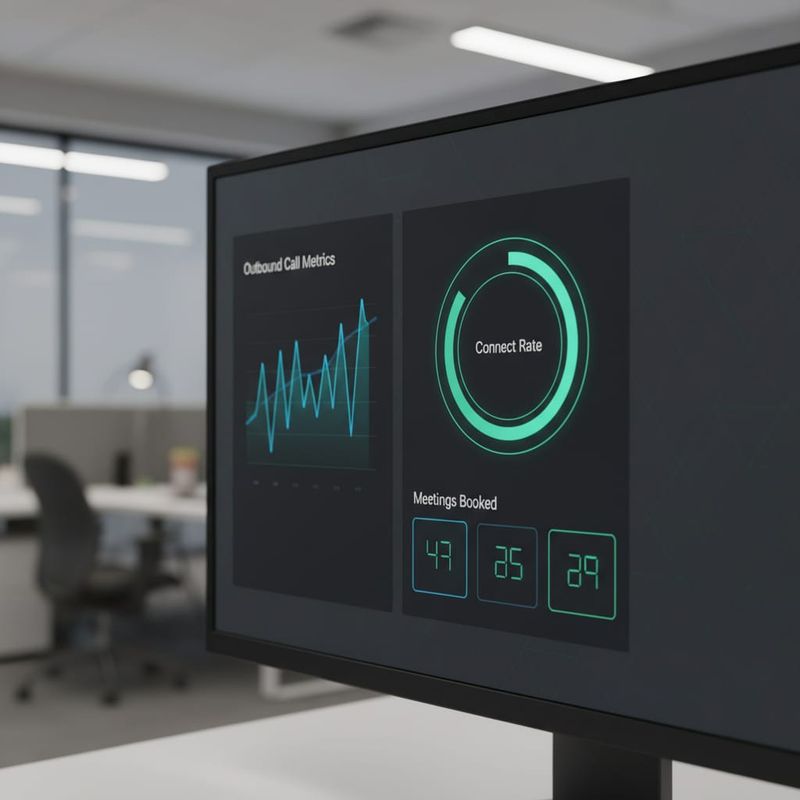
Their quarterly pipeline went from $1.2M to $3.8M in new qualified opportunities. Not all of that becomes closed revenue, but it changed the math for their clients and their own retention rates. If you want to benchmark these figures against industry averages, the AI cold calling metrics benchmarks are worth reviewing before setting your own targets.
5. What Surprised Them
A few things they didn't see coming.
Call drop rates mattered more than expected. In the first two weeks, their drop rate (calls where the AI connected but the prospect hung up immediately) was 18%. After adjusting the opening line and cutting the delay before the AI spoke, it fell to 4%. That single change added 14 meetings per week. Everything on what causes drops in AI outbound is worth reading before you configure your first campaign.
The manager's role changed completely. Instead of coaching reps through call reluctance and CRM hygiene, the manager spent 3-4 hours a day listening to recordings and making prompt tweaks. It's closer to campaign management than traditional sales management. Their person adapted well. Not all managers will, and that's worth planning for.
CRM sync was non-negotiable. At 1,400 calls per day, manual logging is not an option. They connected TopCalls to HubSpot on day one. Every call outcome, every recording, every disposition gets logged automatically. The full setup for HubSpot, Salesforce, and Pipedrive is covered in the AI dialer CRM integration guide.
6. Where AI Calling Doesn't Work
This case study involves a specific use case: outbound calls to cold or warm leads, with the goal of booking a human-led demo. That works well with AI. A few things don't.
High-ticket enterprise deals with long sales cycles: When the average contract value is $250K and procurement involves six stakeholders, the first call needs a human. AI handles volume plays, not the relationship-intensive ones where discovery goes six layers deep.
Regulated verticals with strict call consent rules: Financial services and healthcare have state-level restrictions that go beyond TCPA. AI calling can be compliant, but you need legal review before running campaigns. Don't assume your current setup covers all 50 states.
Low-quality lead lists: AI amplifies volume. If 40% of your list has bad numbers or irrelevant contacts, you're burning call budget faster without better results. Clean data is a prerequisite, not an afterthought.
7. How to Replicate This for Your Team
The agency's setup isn't complicated to replicate. If your use case is outbound qualification and appointment setting at scale, here's what actually matters:
Start with one campaign and one client: Don't migrate all your calling at once. Pick a contained test with a forgiving client or a clean lead list. Give yourself three weeks to tune the script before expanding.
Set volume targets before you launch: Know whether you're running 200 or 2,000 calls per day, because that affects list management, CRM pipeline capacity, and how your closers handle the booking flow. The guide on running 1,000 AI sales calls per day covers the logistics in detail.
Keep one human in the loop: Not to make calls. To listen to 10-15 recordings a day, flag objections the AI is handling poorly, and adjust prompts. This is the role that replaced three SDR positions. It's less expensive and produces more pipeline.
Treat prompt engineering as ongoing work: The script you write on day one won't be your best. Plan for two or three rewrites in the first month based on what you hear in recordings. The post on AI prompt engineering for sales agents walks through how to train your agent for different objection types and buyer personas.
The agency now runs AI calling across 11 client accounts. They hired one additional call manager when they crossed 3,000 calls per day. Total headcount for outbound: two people and an AI that doesn't take lunch.
If you're running outbound for your own team or for clients and want to see whether the numbers work for your specific setup, book a strategy call. We'll pull up your lead volume and current meeting cost and show you the actual math.
Frequently Asked Questions
Get AI calling tips in your inbox
No spam. One email per week with actionable sales automation tips.