The fastest way to reduce outbound call drop rate isn't to hire more agents. It's to change how your dialer makes routing decisions.
At a 7% drop rate on 500 daily dials, you're losing 35 conversations per day. That's 700 missed connections per month. And 49% of people hang up immediately when they hear dead air from an unfamiliar number. They don't call back. No second chances.

This guide covers exactly how to get below 5% (ideally below 2%) using AI-assisted routing, pacing adjustments, and lead list hygiene. Before reading on, check what those dropped calls are actually costing your team with our outbound ROI calculator.
Key Takeaways
- The FCC caps outbound drop rate at 3% across any rolling 30-day window, with TCPA violations costing $500 to $1,500 per incident.
- Roughly 49% of prospects hang up the moment they hear dead air, and they rarely call an unfamiliar number back.
- Switching to AI-assisted pacing typically drops the abandoned-call rate from above 5% to between 1% and 2% within two weeks.
- TopCalls AI voice agents run on sub-500ms response latency, removing the dead-air pause that causes most immediate hang-ups.
- TopCalls reports a 60%+ gain in effective connect rate at scale while holding drop rates in the 1% to 2% range.
- Predictive dialers need at least 8 concurrent agents to absorb answer-rate variance; below that, power dialer mode eliminates drops.
1. What Call Drop Rate Actually Measures
Call drop rate (also called abandoned call rate) is the percentage of outbound calls where the dialer connects but no agent is ready when the customer answers. The person picks up, hears silence, and hangs up. That counts as a drop.
The FCC mandates a maximum 3% drop rate across any rolling 30-day period. TCPA violations run $500 to $1,500 per incident. But the real risk isn't regulatory. Prospects who pick up and hear nothing don't file complaints. They block the number and move on.
Here's where most outbound teams land:
- Excellent (below 1.5%): AI-assisted pacing with real-time routing adjustments
- Acceptable (1.5% to 3%): compliant, but there's room to tighten
- At-risk (3% to 5%): pacing or staffing needs immediate review
- Red zone (above 5%): compliance exposure, trust damage, and revenue bleed
2. Three Root Causes Behind High Drop Rates
Most teams diagnose this wrong. They assume more agents will fix it. Usually it traces back to one of three places, and addressing the wrong one wastes time.
Dialer Pacing That Outpaces Agent Capacity
Predictive dialers work by dialing more lines than there are agents. The assumption: some calls won't connect. When more connect than expected, the overflow becomes drops.
The standard starting point is a 2:1 pacing ratio (two dials per agent). Many teams push it to 3:1 or 4:1 to maximize talk time. During peak hours, when answer rates spike, drop rate spikes with it. There's no buffer built in.
Not Enough Agents on the Floor
Predictive dialers need a minimum pool of concurrent agents to absorb variance safely. Most vendors cite 8 as the floor. Below that, any spike in answer rate creates unavoidable drops. The math doesn't work at small scale.
If you're running 4 to 6 reps on a predictive dialer, switch to power dialer mode. One line per agent, no predictive logic. You'll lose some talk-time efficiency but eliminate drops entirely until you can staff up.
Poor Lead List Quality
Disconnected numbers, fax lines, and wrong numbers still consume dial attempts. Some dialers count a "no answer" from a dead number differently than a genuine drop, which artificially compresses your reported rate. Your actual rate is often worse than it looks.
Phone validation services run $0.002 to $0.005 per number. Running them before each campaign takes 10 minutes and cuts wasted dials by 15% to 25%.
3. How AI Dialer Routing Reduces Abandoned Calls
Traditional predictive dialers use static pacing rules. Set once at configuration, adjusted infrequently. They can't see that two agents just wrapped calls simultaneously and there's now a 30-second surplus before the next available slot.
AI routing is different. It predicts agent availability using real-time call duration data. When five calls are wrapping up at the same time, the system pulls back on new dials. When capacity opens unexpectedly, it accelerates. Pacing adjusts on every dial cycle, not once at setup.
TopCalls AI voice agents run on sub-500ms response latency, which eliminates the dead-air pause that causes 49% of prospects to hang up on a traditional dialer. Connected calls stay connected. At scale, that drives a 60%+ improvement in effective connect rate and keeps drop rates between 1% and 2%. For a side-by-side breakdown of AI dialing platforms, see our Convoso vs TopCalls comparison.
Teams using AI-assisted dialing for outbound sales acceleration typically see their drop rate fall in the first two weeks of switching. No new hires. No campaign overhaul. Just better routing logic.
4. Five Fixes Ranked by Impact
These aren't equal. Fix the highest-impact one first, then work down the list:
- Switch to AI-assisted pacing: drop rate falls from 5%+ to 1%–2% for most teams within two weeks. Highest ROI change on this list.
- Audit your pacing ratio: if you're running above 2.5:1, cut it back. You'll lose 10%–15% in talk time but stop the drops.
- Staff to at least 8 concurrent agents: below that threshold, switch to power dialer mode until you can staff up.
- Clean your lead list before every campaign: phone validation at $0.002–$0.005 per number cuts wasted dials by 15%–25%.

- Set ring time to 15–20 seconds: cutting off too early counts as a drop. Give the prospect time to actually pick up.
5. Calculating Your Current Drop Rate
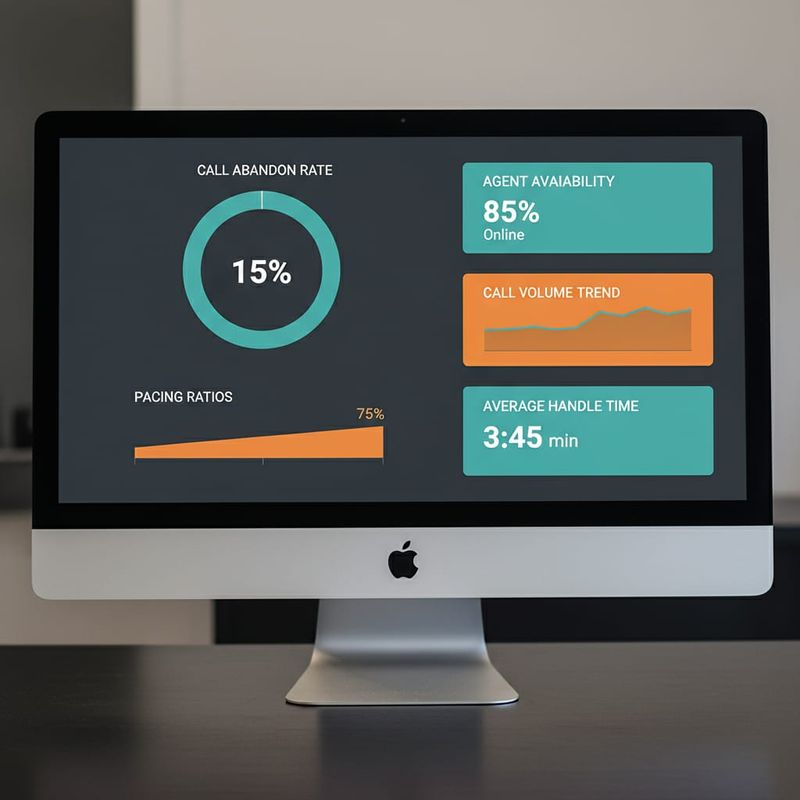
The formula: (calls where no agent was available / total connected calls) x 100. Your dialer dashboard should surface this. If it doesn't break it out clearly, pull 30 days of raw call logs and calculate it yourself. Most CRMs that integrate with dialers (Salesforce, HubSpot, Pipedrive) will show this in their call reports.
Anything above 3% needs a fix this week. Anything above 5% is a compliance event in waiting. A single TCPA class action on a 10,000-contact list at $1,500 per violation isn't theoretical. It happens to teams running 5% to 8% drop rates who assume no one is tracking.
For teams operating in regulated industries, compliance tracking goes beyond drop rates. Our guide to AI calling compliance in financial services covers consent verification, DNC scrubbing, and recording rules in detail.
6. When AI Routing Won't Fix the Problem
AI dialer routing is a pacing and availability tool. A few situations where it won't move the number:
- Teams under 8 agents: you need a power dialer, not a predictive one. No routing algorithm fixes insufficient agent capacity.
- Low connect rate (not high drop rate): if fewer calls are connecting overall, the issue is spam-labeled numbers, bad call timing, or cold list quality. Routing optimizes what happens after a call connects.
- Script or agent quality issues: if agents are dropping conversations early, better routing just gives you more of the same broken outcome, faster.
Fix the right layer. If you want a broader look at how AI fits into the full outbound sales stack, our piece on AI sales automation for SaaS teams covers the complete picture.
If you're sitting above 5% today, you don't need a full platform overhaul. You need a root-cause audit followed by three or four targeted fixes. Most teams cut their drop rate in half within 30 days once pacing and staffing are addressed together.
TopCalls processes 63,000+ calls daily across outbound sales and compliance-sensitive industries. If you want to walk through your current setup and find what's actually driving your drop rate, book a 15-minute call with our team.
Frequently Asked Questions
Get AI calling tips in your inbox
No spam. One email per week with actionable sales automation tips.