Forty percent of B2C finance clients go dormant within 18 months of their first trade. That's not a retention problem — it's a revenue leak that compounds every quarter you don't address it.
Sales reactivation calls are the fastest way to fix it. Not email. Not push notifications. Calls — because they start a real conversation, and real conversations convert. The challenge is that a 10,000-account dormancy backlog can't be worked manually. That's where AI-powered customer reactivation changes the economics entirely.
This guide covers why phone outreach beats email for dormant finance clients, what a working reactivation call framework looks like, and how AI lets you run it at scale without hiring a single new rep.
Key Takeaways
- Reactivating a dormant retail trader costs under $50 versus $200 to $400 to acquire a new one, a 5 to 7x economic advantage.
- Accounts dormant under 90 days convert at 3 to 5x the rate of accounts inactive for 12 months or more.
- A TopCalls AI voice agent runs 1,000 calls simultaneously and starts each conversation in under 500ms, processing 63,000+ calls daily.
- At $0.35 per minute, a 2 to 3 minute reactivation call costs under $1.50, and one reactivated trader covers 200 attempts.
- TopCalls records 100% of calls with automatic retention, satisfying MiFID II requirements for outbound calls to retail clients.
- A 15% reactivation rate on the 30 to 90 day segment is a strong benchmark, and TopCalls can have a first campaign live in 2 weeks.
1. Why B2C Finance Has a Dormancy Problem Other Industries Don't
Banking customers stay on autopilot. Forex traders don't. Their activity is tied to market conditions, personal finances, and confidence — none of which you control.
A trader who goes quiet for 60 days usually isn't gone forever. They're waiting for a reason to come back. Maybe a market moved. Maybe they got paid. Maybe they just need someone to call.
The economics are stark. Acquiring a new retail trader costs $200-$400 in digital ad spend and onboarding effort. Reactivating a dormant one costs under $50, and their lifetime value is already proven. Industry research puts the cost difference at 5-7x in favor of reactivation.
Standard dormancy thresholds in B2C finance run from 30 days (some DeFi platforms) to 180 days (regulated brokers). The reactivation window closes fast: accounts inactive for under 90 days convert at 3-5x the rate of accounts that haven't traded in 12+ months. Speed matters more than anything else in this playbook.
The most common reasons traders go dormant:
- Market volatility fatigue: Lost money on a trade, stepped back to recover emotionally before returning
- Platform friction: Got stuck in a KYC update, couldn't figure out a feature, or hit a deposit issue
- Life events: Job change, relocation, major purchase — capital got diverted elsewhere

- Competitor poaching: A rival broker ran a bonus campaign and grabbed their attention at the right moment
2. What Makes Sales Reactivation Calls Work Better Than Email or SMS
Email open rates for win-back campaigns hover around 12-18% in financial services. That's after you've already paid for the send. A phone call that gets answered? That's a real conversation — and real conversations convert at a different rate entirely.
The difference in outcomes is concrete. One insurance platform ran AI reactivation calls on 15,000 dormant leads and hit a 20% engagement rate with 5% conversion — 750 accounts reopened from a single campaign. Their email sequence on the same list produced 60 conversions over the same period.
Three things make reactivation calls convert that email can't replicate:
- Real-time objection handling: "I lost money last time" gets a live response that addresses the concern. An email can't do that — it sits unread until the client decides they care.
- Tone and intent: A voice carries empathy. "We noticed your account has been inactive and wanted to check in" lands differently than the same sentence in a subject line that competes with 47 other unread messages.
- Immediate action: You can transfer to a live agent, confirm a callback, or collect verbal consent in the same conversation. No click, no form, no friction — the account reopens in minutes.
Timing matters too. Accounts dormant for under 90 days respond at 3-5x the rate of accounts that haven't traded in over a year. Your reactivation call cadence should start with the recently-lapsed. That's where the ROI is.
3. How AI Scales Win-Back Campaigns Without Adding Headcount
A human rep works an 8-hour shift and dials maybe 80 numbers. Most go to voicemail. An AI voice agent runs 1,000 calls simultaneously, starts each conversation in under 500ms, and routes live answers to a human the moment the client says yes to reopening their account.
TopCalls processes 63,000+ AI calls daily. The average connect rate improvement for reactivation campaigns is 60%+ above what clients were getting with manual dialing — because AI doesn't burn out at 4pm, doesn't rush calls to hit a quota, and doesn't skip callbacks when the list gets long.
The cost math works out clearly. At $0.35/minute with reactivation calls running 2-3 minutes on average, each outbound attempt costs under $1.50. A reactivated trader generating $300 in annual commissions covers the cost of 200 call attempts. Manual dialing can't compete with that margin.
Want to know how much dormant revenue your platform is sitting on? Run your numbers through the dormant trader revenue calculator — it estimates reactivation revenue based on your account base size, dormancy rate, and average client value.
AI also handles retry logic automatically. A busy signal triggers a retry in 15 minutes. No answer becomes a callback in 3 hours. A disconnected number flags for CRM update. You set the rules once, and the system works through your entire dormant list while your team focuses on the clients who actually want to talk.
4. A 5-Step Framework for AI Reactivation Calls in B2C Finance
Here's how finance teams structure win-back campaigns that actually convert:
Step 1: Segment by dormancy depth
Split your dormant list into three buckets: 30-90 days inactive, 91-180 days, and 180+ days. Prioritize the first bucket. They're the cheapest to win back and most likely to respond. Don't waste your first campaign on 2-year-old accounts — the conversion rate won't justify the effort.
Step 2: Build conversation scripts for each segment
A 45-day dormant trader needs a different script than a 9-month dormant one. The 45-day script is direct: "We noticed you haven't traded lately — we've added [feature]. Can I walk you through what's new?" The 9-month script needs to rebuild the relationship before making any ask. Check out the AI caller scripts for dormant traders for 7 templates mapped to dormancy depth.
Step 3: Set up smart retry logic
Most dormant accounts don't answer the first call. Set retries at 3-hour intervals, cap at 3 attempts per day, and max out at 6 total touches over 5 days before moving the account to an email nurture. After 5 days with no contact, the economics change — continuing to call costs more than the expected return.
Step 4: Route live answers to retention specialists
When a dormant client picks up and shows interest, the AI hands them off to a live retention specialist in under 5 seconds. The handoff includes full call context — what the AI said, what the client said, what their last trade was. Your specialist starts from a warm conversation, not a cold intro. Smart campaign routing handles the qualification and transfer rules automatically.
Step 5: Measure reactivation rate, not just connect rate
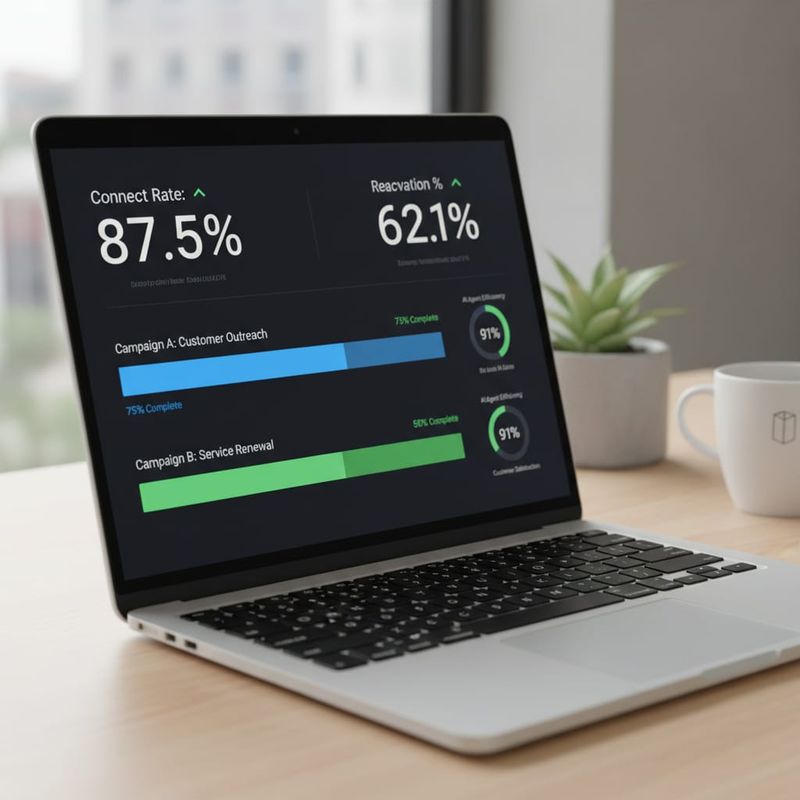
Connect rate tells you how many calls landed. Reactivation rate tells you how many accounts went from dormant to active. Track both, but optimize for the latter. A 15% reactivation rate on your 30-90 day segment is a strong benchmark. Under 8%? Your script needs work. Use your real-time analytics dashboard to see exactly where calls drop off in the conversation and iterate.
5. Compliance Rules for Reactivation Calls in B2C Finance
Finance is a regulated industry. Reactivation calls get more scrutiny than general marketing calls, because you're contacting people who may have opted out of engagement by simply going quiet. You need a clean compliance framework before you dial anyone.
- TCPA (US): You need prior express consent for autodialed calls. If your client signed up for marketing communications during onboarding, you're likely covered — but confirm with your legal team before launching. DNC list scrubbing is non-negotiable before every campaign goes live.
- GDPR (EU): Reactivation calls fall under direct marketing. Legitimate interest can apply for recent customers, but soft opt-in rules vary by country. Germany and France have stricter thresholds than the UK. Document your legal basis per-country before dialing cross-border.
- MiFID II (EU financial services): All outbound calls to retail clients must be recorded and stored for regulatory review. TopCalls records 100% of calls with automatic retention — this is handled out of the box, not as an add-on.
- Caller ID transparency: In the UK and EU, spoofed or unverifiable caller IDs are banned. Use numbers registered to your brokerage entity and verified before any campaign goes live. TopCalls integrates with Twilio for number verification as part of campaign setup.
TopCalls was built with financial services compliance in mind. Every campaign runs DNC scrubbing automatically, call recordings are encrypted and retained per regulatory requirements, and consent verification is logged per-contact. Full details on the secure infrastructure page.
6. Where AI Reactivation Calls Don't Work
Not every dormant account is a good reactivation candidate. Here's where this approach breaks down:
- Accounts closed due to fraud or KYC failure: Calling these creates legal exposure, not revenue. Filter them out of any reactivation segment before the list is even built.
- Accounts with outstanding complaints or chargebacks: A client who had an unresolved dispute with your platform won't respond well to a win-back call. Flag these for a human relationship manager, not an AI campaign.
- Ultra-high-net-worth accounts: A client managing $2M+ who went dormant needs a senior account manager conversation, not an AI intro call. Use AI to qualify and triage, but have a human close it.
- Markets in active decline: If your platform's core market just dropped 40%, your reactivation timing is wrong. Clients reactivate on opportunity. Wait for a market catalyst before calling — the same script that lands a 15% conversion in a bull market might hit 3% in a bear one.
7. How to Run Your First AI Reactivation Campaign in 2 Weeks
TopCalls can have your first campaign live in 2 weeks from kickoff. Week 1 is typically list hygiene — DNC scrubs, phone number validation, segment mapping. Week 2 is script setup and compliance review. The AI is usually the fastest part. For the full setup walkthrough, see how AI voice agents reactivate dormant trading accounts end-to-end.
Pricing at $0.35/minute means a 500-account pilot campaign costs roughly $1,000-$2,000 depending on average call duration. If your average reactivated trader generates $300+ in annual revenue, you need fewer than 10 conversions to break even. Most campaigns hit that in the first week.
The pilot also tells you which segments respond and which don't — data you can't get any other way. If you want to see real-world campaign structure and messaging, the guide on win-back campaigns for inactive trading users has the full playbook with channel sequencing and timing benchmarks.
Before you pitch this internally, run the numbers. The dormant trader revenue calculator estimates reactivation revenue based on your account base size, dormancy rate, and average client value. It takes 2 minutes and gives you a number you can take to your CFO.
If you run a B2C finance platform with a dormant account problem and want to see what AI reactivation calls look like for your specific segment mix, book a 15-minute strategy call. We've run campaigns for forex brokers, stock trading platforms, and crypto exchanges — and the conversion economics work across all three.
Frequently Asked Questions
Get AI calling tips in your inbox
No spam. One email per week with actionable sales automation tips.