Collections is a volume game. A human agent makes 80 to 120 call attempts a day, manages compliance scripts manually, and burns hours on unanswered calls. An AI voice system runs thousands of attempts per hour, delivers the same FDCPA-compliant disclosure on every single call, and logs everything automatically. Agencies deploying AI voice agents for debt collection report 68% lower cost per dollar collected and a 45 to 50% call containment rate.
This guide covers how AI debt collection calls work, which FDCPA rules they enforce automatically, and what the recovery numbers look like from agencies that have deployed them.
Key Takeaways
- Agencies running AI voice agents for debt collection report 68% lower cost per dollar collected than human-agent operations on the same portfolio.
- TopCalls handles 45 to 50% of collection calls to full resolution without a human agent, from opening disclosure through a payment commitment.
- FDCPA rules are automated into the call flow: Mini-Miranda delivery, the 8 AM to 9 PM window, the 7-in-7 cap, and cease-and-desist suppression.
- AI systems hit right party contact rates 7x higher than manual methods by attempting calls across multiple times of day and phone numbers.
- One AI system covers roughly the same contact volume as 20 human agents, with no shift coverage or FDCPA training variability to manage.
1. AI Voice Agents for Debt Collection: What Actually Changes
AI voice agents for debt collection make outbound recovery calls, handle inbound callbacks, deliver required legal disclosures, collect payment commitments (promise-to-pay), and escalate to human agents when a consumer disputes or requests a cease-and-desist. They run 24/7, scale across your entire portfolio without adding headcount, and don't deviate from the compliance script.

What doesn't change: the regulations. FDCPA, TCPA, and CFPB Regulation F apply to AI calls exactly as they apply to human agents. AI is actually easier to audit because every call is recorded and every disclosure is logged. But the rules are identical. Automation doesn't create exemptions.
The practical difference is consistency. A human agent at the end of an eight-hour shift might rush the Mini-Miranda. An AI system delivers the same disclosure at 7 PM Thursday that it delivered at 9 AM Monday. If you've ever had a compliance audit find inconsistent disclosures across call recordings, you understand why that consistency matters.
2. How AI Calling for Collections Agencies Handles FDCPA Compliance
FDCPA compliance for AI debt collection calls isn't optional configuration. It's built into the call flow from the first ring.
The system verifies time zone before dialing. Calls only go out between 8 AM and 9 PM in the consumer's local time. That's the FDCPA-mandated window. If your portfolio spans twenty states, the AI manages that routing automatically. No manual time zone logic, no 6 AM violations because someone forgot about Pacific time.
The call opens with the Mini-Miranda. Every collection call must disclose that it's an attempt to collect a debt, that any information obtained will be used for that purpose, and the identity of the collecting entity. AI delivers this verbatim on every call. No exceptions, no variation.
Consumer disputes the debt or requests to stop being contacted? The AI escalates immediately and logs a cease-and-desist flag. The account is suppressed from further automated outreach. The timestamp is documented. That documentation trail is exactly what a compliance audit or CFPB examination wants to see.
TCPA adds another layer for AI-generated calls, particularly around prior express consent for autodialed or prerecorded messages. For a full breakdown, read our TCPA compliance guide for AI cold calling.
3. The Four FDCPA Rules AI Enforces Without Human Oversight
These are the four rules that generate the most compliance exposure in manual collections operations. AI handles all of them automatically, on every call, without an agent making a judgment call.
Mini-Miranda disclosure: Every collection call must state it's "an attempt to collect a debt and that any information obtained will be used for that purpose." The AI scripts this into the call opening. It can't be skipped, and it doesn't vary by agent or shift.
Call-time windows: 8 AM to 9 PM in the consumer's local time zone. The AI checks time zone before every dial attempt. You don't need anyone managing a per-state calling schedule or reviewing a clock.
The 7-in-7 rule: CFPB Regulation F limits collection calls to 7 within any 7-day period per account. AI systems track this automatically and suppress dialing once the cap is hit. Manual operations rely on agents checking CRM flags, and those checks fail. AI suppression doesn't.
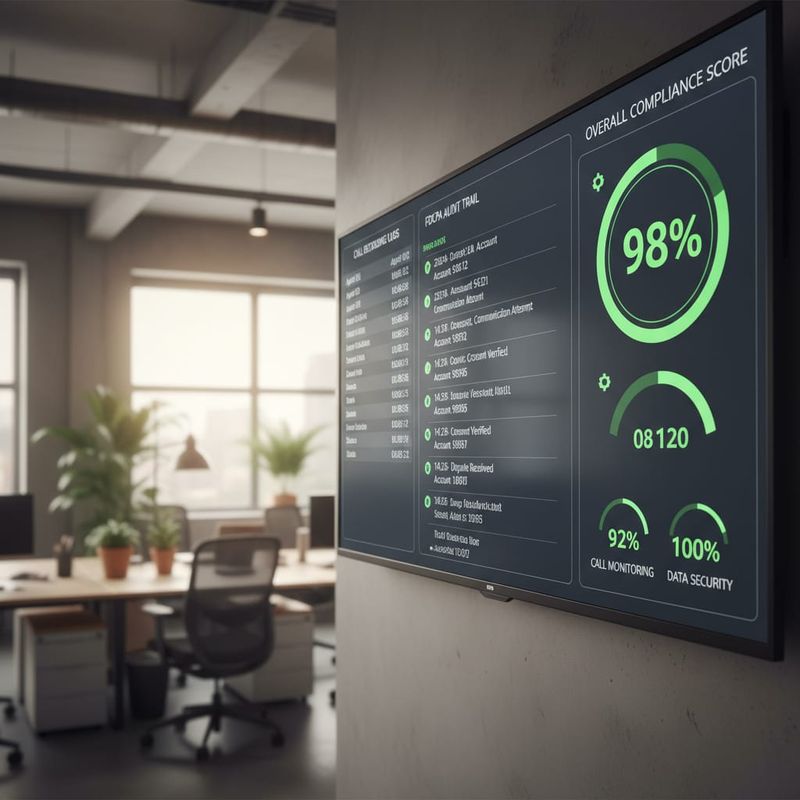
Cease-and-desist handling: If a consumer invokes their right to stop contact, the AI escalates immediately and flags the account. The timestamp, the consumer's statement, and the resulting action are all logged. That's the documentation a regulator or opposing counsel wants in a dispute.
For a detailed breakdown of the National Do Not Call Registry and how it interacts with FDCPA for AI dialers, see our Do Not Call list compliance guide for AI dialers.
4. Right Party Contact: The Metric That Decides Recovery
Right Party Contact (RPC) is the ratio of calls where you actually reach the specific person you're trying to collect from. Not their roommate. Not their old employer. The actual debtor. AI systems run RPC rates 7x higher than traditional manual methods.
The reason is contact timing. A human agent calls during business hours, hits voicemail, and moves on. An AI system attempts contact at 8 AM, 11 AM, 6 PM, and 8 PM across multiple phone numbers, learns from pickup patterns, and schedules retries at optimal times per account. It finds the window when that specific consumer actually picks up.
Better RPC means more of your portfolio is reachable, more payment conversations actually happen, and compliance exposure drops because you're confirming identity before any debt information is discussed. The AI verifies the consumer's identity in the call opening before the disclosure begins.
Our AI voice agents product page covers how smart retry scheduling handles busy signals, unanswered calls, and callbacks, including the retry intervals (busy: retry in minutes; unanswered: retry in hours).
5. What Recovery Numbers Look Like in Practice
Here's what agencies deploying AI voice agents for debt collection are reporting across portfolios:
45 to 50% call containment rate: Calls fully resolved without a human agent. Payment arranged, dispute logged, callback scheduled. The AI handles the complete interaction from opening disclosure through payment commitment.
25 to 40% improvement in early-stage recovery: On accounts in the 0 to 30 day delinquency window. AI moves fast enough to catch accounts before they age into harder recovery buckets. Early-stage accounts have 85% resolution rates when contacted promptly.
68% lower cost per dollar collected: Compared to human agent operations running the same portfolio. That's the number that changes collection economics at scale. For a 50,000-account portfolio, that gap translates to over $1 million in additional annual recovery on the same budget.
20x call volume: One AI system covers the same contact volume as roughly 20 human agents over the same period. Scale without adding headcount, without managing shift coverage, without FDCPA training variability.
Want to see what those numbers mean for your specific portfolio size and account mix? Run the numbers through our ROI calculator for AI calling and get a cost and recovery projection.
6. Vertical-Specific Compliance: Medical, BNPL, and Secured Debt
Debt collection touches multiple regulated industries, and each adds requirements on top of FDCPA. AI systems need to reflect those vertical-specific rules in call scripts and handling logic.
Medical debt: Healthcare collections add HIPAA on top of FDCPA. Any AI system handling patient account data needs Business Associate Agreements and proper PHI handling protocols. If you work healthcare accounts, your platform needs demonstrated HIPAA compliance, not just FDCPA.
BNPL and fintech: Buy-Now-Pay-Later accounts are newer to collections workflows. CFPB guidance on BNPL is still developing, but FDCPA applies. Treating BNPL accounts with the same disclosure and frequency rules as traditional installment debt is the safe approach while the regulatory picture firms up.

For deeper coverage of financial services compliance across verticals, see our AI calling for financial services guide and our breakdown of the legal framework for AI calling.
7. Where AI Debt Collection Calls Don't Work
Not every account fits automated outreach. Being honest about that matters for compliance and for recovery rates. Forcing the wrong accounts through an AI flow costs more than it recovers.
Large, legitimately disputed balances: A $45,000 commercial debt where the original amount is contested needs a human negotiator. AI escalation is the right move. Don't try to automate what requires judgment and negotiation.
Consumers showing hardship indicators: CFPB guidance on vulnerable consumers applies here. Active bankruptcy filings, domestic violence disclosures, and repeated statements of inability to pay warrant human handling. AI systems should be configured to escalate these, not continue the automated flow.
States with stricter rules: California, New York, and a handful of other states have collection laws that exceed FDCPA requirements. Different call-time windows, lower frequency limits, or different disclosure language. AI scripts need to reflect state-specific requirements if you're working those markets, not just the federal floor.
Sub-$100 disputed balances: The economics of collecting a $40 disputed charge rarely work through any channel. That's not an AI limitation. It's portfolio math.
8. How to Set Up AI Calling for Debt Recovery
Five steps most agencies work through when deploying AI voice agents for collections:
1. Compliance audit first. Map your current call flows against FDCPA, Regulation F, and any state-specific requirements. Know which rules apply to which account segments before scripting a single call.
2. Clean your contact data. Verify time zones, scrub against the National Do Not Call Registry, flag accounts with active cease-and-desist records, and validate phone numbers before loading your portfolio. Bad data in means compliance risk out.
3. Segment your portfolio. Different scripts for different stages. Early-stage accounts (30 to 60 days) respond better to softer payment arrangement language. Late-stage accounts (90+ days) need a different approach. One script for the whole book underperforms.
4. Build explicit escalation paths. Define exactly when AI hands off to a human agent: dispute triggers, cease-and-desist invocations, hardship indicators, account types flagged for human-only handling. These need to be explicit in the system configuration, not inferred from context.
5. Test before scaling. Run a subset of your portfolio for 30 days. Measure containment rate, RPC, and payment commitment rate, then adjust scripts before rolling out to the full book. The 30-day test will surface edge cases your compliance audit missed.
TopCalls' secure infrastructure for AI calling handles FDCPA compliance logging, call recording, and audit trail generation automatically. If your portfolio spans multiple languages, our multilingual AI voice agents cover 32 languages for international collections.
Ready to map your portfolio against these steps? Schedule a strategy call with our team and we'll walk through your account segments. If you're also looking at AI-driven customer reactivation campaigns beyond collections, that's a different call flow built on the same underlying platform.
Frequently Asked Questions
What are AI voice agents for debt collection?
AI voice agents for debt collection are automated calling systems that conduct outbound recovery calls using conversational AI. They deliver FDCPA-required Mini-Miranda disclosures, verify right party contact, collect payment commitments, enforce call timing restrictions, and escalate to human agents when a consumer disputes or invokes a cease-and-desist. Every interaction is recorded and logged automatically, giving collections operations a complete audit trail.
Is AI calling for collections agencies FDCPA compliant?
Yes, when implemented correctly. FDCPA compliance is built into the call flow: Mini-Miranda delivery, 8 AM to 9 PM call window enforcement, the 7-in-7 frequency cap from CFPB Regulation F, and cease-and-desist handling are all automated. Compliance exposure is typically lower with AI than with human agents because there's no variation in script delivery and documentation is generated automatically on every call.
What is the 7-in-7 rule in debt collection?
The 7-in-7 rule comes from CFPB Regulation F, effective November 2021. It prohibits collection agencies from calling a consumer more than 7 times within any 7-day period for the same debt. After speaking with the consumer, you can't call again for 7 days. AI systems track this count automatically per account and suppress further dial attempts once the cap is reached, eliminating a common and costly source of FDCPA violations.
What recovery rates can agencies expect from AI debt collection calls?
Agencies using AI voice agents for debt collection report 25 to 40% improvement in early-stage recovery on 0 to 30 day accounts, 45 to 50% call containment rate (full resolution without human involvement), and 68% lower cost per dollar collected vs. human agent operations. Results vary based on portfolio composition, account age distribution, and call script segmentation quality.
Frequently Asked Questions
Get AI calling tips in your inbox
No spam. One email per week with actionable sales automation tips.