A human SDR costs $80,000-$100,000 a year when you add salary, commission, benefits, and the tech stack they need to work. An AI SDR on per-minute pricing can run the same call volume for under $3,000 a month. But the pricing model you pick changes that math significantly, and in 2026, three structures dominate the market: per-minute usage, per-seat subscription, and enterprise flat-rate.
Which one is cheapest depends on your call volume, team size, and how consistent your outbound cadence is. Whether you're running customer reactivation campaigns or cold prospecting at scale, this breakdown covers how each model works, what's included versus billed on top, and how to figure out which structure actually saves you more money.
Key Takeaways
- Human SDRs cost $80,000-$100,000/year fully loaded; AI SDRs on per-minute pricing run $2,000-$5,000/month at typical mid-market call volumes.
- Per-minute is cheaper for teams making under 5,000 calls/month; per-seat wins above that volume only when the platform is genuinely all-inclusive with no add-on STT, TTS, or LLM charges.
- All-inclusive per-minute pricing (Topcalls charges $0.35/min with nothing added on top) is structurally different from metered pricing that stacks separate voice processing charges on a base rate.
- True total cost of ownership includes dead-call minutes, CRM integration fees, and onboarding costs that can flip the winner between models.

- Small teams (1-5 SDRs) almost always pay less on per-minute; larger teams (10+ reps at consistent volume) should model both before signing anything.
1. How Is AI SDR Pricing Structured in 2026?
AI SDR platforms in 2026 use one of three pricing models: per-minute usage-based, per-seat subscription, or enterprise flat-rate. Per-minute charges only for actual call time. Per-seat charges a fixed monthly fee per user regardless of call volume. Enterprise flat-rate is a negotiated contract with high-volume calls baked in, typically for teams running more than 15,000 calls per month.
The split comes down to predictability versus flexibility. Per-seat gives you a flat monthly bill you can budget around, whether your team has a great outbound month or a slow one. Per-minute scales with actual activity, which is useful when call volume is inconsistent or you're still figuring out the right cadence for your ICP.
A few platforms blur the lines. Some charge per seat with a minute allowance built in, then bill overage per minute above a threshold. Others advertise unlimited calls but cap concurrent lines or charge separately for certain voice providers. When comparing AI SDR pricing, always ask for the total cost at your expected monthly call volume, not just the headline rate on the pricing page.
| Model | Best For | Cost Structure | Predictability |
|---|---|---|---|
| Per-minute | Variable-volume teams, pilots | Pay per call minute | Variable |
| Per-seat | High-volume, consistent calling | Fixed fee per user/month | High |
| Enterprise flat-rate | 15,000+ calls/month | Negotiated annual contract | Very high |
2. Is Per-Minute or Per-Seat Cheaper?
Per-minute pricing is cheaper than per-seat for most teams making under 5,000 outbound calls per month. Above that threshold, per-seat models can cost less, but only if the platform doesn't stack separate charges for speech-to-text, text-to-speech, or LLM processing on top of the seat fee. The real question isn't the headline rate. It's what's included.
Topcalls' AI voice agents run at $0.35/minute, all-inclusive. No separate charges for speech-to-text, text-to-speech, or the language model handling the conversation. A team making 3,000 calls averaging 2 minutes each spends $2,100/month. Compare that to a per-seat platform at $200/seat/month with 5 seats: $1,000/month on paper. But add STT at roughly $0.02/min, TTS at $0.015/min, and LLM token costs, and the same call volume lands closer to $1,600-$1,900.
Per-seat wins when your team is large, your call volume is consistent month over month, and the platform is genuinely all-inclusive. Per-minute wins when volume varies, when you want to start a pilot with low commitment, or when you don't want to pay for seats on months when your team slows down.
| Pricing Model | Headline Rate | Add-Ons | Real Monthly Cost |
|---|---|---|---|
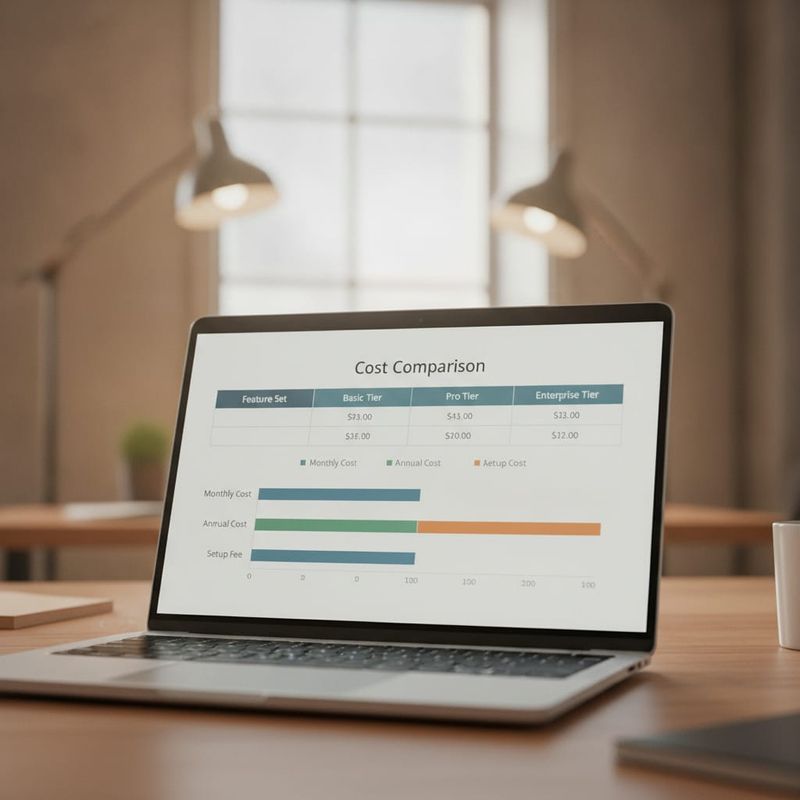
| Topcalls per-minute (all-in) | $0.35/min | None | $3,500 |
| Per-seat, 5 seats @ $300 | $1,500 flat | STT+TTS+LLM: ~$0.04/min | $2,900-$3,300 |
| Per-seat, 10 seats @ $200 | $2,000 flat | Varies by platform | $2,400-$3,100 |
3. What's the True Total Cost of Ownership?
Total cost of ownership for an AI SDR platform includes the monthly platform fee, setup and onboarding charges, CRM integration time, and the minutes burned on voicemails and wrong numbers. When you add all of that, a per-minute platform with self-serve setup often wins on TCO against a per-seat platform that charges $5,000-$10,000 for implementation before you make a single call.
Three costs most teams don't account for when comparing AI SDR pricing:
- Dead-call minutes. Calls to voicemail, wrong numbers, and disconnected lines consume minutes on per-minute plans. A 30% dead-call rate adds roughly 43% to your cost per connected conversation. Good platforms detect voicemail within 3-5 seconds and drop the call to limit waste.
- CRM integration fees. Some AI SDR platforms charge $500-$2,000 extra to sync with Salesforce or HubSpot. Topcalls includes native integrations with Salesforce, HubSpot, Pipedrive, and Close at no additional cost.
- Seat costs for low-usage users. Per-seat models charge for every active user, including managers checking dashboards twice a week. On a 10-seat plan at $200/seat, that's $400/month for two people who aren't making calls.
For context: according to The Bridge Group's SDR Metrics and Compensation Report, the average fully-loaded cost of a US-based SDR (including base salary, OTE, benefits, management overhead, and tech stack) runs in the range of $95,000-$115,000 per year. An AI SDR running on Topcalls at $0.35/min, making 5,000 calls a month, costs roughly $2,625/month, or $31,500/year. That's a 65-70% reduction in cost, and the AI works 24 hours a day without attrition.
Want to run the numbers for your team? Use our ROI calculator to compare what you're spending on human SDRs against what per-minute AI calling would actually cost at your volume.
4. How Does Usage-Based Pricing Scale?
Usage-based pricing scales linearly with call volume: double the calls, roughly double the cost. But two efficiency gains flatten the curve at higher volumes. Better list targeting reduces your dead-call rate over time. And above 15,000-20,000 calls per month, most per-minute platforms will negotiate a volume discount that cuts the effective rate by 20-35%.
For new teams, per-minute billing has one more advantage: it forces discipline on list quality. When every wasted dial costs money, you clean your contact lists faster. Teams on flat per-seat plans often let list hygiene slide because there's no per-call cost signal. Topcalls processes over 63,000 calls per day across its platform, and customers who've tightened targeting see dead-call rates drop below 20%, which changes the effective cost per connected conversation significantly.
| Monthly Calls | Cost/Month | Cost/Year | vs Human SDR at $100k/yr |
|---|---|---|---|
| 2,000 | $1,050 | $12,600 | -87% |
| 5,000 | $2,625 | $31,500 | -69% |
| 10,000 | $5,250 | $63,000 | -37% |
| 20,000+ | $10,500+ | $126,000+ | Negotiate enterprise rate |

The break-even point where AI and human SDR costs cross depends on your call-to-meeting rate and average deal size. Topcalls' smart campaign analytics track cost per booked meeting in real time, so you can see exactly where usage-based pricing beats your current model on your specific numbers.
5. Which AI SDR Pricing Model Fits a Small Sales Team?
For a team of 1-5 SDRs, per-minute pricing almost always wins. You're not running enough volume for per-seat economics to kick in, and you don't want to pay for 5 seats in months when you barely use 2. Per-minute also lets you pilot with a real budget: $500 gets roughly 1,400 minutes of AI calling at Topcalls' rate, enough to run a full campaign with 700 prospects and measure your actual results before scaling.
The fit criteria by team size:
- 1-3 reps using AI alongside manual outreach: Per-minute. Start with $300-$500/month, test a list, measure connect rate and booked meetings before committing to anything larger.
- 5-10 reps with consistent daily outbound: Model both options. Per-seat can be cheaper if the platform includes everything, but the math varies widely by vendor and your average call length.
- 10+ reps with 15,000+ calls/month: Talk to an enterprise sales rep. Volume-discount contracts save 20-35% versus pay-as-you-go at that scale, and annual contracts often include dedicated support and SLA guarantees.
HubSpot's State of Sales report consistently finds that cost of tools is one of the top constraints sales teams cite for outbound volume. Per-minute pricing removes the per-seat commitment that makes teams reluctant to scale. You pay for what you use, which means you can double your calling volume this month without waiting for a contract amendment or a new billing cycle.
Topcalls' 15-minute setup time matters here too. A small team can go live without a $10,000 implementation contract or a 4-week onboarding process. That alone shifts the total cost of ownership in favor of per-minute for teams that want to test before committing.
6. Where Per-Minute Pricing Doesn't Work
Per-minute pricing isn't the right call for every team. BPOs and full-time outbound operations running 500+ calls per rep per day hit a volume threshold where a negotiated enterprise rate saves real money. At 20,000 calls/month, a 15% volume discount is worth roughly $1,575/month compared to paying the standard rate, enough to justify an annual contract.
Per-minute pricing also penalizes poor list quality harder than per-seat does. A 50% voicemail rate means you're paying for 50% of your minutes without a conversation. Teams with genuinely bad data hygiene should fix their lists before committing to per-minute billing. On a flat per-seat plan, junk calls feel "free" in the short term, though you're paying either way, it's just less visible on the bill.
One more edge case: teams running high-ticket enterprise sales where every call needs deep context and a long build-up don't get as much value from AI SDR calling regardless of pricing model. The ROI on AI calling is strongest in mid-market and SMB outbound, reactivation campaigns, and follow-up sequences. For $250,000 enterprise deals that need a 6-month relationship, the economics look different.
The Right AI SDR Pricing for Your Team
Most teams starting with AI calling should default to per-minute. It's lower risk, easier to pilot, and immediately rewards any improvement in targeting and list quality. If you're running customer reactivation or new cold outbound campaigns, per-minute lets you measure cost per booked meeting before you've committed to a seat count you might need to fight to change.
Run your actual call volume through our ROI calculator to see what per-minute versus per-seat costs on your specific numbers. If you want someone to walk through the model with you, book a strategy call and we'll build the projection together.
Frequently Asked Questions
Get AI calling tips in your inbox
No spam. One email per week with actionable sales automation tips.