Ten to twenty percent of students who accept a college offer never show up in the fall. Admissions offices call it summer melt, and at schools serving first-generation students, that number reaches 40%. Private nonprofit four-year colleges saw a 1.6% enrollment drop in fall 2024, and the demographic headwinds aren't letting up. AI calling for student enrollment is how forward-thinking admissions teams are closing that gap.
The core problem isn't marketing. It's follow-through. Most admissions offices can't call hundreds of admitted students every week from April through August. Staff is stretched, peak season lasts months, and one missed touchpoint is sometimes all it takes for a student to choose a different school.
This guide covers how AI voice agents work in admissions, when to deploy them, what enrollment yield gains are realistic, and what FERPA actually means for your outreach strategy.
Key Takeaways
- Summer melt affects 10 to 20% of committed students nationally, rising to 40% for first-generation and low-income students, per Education Northwest research
- National enrollment yield at four-year colleges averages 30 to 36%, meaning most admitted students pick a different school or don't enroll at all
- During peak season, admissions offices take 1 to 2 weeks to respond to inquiries; Topcalls AI agents respond within seconds, 24 hours a day
- FERPA doesn't restrict AI outreach to prospective or admitted pre-enrolled students; the compliance clock starts at enrollment
- Topcalls runs admissions calls at $0.35/minute all-inclusive, supports 32 languages, and deploys a full campaign in under 15 minutes
1. How Do AI Voice Agents Help Admissions Teams?
AI voice agents help admissions teams by handling the high-volume, time-sensitive calls that staff can't get to fast enough. They reach prospective students within seconds of a form submission, confirm application receipt, follow up on missing documents, and deliver personalized reminders before deposit deadlines. The handoff to a human counselor happens automatically when a student needs deeper support.
Speed is the first lever. A prospective student who submits an interest form at 9 PM on a Friday doesn't want to wait until Monday morning for acknowledgment. An AI agent calls within seconds. That immediate contact signals that your school is responsive, and it cuts the window where a competing institution can swoop in.
Scale is the second. Topcalls processes 63,000+ AI calls daily across its platform. An admissions team using the system can run outreach campaigns across its entire admitted class in parallel, not in batches. Every response, every question, every hesitation is logged in the real-time enrollment analytics dashboard, so counselors know exactly who to prioritize for a personal follow-up call.
Consistency is the third. Every student gets the same accurate information about deadlines, financial aid, orientation dates, and housing options. There's no version where a tired counselor on call 50 gives a slightly different answer than counselor on call 5.
2. Can AI Reduce Application Abandonment?
Yes. The main driver of summer melt is a breakdown in follow-up contact during the months between acceptance and orientation. Students who don't hear from a school assume the school isn't invested in them. AI voice agents can make consistent biweekly touchpoints through June, July, and August, while a human counselor would run out of hours by week two.
Education Northwest's review of summer melt research found that 10 to 20% of college-committed students don't enroll in the fall, with rates up to 40% for first-generation and low-income students. The gap isn't random. It tracks directly to which students received consistent, personalized follow-up over the summer.
Where AI calling helps most is in the tedious-but-critical middle phase: the 10-to-15-minute check-in, answering routine questions about orientation logistics, confirming financial aid documents were received, and making sure a student still knows your institution wants them. That's a call most offices can't make to 800 students three times over the summer. AI can.

What the agent can't do is resolve a serious financial aid dispute or talk a student through a family crisis. Those calls need a real counselor. The AI's job is to flag those students early so a human can step in while there's still time to help.
3. How Does AI Calling Lift Enrollment Yield?
Enrollment yield improves when students feel connected to the institution before they arrive. A phone call from an AI agent that confirms a housing deposit, walks through financial aid questions, and schedules an orientation session creates that connection faster than an email the student might not open. The contact rate, not the message content, is usually what's missing.
National enrollment yield at four-year institutions averages 30 to 36%, with private colleges sitting around 33%. For every 100 students you admit, you lose 64 to 70 to other schools or to no enrollment at all. The admissions funnel has a massive leak in the middle, and most of it is a communication problem.
| Method | Response Speed | Scale | Annual Cost |
|---|---|---|---|
| Human phone team | 3 to 14 days at peak | 20 to 50 calls per rep per day | $35,000 to $65,000 per rep |
| Email only | None (send and wait) | Unlimited sends | Low (no handoff) |
| Topcalls AI agents | Under 60 seconds | 1,000+ calls per hour | $0.35/minute all-inclusive |
The speed gap is where yield gets won or lost. A student who hears from your school within 24 hours of their acceptance letter is more likely to commit than one who waits a week. Use the ROI calculator to estimate what a 5 to 10 percentage point yield improvement would mean for your institution's revenue.
4. When Should Admissions Teams Call Applicants?
The best windows to call admitted students are within 24 hours of acceptance notice delivery, two weeks before the deposit deadline, and every two to three weeks from May through August. Those are the moments when enrollment decisions are actively being made, when competing schools are also calling, and when a personalized touchpoint has the most impact.
| Stage | When to Call | Goal |
|---|---|---|
| Application received | Within 24 hours | Confirm receipt, reduce anxiety |
| Acceptance letter sent | Days 1 to 3 after send | Answer questions, build excitement |
| Before deposit deadline | 2 weeks out, then 48-hour reminder | Drive commitment |
| Post-deposit summer (May to August) | Every 2 to 3 weeks | Prevent summer melt |
| Orientation week | 7 days before start | Reduce no-shows |
For schools running admitted student open houses or virtual campus visits, the post-acceptance window is also where AI appointment setting pays off directly. The agent confirms the event, schedules a reminder call 48 hours before, and routes students with complex questions to a human counselor automatically.
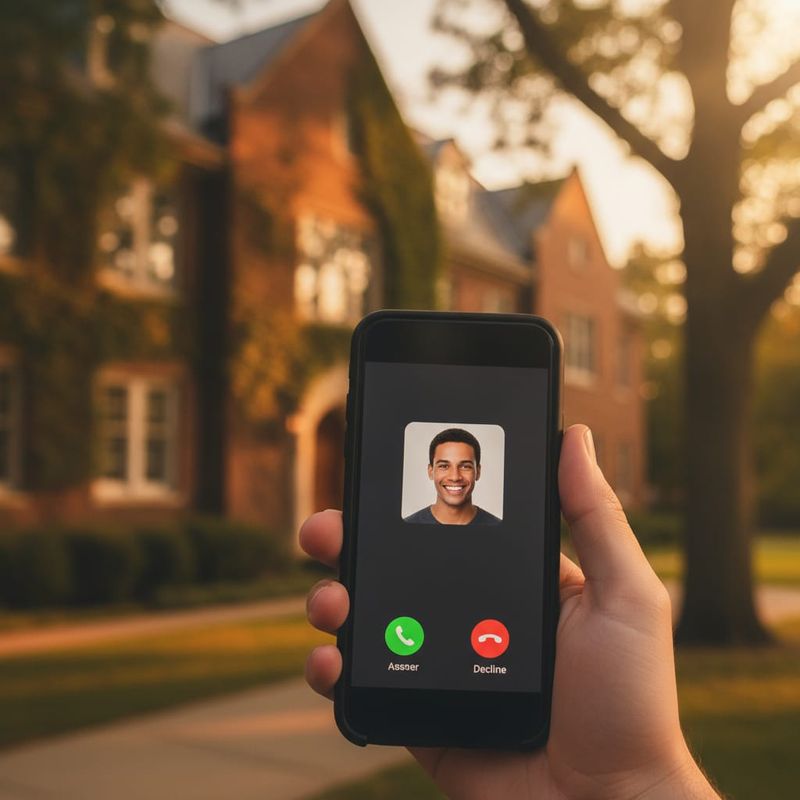
One practical note: calling at 8 AM on a Saturday is different from calling on a Tuesday afternoon. Topcalls lets admissions teams configure calling windows that match when students at their institution actually pick up. That respects both TCPA compliance requirements and the reality of how 18-year-olds use their phones.
5. Is AI Outreach FERPA-Aware?
FERPA doesn't restrict outreach to prospective or admitted students who haven't yet enrolled. The law protects the education records of currently enrolled students. Once a student enrolls, any AI tool accessing education records must meet the same 'legitimate educational interest' standard as a human school official. For pre-enrollment outreach, the compliance requirements are lighter.
What that means in practice: calling a student who submitted an inquiry form, contacting an applicant about their application status, and reaching an admitted student about their deposit are all FERPA-clean. Topcalls doesn't store student education records. Call data, outcomes, and recordings stay within your configured retention policies and don't interact with FERPA-protected systems.
Topcalls also operates under TCPA and GDPR frameworks, which matter more than FERPA for most pre-enrollment outreach. The TCPA requires consent for certain types of automated calls to cell phones. For students who've submitted an inquiry or application, consent is typically established by the relationship and nature of the contact. If your legal team has jurisdiction-specific questions, a compliance review before launch is worth doing.
6. Where AI Calling Doesn't Replace a Human Counselor
AI handles volume and timing. It doesn't handle emotional weight. A student deciding between your school and a full scholarship elsewhere needs a real counselor who can escalate to financial aid on the spot. An AI agent can identify that conversation and route it, but it can't substitute for it.
Complex financial aid appeals, mental health conversations, students in personal crisis, and any situation where the institution's legal exposure is at stake, those stay human. The AI's role is to make sure those conversations happen sooner, not to replace them.
Schools that see the biggest enrollment lift from AI calling use it to free counselors for high-value conversations, not to avoid hiring counselors altogether. The technology doesn't change what students need. It changes how quickly your team finds the students who need something.
Topcalls sets up in 15 minutes. A full enrollment outreach campaign goes live in under two weeks. If your school heads into another recruiting cycle carrying the same follow-up gap, book a strategy call to see what a summer melt reduction of 5 percentage points would mean for your fall class.
Where to go next: see how Topcalls runs AI voice agents for appointment setting, size the upside with the ROI calculator, or book a strategy call.
Frequently Asked Questions
Get AI calling tips in your inbox
No spam. One email per week with actionable sales automation tips.