
Most brokerages already own the phone numbers that would close this quarter's deposit gap. Forex broker call automation is how you dial all of them, in the trader's own language, with the compliance desk's script, without hiring a second retention floor. This forex broker call automation buyers guide covers what the software does, which calls to automate first, what to ask a vendor, what it costs, and where it doesn't belong.
Topcalls runs those calls at $0.35 per minute all-inclusive, with real-time replies and up to 78 languages. Keep those numbers on the table. They're the yardstick for every vendor conversation you'll have.
Key Takeaways
- Forex broker call automation dials dormant traders, failed deposits and KYC stragglers from a CRM or MT4/MT5 export, holds a two-way conversation, and writes the outcome back.
- Topcalls charges $0.35 per minute all-inclusive, so a 3-minute reactivation call costs about $1.05 with no per-seat, setup or telephony fees.
- The FCC ruled on February 8, 2024 that AI-generated voices are "artificial" under the TCPA, so US traders need prior express written consent before an automated call.
- UK firms under FCA SYSC 10A must keep call records for five years, up to seven when the FCA asks, so the platform has to store and export audio.
- First setup takes about 15 minutes, a live campaign about two weeks, and a written proposal arrives within 48 hours of a strategy call.
- Sub-500ms response latency and up to 78 languages are the two specs that decide whether a trader in Dubai or Warsaw stays on the line.
1. What is forex broker call automation?
Forex broker call automation is software that places and holds outbound phone calls to traders and leads on a broker's behalf, using an AI voice agent instead of a human dialer. The system pulls a list from the CRM or trading platform, calls each account, carries the conversation, and logs the result. Topcalls runs these calls at $0.35 per minute in up to 78 languages with real-time replies.
That's different from a predictive dialer. A dialer still needs an agent on the other end; the only thing automated is the dialing. An AI voice agent carries the whole conversation, which is why the economics change and why the compliance questions get sharper. The AI voice agent for forex brokers guide goes deeper on how the agent itself works. This article is about buying one.
Two things a broker needs from day one. The agent has to know what a margin call, a swap-free account and a declined card deposit are, and it has to answer fast enough that a trader doesn't talk over it. Topcalls replies in real time, which is the difference between a conversation and something that sounds like a robocall.
2. Which broker calls should you automate first?
Start with the lists that already carry a known money value: dormant funded accounts, failed or abandoned deposits, and clients stuck in KYC. Those three produce a measurable deposit result inside the first campaign because the trader already signed up and already showed intent. Demo-to-live conversion and incomplete registrations come next. Cold purchased lists come last, if at all.
- Dormant funded accounts: no trade in 90 days, balance still sitting there. The call asks why they stopped, answers the platform or fee question that usually caused it, and books the next step. The guide to reactivating dormant trading accounts covers the scripts that work.
- Failed and abandoned deposits: card declined, 3D Secure timed out, bank blocked the transfer. A call within the hour beats an email tomorrow, because the trader is still sitting in front of the deposit page.

- KYC stragglers: registered, sometimes deposited, never uploaded the ID. The compliance desk can't release anything until the document lands, so the call walks the trader through the upload and marks the account when it's done.
- Demo accounts past 14 days: the trader has placed practice trades and gone quiet. The call finds out whether the block is funding, confidence or position size, and routes to a human if it's the last one.
- Webinar and event leads: registered for a strategy session, never opened an account. Short call, one question, one link.
Each of these is a segment, not a script. On Topcalls every list runs as its own campaign with its own opening line, its own instructions and its own suppression rules, so the KYC call never reaches an account the compliance desk has frozen. The customer reactivation solution page shows the campaign shape most brokers start with.
Before you talk to a vendor, put your dormant count and average first deposit into the dormant trader revenue calculator. It gives you the deposit figure the first campaign has to beat, and it stops the demo from being about features instead of money.
3. What should a broker check before buying call automation?
Check six things: response latency, language coverage, how the platform reads your CRM and MT4/MT5 data, what it does with call recordings, how it hands a live trader to a human, and how the pricing is structured. Get each answer in writing. A vendor that can't state a latency number or a retention period hasn't sold to a broker before.
| Requirement | Why a broker cares | Ask the vendor | Topcalls |
|---|---|---|---|
| Response latency | Traders hang up on pauses; long gaps read as a robocall | What is the round-trip latency on a live call? | Sub-500ms |
| Languages | One book spans the EU, MENA, LATAM and APAC | Which languages are native, not translated? | up to 78 languages |
| Data in and out | Segments live in MT4/MT5 and the CRM | How do lists get in and outcomes get back? | 764+ tools through Integrations |
| Recording and retention | FCA SYSC 10A: five years, up to seven | Where are recordings stored, for how long, and how do we export? | Recording and transcription included in $0.35/min |
| Human handoff | A funded trader with a complaint needs a person | Can the agent transfer live to the retention desk? | Confirm on the demo |
| Pricing structure | Per-seat plus add-ons hides the real cost | What is the all-in price per connected minute? | $0.35/min, no per-seat, no setup |
Uptime belongs on the list too. Topcalls runs at 99.9% uptime, and that matters on the morning a central bank surprises the market and every dormant account suddenly wants to know if their platform still works. The sibling post on questions to ask AI voice vendors has the long-form version of this checklist.
One more filter. Ask the vendor to run a call in your second-largest language on the demo, not your largest. English demos all sound fine. The Polish, Arabic or Portuguese call is where you hear whether the AI voice agents were built for a multilingual book or bolted on afterwards.
4. What does forex broker call automation cost?
Topcalls charges $0.35 per minute all-inclusive: voice model, telephony, recording, transcription and analytics in one price, with no per-seat, setup or bundle fees. A typical 3-minute reactivation call costs about $1.05. A 5,000-account dormant campaign would run about $5,250 in call minutes if every trader picked up and talked for three minutes, which they won't, so treat that as the ceiling.
Compare that with how most call platforms bill a brokerage: a per-seat licence, then telephony on top, then a transcription add-on, then analytics as a separate tier. Each line looks small. The invoice doesn't. Ask for the all-in figure per connected minute and put it next to $0.35.
What the money buys is coverage. Topcalls processes 63,000+ AI calls a day across its customers, and brokerages running it beside a human desk place 3-10x more calls per day than the desk managed alone. Human agents keep the accounts that need a relationship. The automation covers the rest of the book.
The AI calls vs human agents cost post has the side-by-side per reactivated trader. And the dormant trader revenue calculator turns your own dormant count into a break-even deposit figure, so the cost conversation starts from your numbers rather than a vendor's slide.
5. How does call automation handle broker compliance?
A broker's compliance desk needs four things from call automation: a consent check before each dial, calling-hour rules per country, call recording with a retention period the regulator accepts, and a script that never drifts into a financial promotion the firm hasn't approved. Topcalls dials only inside the calling hours you set and records and transcribes answered calls. The broker still owns the script, the consent records and the sign-off.
In the US, the FCC ruled on February 8, 2024 that calls made with AI-generated voices are "artificial" under the TCPA, which puts your AI agent under the same prior express written consent rule as a prerecorded robocall. FCC Chairwoman Jessica Rosenworcel said: "We're putting the fraudsters behind these robocalls on notice." A dormant trader who ticked a marketing box at signup is a different case from a purchased lead list. Keep the consent record next to the phone number.
Calling hours are a separate trap. The FTC's Telemarketing Sales Rule guidance lists calling before 8 a.m. or after 9 p.m. as an abusive practice, measured in the person's local time. A brokerage with traders across six time zones needs per-timezone calling windows in the platform, not one global schedule set in the head office.
In the UK, FCA SYSC 10A.1.14R requires call records to be "kept for a period of five years and, where requested by the FCA, for a period of up to seven years." Ask where the audio lives and how you export it the day the FCA asks. In the EU, ESMA's 2018 CFD measures capped retail leverage at 30:1 on major currency pairs and made standardised risk warnings mandatory. An AI agent that promises returns or skips the warning creates a financial promotion problem that no call volume justifies.
The compliant AI calling for forex brokers post walks through the desk-level checklist, and TCPA compliance for AI cold calling covers the US rules in depth. Both are worth reading before the demo, because the questions they raise are the ones the vendor should already have answers for.
6. How long does it take to get live?
First setup on Topcalls works like this: upload a list, pick a voice and a language, write the opening line and the instructions. A live campaign against real dormant accounts usually follows within about two weeks, and most of that time is the broker's own compliance review and CRM mapping. A proposal arrives within 48 hours of a strategy call.
The two-week figure depends on your side of the table. Brokers with a clean MT4/MT5 export (account ID, last trade date, balance, language, consent flag) move faster. Those still reconciling three CRMs move slower. Integrations connects to 764+ tools, so HubSpot, Salesforce and a webhook into the back office are the usual paths, and the call outcome lands in the same record the retention desk already reads.
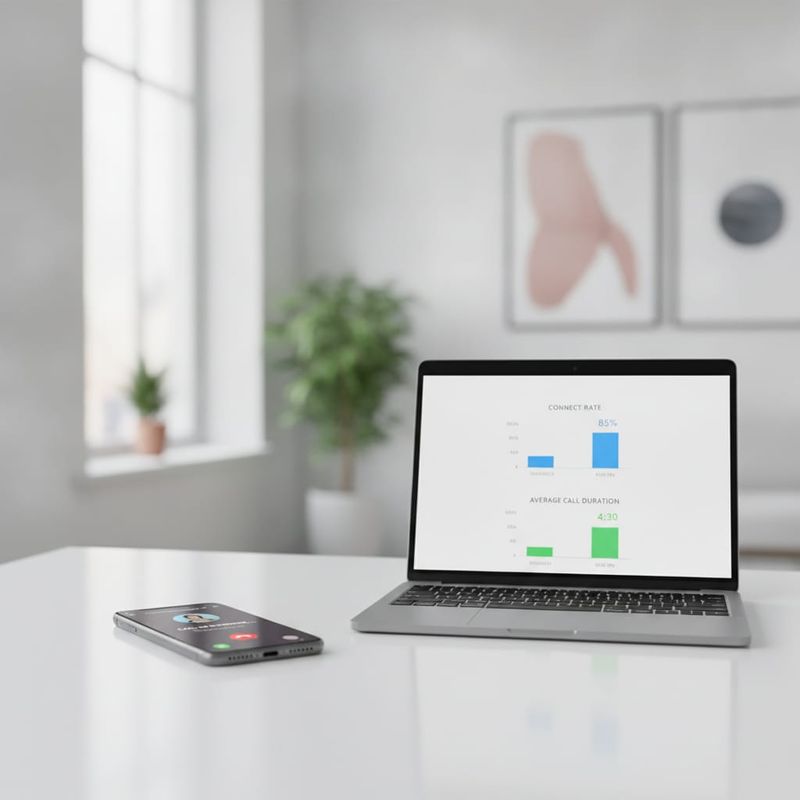
Once live, real-time analytics shows connect rate, average duration and outcome per campaign as the calls happen. Watch the first 200 calls closely. That's usually enough to see whether the opening line lands or whether the segment needs splitting by deposit size.
7. When doesn't forex broker call automation fit?
Call automation doesn't fit when the list is tiny, when consent is missing, or when the conversation is a negotiation. Under a few hundred contactable accounts, a good retention agent on the phone for an afternoon does the job without a new vendor. And no platform fixes a purchased list with no consent trail; after the FCC ruling that list is a liability, not a shortcut.
- Institutional and IB relationships: a partner moving seven-figure volume gets an account manager, not an automated call.
- Complaints and disputes: stuck withdrawals, slippage arguments, a frozen account. These need a human with authority to fix something, and the agent should hand them straight over.
- Markets you aren't licensed to promote in: an automated call is still a financial promotion. If the firm can't market to residents of a country by email, it can't call them either.
- Brokers with no outcome field in the CRM: if nobody reads the call disposition, the calls happen and nothing changes. Fix the field first.
Everything else, the dormant book, the failed deposits, the KYC queue, the demo accounts, is where the software earns its $0.35 a minute.
If your dormant funded accounts, failed deposits and KYC stragglers are sitting in three separate spreadsheets right now, that's your first campaign. Book a 30-minute call with the counts in hand and you'll have a proposal within 48 hours, built on your segments and your languages.
Frequently Asked Questions
Get AI calling tips in your inbox
No spam. One email per week with actionable sales automation tips.