Every dormant trader a retention agent dials by hand costs the brokerage a slice of a $21.53-an-hour wage, and most of those dials never connect. The TopCalls vs manual forex calling comparison is really about what an hour of a desk's time buys: attempts, conversations, deposit callbacks and compliance exposure. Topcalls prices an AI call at $0.35 per minute all-inclusive and answers a trader in real time, so the arithmetic of that hour changes.
This guide lays out the comparison a head of retention can take into a budget meeting: reach per day, cost per attempt, who carries the compliance risk, how the calls sound to a trader who lost money last year, MT4/MT5 and CRM fit, and where a human desk still wins.
Key Takeaways
- Topcalls charges $0.35 per minute all-inclusive, so a two-minute reactivation call costs $0.70 with telephony, recording, transcription and analytics included.
- The median US customer service representative earned $21.53 an hour in May 2025 according to the Bureau of Labor Statistics, before benefits, management or phone bills.
- The US Telemarketing Sales Rule restricts outbound calls to 8:00 a.m. to 9:00 p.m. at the called person's local time, a window a single-shift desk can't cover across time zones.
- Topcalls processes 63,000+ AI calls a day across the platform and speaks up to 78 languages, so one campaign can work a broker's EU, MENA and APAC books at the same time.
- Topcalls' published figures put the connect-rate lift at 60%+ and call volume at 3-10x a human team; a fair two-week split test on your own dormant list will show whether that holds for you.
- ESMA found that 74-89% of retail CFD accounts lose money, which is why every reactivation call needs the same risk wording, not whatever the agent remembers.
1. What does TopCalls vs manual forex calling actually compare?
TopCalls vs manual forex calling compares two ways of working the same dormant list. Manual calling means retention agents dial traders one at a time from the CRM, log an outcome and move on. Topcalls runs the same list through an AI voice agent that dials, holds the conversation, books the deposit callback or handoff, and writes the result back. The list, offer and compliance rules stay the same; the labour and cost per attempt change.
Both approaches start from the same MT4 or MT5 export of accounts with no trade in 90 days, the same suppression file, the same offer and the same risk wording the compliance desk signed off. If you're still building that list, the dormant account reactivation guide covers segmentation before any dialing starts.
Two neighbours of this comparison get their own guides. Outsourcing the desk to a third-party call centre is covered in TopCalls vs call center outsourcing, and predictive dialers that speed up human agents without replacing them are covered in automated calls vs manual dialing for brokers. This piece is strictly the in-house desk against the AI agent.
2. How many dormant traders can each approach reach per day?
A manual desk reaches as many traders as its agents can dial inside the legal calling window, one call at a time. Topcalls runs calls concurrently, so a 5,000-trader list that would tie up a five-agent desk for weeks can be attempted in days, and every attempt lands inside the trader's own local calling window instead of the desk's shift hours.
Time zones are the quiet killer of manual reach. The US Telemarketing Sales Rule (16 CFR 310.4(c)) bars outbound calls to a residence outside 8:00 a.m. to 9:00 p.m. at the called person's location. A New York desk working 9 to 6 can reach a Los Angeles trader for about seven of those hours. Apply the same window as house policy to a Dubai client and the overlap shrinks to roughly four hours, all at the tired end of the New York day.
Topcalls flips that around. A campaign holds each lead's time zone and calling window, dials when the trader is actually reachable, and schedules the retry itself when a number is busy or rings out. Across the platform Topcalls handles 63,000+ AI calls a day, and the published call-volume lift against a human team is 3-10x. One retention manager watches a 5,000-lead campaign move instead of five agents fighting the clock.
3. What does each call cost a forex brokerage?

Topcalls costs $0.35 per minute, so a 90-second attempt costs about $0.53 and a two-minute conversation costs $0.70, with telephony, recording, transcription and analytics included. A manual attempt costs the agent's hourly wage divided by dials per hour. At the $21.53 US median wage and 12 dials an hour that comes to about $1.79 per attempt, before benefits, management, QA and the phone bill are added.
That wage figure is public. The Bureau of Labor Statistics reports a $21.53 median hourly wage for customer service representatives in May 2025. Twelve dials an hour is an assumption. Replace it with your own desk's number: a desk that hand-dials and types notes between calls often lands below it, a desk on click-to-dial lands above it.
| Line item | Manual forex desk | Topcalls |
|---|---|---|
| Base rate | $21.53 per hour median wage (BLS, May 2025), benefits extra | $0.35 per minute, all-inclusive |
| 90-second attempt | About $1.79 at 12 dials an hour, wage only | About $0.53 |
| Two-minute conversation | About $1.79 (same hour cost) | $0.70 |
| Telephony, recording, transcription | Separate line items | Included |
| Per-seat and setup fees | Per agent hired | None |
Scale it to a campaign and the gap widens. One thousand 90-second attempts cost roughly $1,790 in wages on the manual desk and about $525 on Topcalls, and the manual figure still excludes benefits and a team lead. The dormant trader revenue calculator puts your list size, average first deposit and agent cost side by side so the number you present is yours, not ours. A full wage-plus-benefits model, including a 10,000-trader worked example, lives in AI calls vs human agents cost.
One cost never appears on either line: the traders the manual desk never gets to. Five agents at 12 dials an hour make about 480 attempts a day, so on a 20,000-account dormant book the second attempt is six weeks away. By then part of that book has funded an account somewhere else.
4. Which handles compliance better on a forex desk?
Topcalls applies calling windows, disclosure and recording to every call by rule, while a manual desk depends on each agent remembering those rules at 4:55 p.m. on a Friday. Whatever the compliance desk approves, including the risk wording, runs identically on call 1 and call 4,000.
Forex makes this sharper than most industries. ESMA found that 74-89% of retail accounts lose money on CFDs, with average losses per client between EUR 1,600 and EUR 29,000, and limited retail positions on major currency pairs to 30:1. A reactivation call to someone in that group has to carry the risk warning the same way every time. An agent chasing a monthly target tends to shorten it. A Topcalls agent can't.
Every Topcalls call produces a recording and a transcript, so the compliance desk can sample 50 calls from Tuesday's campaign in an afternoon. On a manual desk the recording usually exists; the transcript and the search across 4,000 calls usually don't.
The same Telemarketing Sales Rule (310.4(b)(4)) caps abandoned calls at 3% of answered calls over 30 days and requires at least 15 seconds or four rings before hanging up. A Topcalls agent is on the line the moment the trader answers, so there's no queue of answered calls waiting for a free human, which is where abandoned calls come from.
None of this makes compliance automatic. The broker still owns the suppression list, the GDPR consent basis for EU traders, and the AI disclosure where a market requires it. Those decisions just get made once, by the compliance desk, instead of 4,000 times by agents.
5. How does call quality compare on reactivation calls?
Manual calling wins on rapport with a known VIP; Topcalls wins on consistency, speed and language coverage. Topcalls responds in real time, speaks up to 78 languages and delivers the same opening, offer and risk wording on every call, then hands the trader to a human when the conversation needs one. An agent's tenth reactivation call of the afternoon rarely sounds like the first.
Dormant traders raise the same objections: the spreads, the loss they took last spring, the broker they moved to, the withdrawal that took four days. A good agent handles all four on Monday morning. The same agent at 5 p.m. on Thursday gives shorter answers, and a new hire improvises. Topcalls carries the objection responses the desk wrote into every call and escalates the ones that need a person, a flow covered in human handoff on AI calls for forex.
Language is where the gap is widest. A broker with Arabic, Spanish, Vietnamese and Polish books needs four agent pools to call manually. The Topcalls AI voice agent picks the language per lead across up to 78 languages inside one campaign, so the customer reactivation flow runs the same for a trader in Warsaw as for one in Madrid.
| Factor | Manual forex desk | Topcalls |
|---|---|---|
| Attempts per day | Limited by headcount and shift | Concurrent; 63,000+ calls a day platform-wide |
| Cost per attempt | Wage divided by dials per hour | $0.35 per minute, all-inclusive |
| Languages | One or two per agent | 32 in one campaign |
| Calling window | The desk's shift | The trader's local window |
| Risk wording | Agent memory and mood | Fixed per campaign, recorded and transcribed |
| Time to start | Hire, train, ramp | About 15 minutes for first setup, live within about two weeks |
| Best for | VIPs, negotiations, complex cases | Volume reactivation, deposit and KYC follow-ups |
6. How does each fit MT4/MT5 and CRM workflows?
A manual desk pulls dormant accounts out of MT4 or MT5 reports, works them from the CRM and types outcomes back by hand. Topcalls takes the same export as a lead list, runs the calls, and pushes the outcome, transcript and recording into the CRM or the broker's back office through Integrations, which reaches 764+ tools. The trader record gets updated the minute the call ends, not at the end of the agent's shift.
That difference shows up in the fields. On a manual desk the outcome is whatever the agent typed: "cb thu", "not int", "wrong no". A Topcalls campaign returns structured outcomes: callback booked for Thursday 6 p.m. local, KYC refresh requested, number invalid, do-not-call requested. The compliance desk acts on the last one the same day.
- Lead list: an MT4/MT5 export with account ID, phone, language, last trade date and equity, deduplicated and suppressed against DNC before upload.
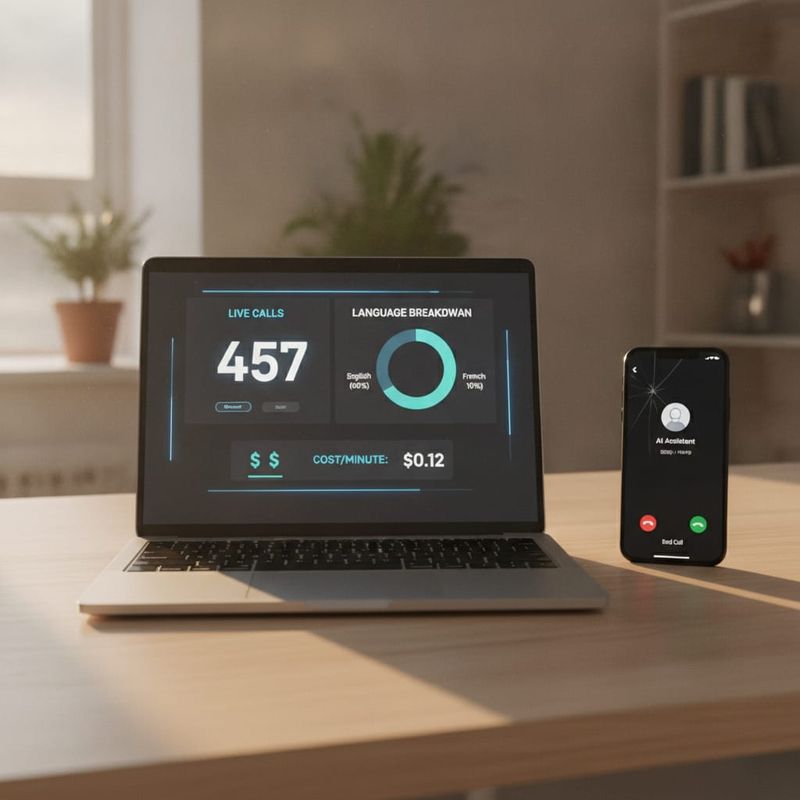
- Call: Topcalls dials inside the trader's window, holds the conversation in their language and books the callback or handoff.
- Write-back: outcome, transcript and recording land in HubSpot, Salesforce or the back office through the Integrations product, and a deposit callback creates the task for a human agent.
- Retry: busy and unanswered numbers are rescheduled automatically, so the second attempt on a 20,000-account book is days away rather than six weeks.
7. When doesn't TopCalls fit a forex retention desk?
Topcalls doesn't fit a desk whose value is a personal relationship with a few hundred high-net-worth clients, a dormant list under a few hundred numbers, or a jurisdiction where the compliance team hasn't yet cleared AI disclosure for outbound calls. A manual desk also wins when the call is a negotiation over rebates, margin terms or a disputed withdrawal rather than a reactivation nudge.
- Private-client books: a trader who deposits six figures expects the same account manager who called last quarter. Keep that book on the desk and give Topcalls the long tail.
- Tiny lists: a 300-account dormant list is two days of manual work. The setup effort on either side is similar, and the desk already knows those names.
- Disputes and negotiations: a client arguing about a slippage claim or asking for a rebate needs a human with authority, not a scripted agent.
- Regulatory holds: if your compliance desk hasn't signed off the AI disclosure wording for a market, don't call that market with Topcalls until it has.
Most brokers land on a split. The desk keeps the top 5% of the book by equity and every dispute. Topcalls works the other 95%, plus KYC reminders and failed-deposit follow-ups, and passes real conversations back to a person.
8. How do brokers run a fair TopCalls vs manual test?
Split one dormant segment in two at random, give half to the desk and half to Topcalls for two weeks, and compare connect rate, conversations, deposit callbacks and cost per reactivated trader. Topcalls sends a proposal within 48 hours of a strategy call, and campaigns are typically live in about two weeks with managed setup, so the test fits inside a month.
- Pick a segment the desk already believes in, such as accounts dormant 90 to 180 days with a prior deposit above $500, so nobody can argue the AI got the easy list.
- Freeze the offer, the risk wording and the suppression file for both halves, and log the same four outcomes on both sides: reached, conversation, callback booked, deposit within 14 days.
- Count the manual side's full cost: wages, the team lead's hours, telephony, and the calls never attempted because the fortnight ran out.
- Divide spend by deposits on each side. Cost per reactivated trader is the number the CFO will remember.
If you'd rather have the segment scoped with someone who has run this test before, book a 30-minute call and bring the list size and last quarter's reactivation numbers. Brokers who want the manual-side playbook first can start with win-back campaigns for inactive trading users.
A desk that dials by hand isn't wrong. It's just expensive per attempt, capped by the clock, and inconsistent by 5 p.m. Put the two side by side on your own list for a fortnight and the decision usually makes itself.
Frequently Asked Questions
Get AI calling tips in your inbox
No spam. One email per week with actionable sales automation tips.