Your front desk answers 100 calls a day, books appointments all morning, and still misses 25% of them. Those missed calls aren't just annoyances. They're clients who found a different clinic.
AI calling for vet clinics changes that equation. An AI voice agent answers every call, books appointments, sends reminders, and follows up on no-shows around the clock. Clinics that deploy it report 31% fewer no-shows and capture bookings that would otherwise be lost to competitors down the street.
This guide covers exactly how that works, the real numbers behind no-show costs, and how to decide if it fits your practice.
Key Takeaways
- Vet clinics average 10-15% no-show rates, costing $45,000-$90,000 annually at a 30-appointment-per-day practice.
- 24-28% of vet clinic calls go unanswered on an average day; 85% of those callers won't try again.
- Practices with effective phone systems see 31% lower no-show rates than those relying on manual reminder calls.
- 72% of after-hours callers won't leave a voicemail, so unanswered evening calls are gone for good without an AI agent.
- Topcalls runs AI voice calls at $0.35/minute all-inclusive, with no-show reminders and after-hours booking typically live within 15 minutes.
1. How Do Vet Clinics Use AI Voice Agents?
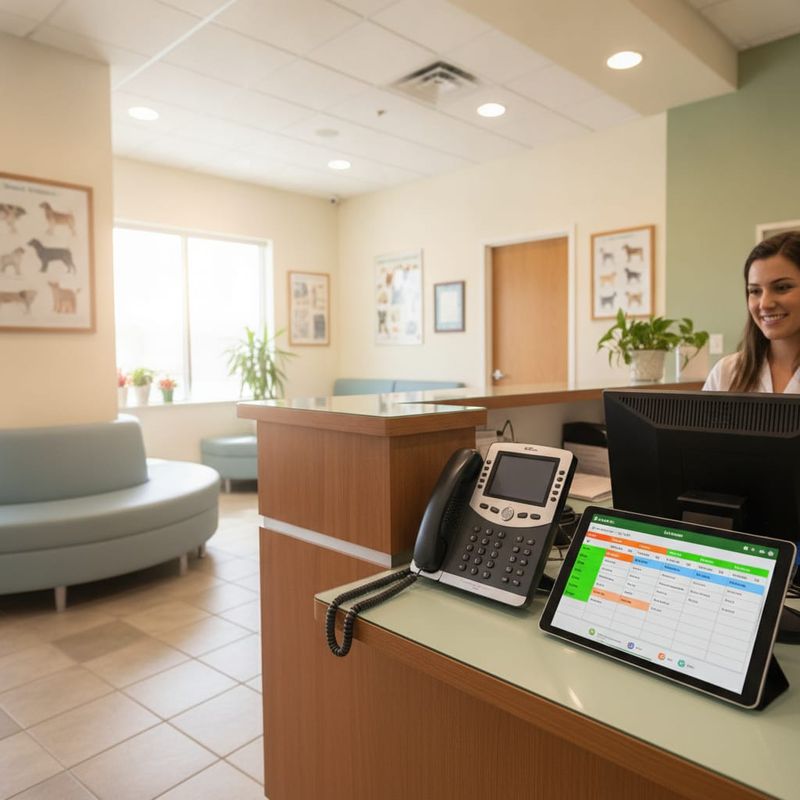
Vet clinics use AI voice agents for four main tasks: answering inbound calls, booking and confirming appointments, sending reminder calls before visits, and following up on no-shows. The agent connects to the clinic's scheduling system and handles each task automatically, handing off to a human only when clinical judgment is needed. Most practices start with AI-powered appointment booking and add overflow handling once the first layer is running smoothly.
The average vet clinic handles 75-150 calls per day, according to veterinary phone data from AgentZap. High-volume practices field 200+ calls daily. That's an enormous front-desk load when the same team is also checking in patients, managing records, and handling walk-ins.
Here's how the tasks break down for a typical small-to-mid-sized practice:
| Task | Manual (Staff) | AI Voice Agent |
|---|---|---|
| Answer inbound calls | During clinic hours only | 24/7, zero hold time |
| Book new appointments | 1-3 min per call | Under 60 seconds |
| Send appointment reminders | Manual or batch SMS | Automated voice + SMS |
| Follow up on no-shows | Rarely done consistently | Automated same-day |
| After-hours emergency triage | On-call vet only | AI captures and routes |
2. Can AI Book and Confirm Vet Appointments?
Yes. A properly configured AI voice agent handles the entire appointment booking conversation, from asking the reason for the visit to confirming a time slot, checking for conflicts, and sending confirmation. It books directly into your practice management software through a calendar integration, so there's no double-booking and no manual data entry after the call.
Phone appointments still dominate in veterinary care. 47% of appointments are booked by phone, and 73% of new clients call before their first visit. If that call goes to hold or voicemail, many of them hang up and try the next clinic on their list.
The confirmation side is just as valuable. Topcalls AI agents call or text clients 24-48 hours before their appointment to confirm attendance, then again the morning of the visit. Those touchpoints are the single most effective no-show reduction tool, but they need consistent follow-through that most front desks can't maintain across 30+ daily appointments.
3. How Much Do No-Shows Cost a Vet Clinic?
Each no-show costs a vet clinic $150-$300 in lost appointment revenue. A typical practice running 30 appointments per day at a 10% no-show rate loses $45,000-$90,000 a year to appointments that were booked but never showed up. A 3-percentage-point improvement (from 11% to 8%) translates to roughly $50,000 in recovered annual revenue, according to VetSyCare's no-show analysis.
The industry average sits at 10-15%. Practices that maintain under 8% are considered high performers, and those under 5% are exceptional. The difference between average and exceptional is almost always the reminder system, not the clientele.
Booking window matters a lot here. Appointments scheduled three or more weeks out have no-show rates of 25-35%, compared to under 10% for same-week bookings. An AI agent configured to send extra reminders for far-out appointments flattens that curve significantly. It also fills cancellation slots in real time instead of leaving gaps in the schedule.
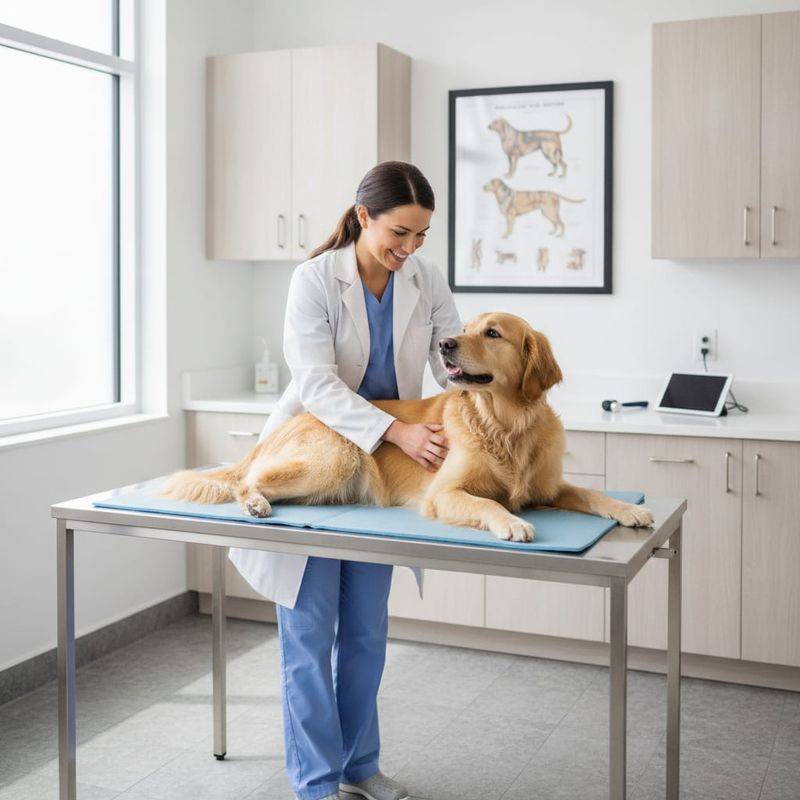
Want to see what no-show reduction is worth at your clinic's specific appointment volume? Run your numbers in the Topcalls ROI calculator.
4. Does AI Handle After-Hours Pet Calls?
An AI voice agent answers after-hours calls 24/7. It picks up immediately, collects the caller's information and reason for calling, routes genuine emergencies to the on-call vet, and books non-urgent cases for the next available slot. Without it, clinics miss 30-70% of after-hours calls, and 72% of those callers won't leave a voicemail. They call the next clinic on their list.
After-hours coverage matters more than it looks in a spreadsheet. Emergency cases generate 4.2 times more revenue than routine wellness visits. A single captured emergency client, with a lifetime value of $12,800-$25,000 in ongoing care, can cover months of AI calling costs.
The AI isn't making clinical decisions. It's handling intake: name, pet name and species, reason for the call, urgency level based on the owner's description. True emergencies get escalated immediately to your on-call vet. A refill request at 9pm gets queued for morning. Your team only gets paged when there's a genuine reason.
5. How Does AI Reduce Front-Desk Call Overflow?
Front-desk call overflow happens when incoming calls exceed what staff can handle in real time. The result is that 24-28% of vet clinic calls go unanswered on an average day, and 85% of those callers won't try a second time. AI voice agents absorb the overflow automatically, handling booking, prescription refill requests, and standard inquiries so your team can focus on patients in the room.
High-volume practices field 200+ calls per day. During a busy morning check-in window, one staff member might handle three calls in a row while two more ring through unanswered. An AI handles all of them simultaneously. No queue, no hold music, no missed call.
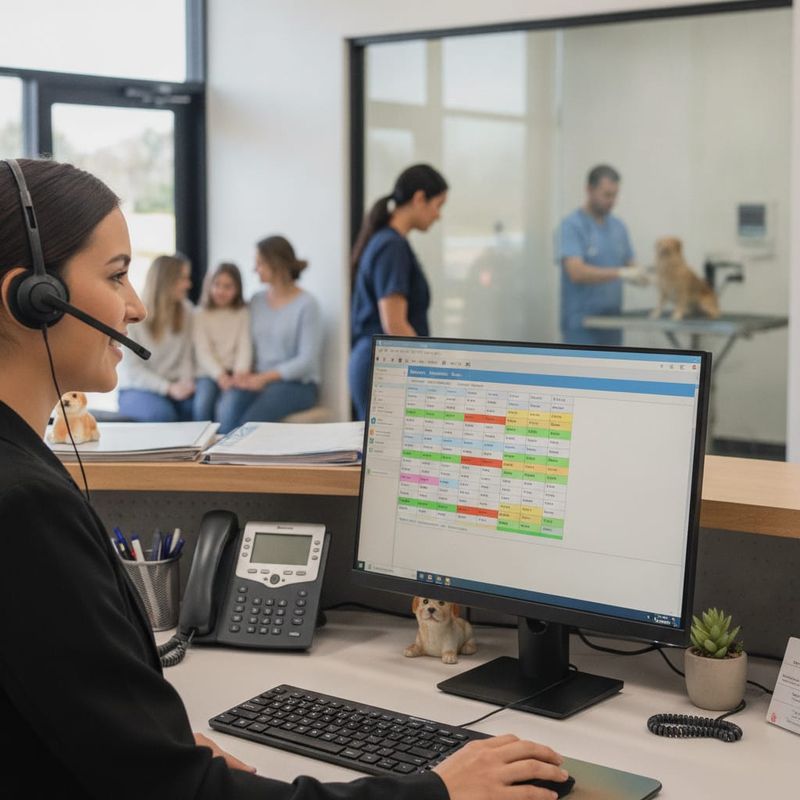
Topcalls processes 63,000+ AI calls daily at sub-500ms voice response latency. The conversation feels immediate, not like a phone tree. Callers complete appointment booking in under 60 seconds without waiting for a staff member to be free. Combined with smart campaign tools, you can also run proactive outreach, like annual wellness reminders and vaccine follow-ups, alongside the inbound layer.
Where AI Calling Doesn't Replace Human Judgment
AI voice agents don't make clinical decisions. They don't advise on symptoms, adjust medication dosages, or handle grief conversations after a pet's death. Any call requiring real empathy, medical knowledge, or a complex exception needs a person.
They also don't work well without a connected scheduling system. If the AI can't read your available slots and write a confirmed booking back to your practice management software, it's doing half the job and creating manual cleanup work. Integration setup is the most important step before go-live.
Specialty referral clinics and exotic animal practices with complex intake protocols need more configuration time. That's doable, but it's not a 15-minute setup. Standard companion-animal clinics (dogs, cats, small mammals) are the easiest and fastest to deploy.
Getting Started With AI Calling for Your Vet Clinic
Most vet clinics go live with Topcalls in about 15 minutes for basic inbound handling and appointment booking. Setup covers connecting your calendar, uploading your call script, and running a test call to verify the booking loop works end-to-end.
Start with the highest-impact layer for your practice. If no-shows are your main pain point, launch with reminder calls first. If missed after-hours calls are the problem, start there. If it's morning rush overflow, configure overflow routing first. You don't have to do everything at once. Similar service businesses like med spas using AI calling follow the same phased approach.
Topcalls runs at $0.35/minute all-inclusive, with no per-seat fees and no setup charges. For a clinic handling 100 calls per day at 2 minutes per call, that's $7 a day in call handling. If one captured call books a new client with a $12,800 lifetime value, the math is obvious.
Ready to see what this looks like for your clinic? Book a strategy call and we'll map out exactly which tasks make sense to hand off first.
Frequently Asked Questions
Get AI calling tips in your inbox
No spam. One email per week with actionable sales automation tips.