Tax season doesn't slow down for anyone. Accounting firms get hit with a surge of client calls starting in January, and most of that volume is routine: document reminders, appointment confirmations, deadline questions, and invoice follow-ups. Your CPAs shouldn't spend a quarter of their day on that. AI calling for accounting firms puts those repetitive outreach tasks on autopilot, so your team focuses on the actual accounting work.
Key Takeaways
- Topcalls AI agents handle 63,000+ calls daily at $0.35/minute all-inclusive, a fraction of the cost of seasonal administrative staff or per-seat software licenses.
- AI can call your entire client list in a morning to chase missing W-2s, 1099s, or bank statements, with each call personalized by client name and exact document needed.
- Tax-season call volume spikes sharply every year, and AI scales instantly with no ramp-up, no recruiting, and no training cycle required.
- All call data is encrypted in transit and at rest, with GDPR-compliant and SOC 2-aligned infrastructure consistent with typical CPA board data handling requirements.
- Most accounting firms go live with their first AI campaign in under 15 minutes, with full client outreach running within two weeks.
1. How Do Accounting Firms Use AI Voice Agents?
AI voice agents handle the outbound and inbound calls that don't require a CPA. For accounting and tax firms, the core use cases are client document collection, appointment reminders, deadline notifications, invoice follow-up, and after-hours inquiry routing. The agent calls clients, identifies itself as an AI assistant for your firm, delivers the message, and captures a response. No hold times, no missed calls, no staff time spent on calls that didn't need a licensed professional.
The most common starting point is busy-season document collection. A client missing a W-2 or a 1099 won't call to volunteer that information. Your staff has to chase them. An AI agent runs that entire campaign automatically, calling each client on a schedule, logging outcomes in your CRM, and escalating only when a client has a question the agent can't answer. Past busy season, the same infrastructure handles appointment confirmation and reminders, quarterly estimate notifications, and reactivation campaigns for clients who haven't filed with you in over a year.

Topcalls supports 32 languages with native-sounding accents, which matters if your firm serves Spanish-speaking clients, Portuguese-speaking business owners, or Mandarin-speaking families who find English-only phone calls uncomfortable. The agent doesn't forget to call the last 20 clients on the list because it got busy with something else.
2. Can AI Chase Missing Client Documents?
AI can run the full document-chasing workflow for your firm. You give the agent a list of clients and what documents you're waiting for. It calls on the schedule you set, mentions exactly what's missing by name, confirms receipt when documents arrive, and logs everything. The agent doesn't get uncomfortable asking a longtime client for the third time. That's where automated follow-up sequences deliver the fastest ROI for professional service firms: the problem was always effort, not client intent.
A typical document collection campaign runs in tiers:
- Day 1 after a document deadline: Agent calls every client with outstanding items, states what's missing, and explains where to send it.
- Day 4: Agent follows up with non-responders, names the specific document again, and references the filing deadline.
- Day 8: Agent flags uncollected items for partner review and notes whether an extension is likely needed.
The agent can also tell clients exactly how to send documents: email a photo to your intake address, upload to the client portal, or fax to a specific number. That cuts the back-and-forth where clients send things to the wrong place and your staff has to follow up a fourth time.
Topcalls runs calls with sub-500ms voice response latency. On a live call, a pause longer than 700ms reads as a dropped connection to most listeners. The conversation has to feel natural for clients to stay on the line and actually respond, which is what gets the documents collected.
3. How Does AI Handle Tax-Season Call Volume?
AI voice agents scale instantly. During peak filing weeks, you can run hundreds of outbound calls per day without adding headcount. Topcalls smart campaigns handle as many simultaneous outreach sequences as you need, with no queue and no delay. When busy season ends, costs drop because you pay per minute of actual call time, not a per-seat license sitting idle from May to December.
To put the volume in context: the IRS processed more than 160 million individual income tax returns in its most recent filing season. Most of those filers use a paid preparer. Every one of them could call your firm asking about their return, their documents, or their refund. That entire call load concentrates into a 12-week window.
Hiring seasonal administrative staff means recruiting, training, and then off-boarding people every year. Quality varies. AI onboarding takes 15 minutes. Upload the client list, configure the message, and the campaign starts. No ramp-up week while someone learns your firm's intake process.
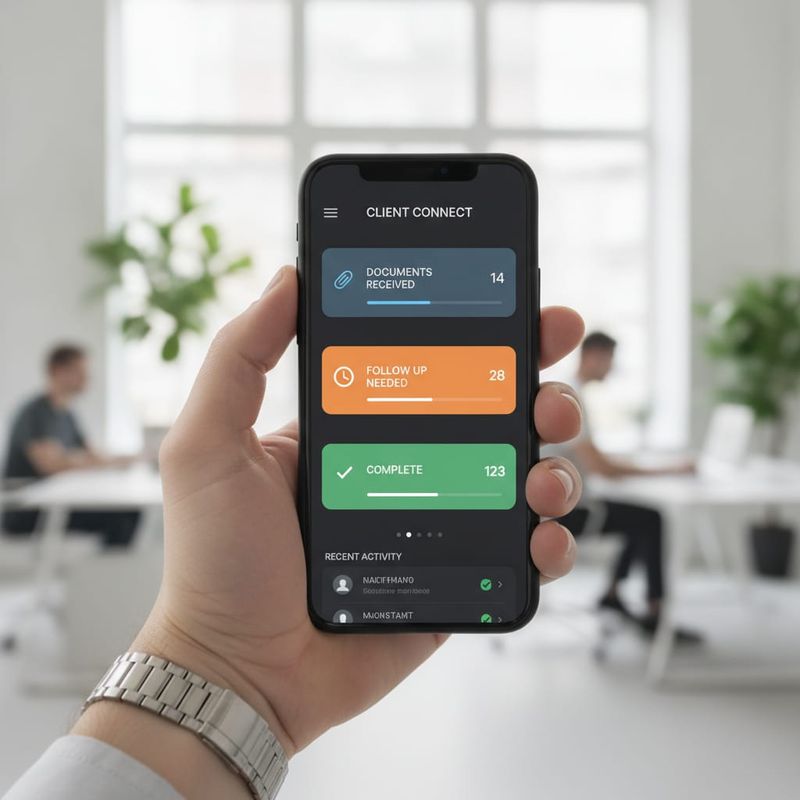
And there's the after-hours problem. If a client calls at 9 PM about what documents to gather for their S-corp return, a voicemail doesn't help either party. Topcalls' AI voice agents handle that conversation after hours: collect the intake information, answer common questions, and route complex ones to your system with a note for the morning. Your staff comes in with a completed intake, not a backlog of voicemails.
4. Is AI Calling Secure for Financial Data?
AI calling for accounting firms doesn't expose client financial data on the call. The agent identifies your firm, delivers a scripted message, and collects a basic response. No account numbers, no Social Security numbers, no tax figures pass through the AI layer. Topcalls' secure infrastructure keeps all call data encrypted in transit (TLS 1.2+) and at rest, with GDPR-compliant data processing and SOC 2-aligned security practices.
The key distinction: the agent isn't accessing your client's file. It's delivering a message and collecting a response. A receptionist confirming an appointment doesn't see the tax return. Neither does the AI agent calling about a missing 1099. That said, AI calling data flows should be documented in your firm's written information security plan if you fall under the FTC Safeguards Rule as a tax preparer.
Before choosing any AI calling platform, confirm three things:
- Call recordings: How long are they stored and who can access them? Topcalls provides role-based access controls and exportable call logs.
- Data residency: Where do call logs and client contact data live? Topcalls offers EU and US data processing options, consistent with GDPR and most state requirements.
- AI disclosure requirements: Several states require AI agents to identify themselves at the start of a call. Review AI disclosure laws by jurisdiction and configure your call opening accordingly.
| Requirement | What to Verify | Topcalls |
|---|---|---|
| Encryption | TLS 1.2+ in transit, AES-256 at rest | Yes |
| GDPR compliance | Data processing agreements available | Yes |
| Data residency | EU and US processing options | Yes |
| Recording access | Role-based controls, exportable logs | Yes |
5. Does AI Follow Up on Unpaid Invoices?
AI voice agents run accounts receivable follow-up calls for your firm. You configure the agent with invoice details, the client name, and the outstanding amount. The agent calls, identifies the invoice, and asks the client to confirm a payment date or plan. It's more effective than an email and less awkward than a partner calling a longtime client who's 90 days overdue. Combined with client reactivation campaigns, AI calling covers the full AR lifecycle from first reminder to recovery.
Unpaid invoices are a chronic issue for firms on project-based or hourly billing. Clients who ignore email reminders often respond to a phone call. The problem is that calling 50 clients with outstanding balances takes a chunk of someone's day, and it usually falls to whoever has the least pull to actually collect.

AI calling flips that. The agent calls every outstanding invoice on a schedule, logs the outcome, and flags only difficult cases for a partner. Clients who pay get removed from the campaign via CRM integration. Clients who dispute get escalated to a human. Use the ROI calculator to see what recovering one extra week of AR follow-up per month is worth for your cash flow.
6. Where Does AI Calling Fall Short for Accounting Firms?
AI voice agents don't belong in advisory conversations, complex tax situations, or any call where a CPA's judgment matters. If a client is asking about the tax implications of selling a business, responding to an IRS audit notice, or navigating a divorce that affects their filing, that call needs a licensed human. AI is the infrastructure that clears routine volume so your staff can have those conversations.
Situations to route directly to a human:
- Complex advisory calls: Estate planning, foreign accounts, partnership distributions, and business succession questions all need a licensed professional, not an AI routing layer.
- IRS correspondence: A client calling about a notice of deficiency or an audit should reach a CPA immediately, not go through an AI triage step.
- Sensitive personal situations: Clients going through bankruptcy, divorce, or business failure need a human voice from your firm.
- Multi-state client bases: If your firm serves clients in states with two-party recording consent laws, confirm your call recording and disclosure settings are configured correctly before launching campaigns.
Firms that build AI calling into their operations during busy season come out of it with infrastructure that runs year-round: document collection, appointment management, invoice follow-up, all without staff overhead. The firms that don't keep rebuilding the same process every January. If you want to see how this fits your practice, book a strategy call with the Topcalls team and we'll walk through your specific workflows.
Frequently Asked Questions
Get AI calling tips in your inbox
No spam. One email per week with actionable sales automation tips.