A few minutes of clean audio is now enough to rebuild someone's voice well enough to fool their own family. That same technology can read your sales script in your founder's voice, on 63,000+ calls a day. Voice cloning for sales is powerful and easy to get wrong. The line between a branded outbound program and a scam isn't the tech. It's consent and disclosure.
This guide explains what voice cloning for sales actually is, where the ethical and legal lines sit in 2026, and how to set up a custom brand voice the right way. No hype. Just the parts that decide whether you build trust or burn it.
Voice cloning for sales is the use of AI to recreate a specific human voice from recorded samples, then have an AI voice agent speak your call script in that voice on outbound or inbound calls.
Key Takeaways
- Voice cloning recreates a real person's voice from samples; modern systems need only a few minutes of clean audio to build a usable clone.
- Consent is the hard gate: clone only a voice whose owner has given written permission, never a third party's voice without it.
- Several US states and the EU AI Act now require disclosure when callers interact with AI, so a cloned voice should still say it's automated.
- On Topcalls, voice cloning is a Pro and Enterprise feature; calls still run at $0.35 per minute all-inclusive with sub-500ms response latency.
- The FTC banned AI voice-cloning impersonation of government and businesses in 2024, and proposed extending that protection to individuals.
What is voice cloning for sales calls?
Voice cloning for sales takes recorded samples of a real person speaking, trains an AI model on the timbre and rhythm of that voice, then uses it to read your script aloud on live calls. The result is a synthetic voice that sounds like a named individual, your founder, your top rep, or a hired voice actor, instead of a generic text-to-speech voice. It runs inside an AI voice agent that listens and replies in real time.
The pipeline matters. A cloned voice is the output layer of the call. Speech-to-text hears the prospect, a language model decides the reply, and the cloned text-to-speech voice speaks it. Voice cloning changes how the agent sounds, not how it thinks. For the full mechanics, see how AI voice agents work end to end below.
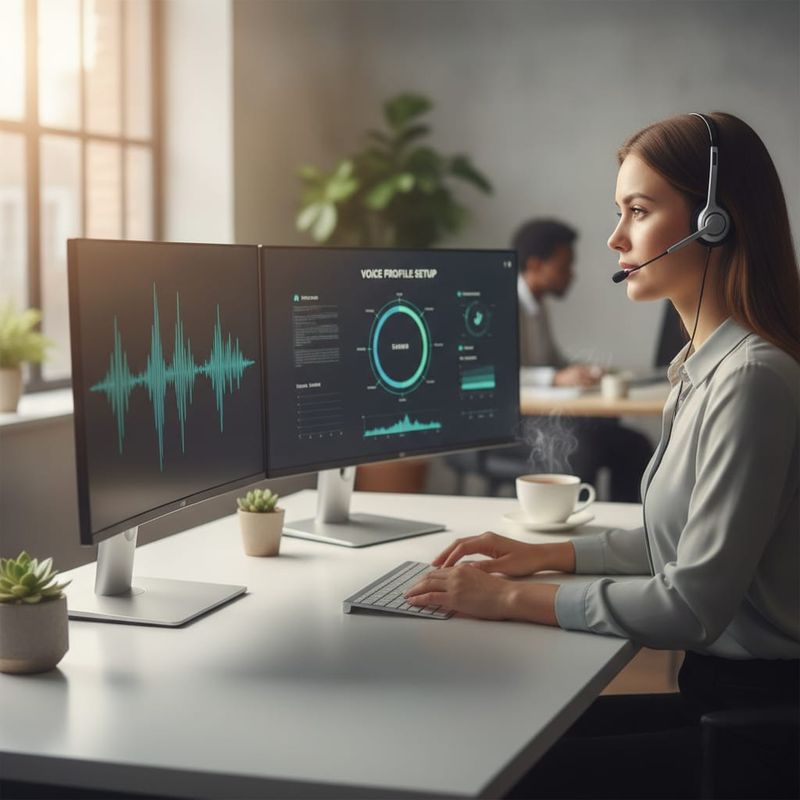
How little audio it takes has dropped fast. ElevenLabs documents that instant voice cloning needs about one to two minutes of clean audio. That accessibility is exactly why the consent and disclosure rules below exist.
How do you clone a voice ethically?
You clone a voice ethically by getting written consent from the person whose voice it is, before any sample is recorded or uploaded. Clone only a voice you own or have explicit permission to use, your own, an employee's with a signed release, or a paid voice actor's under contract. Cloning a public figure, a competitor, or a customer without permission is the bright line you don't cross. Consent first, always.
Three rules keep a cloning program clean:
- Written consent: the voice owner signs a release that names where and how the clone will be used, and lets them revoke it later.
- Scope limits: use the clone only for the campaigns the owner agreed to. A clone built for a welcome message shouldn't end up on a debt-collection script.
- No impersonation: never imply the prospect is talking to a real human in real time when they're talking to an AI agent. That's the move that turns cloning into deception.

Regulators have already drawn this line. In February 2024 the FTC finalized a rule banning AI impersonation of governments and businesses and proposed extending it to individuals, citing a sharp rise in voice-cloning scams. Treat that as the floor, not the ceiling, for your own policy.
Do you have to disclose a cloned voice?
Yes, in a growing number of places you do, and even where the law is silent, you should. A cloned voice is still an AI agent, and a rising stack of US state laws plus the EU AI Act require telling people when they're interacting with AI. The clean practice is to disclose the call is automated near the start, regardless of which voice it uses. Disclosure costs you a sentence and buys you trust.
The EU AI Act spells it out. Article 50 requires that people be informed they're interacting with an AI system unless it's obvious from context. California's bot-disclosure law and Utah's AI disclosure rules push the same direction for US outbound. A cloned voice that sounds perfectly human makes that disclosure more important, not less, because the realism is exactly what removes the prospect's natural cue.
Wording matters less than presence. A line like "Hi, this is an AI assistant calling on behalf of [company]" satisfies most rules and rarely hurts pickup. For the state-by-state breakdown of when you must say it's AI, read our guide to AI disclosure laws in 2026.
Not sure a cloned-voice campaign fits your compliance posture? Talk it through with the Topcalls team before you record a single sample.
How do you set up a custom brand voice?
You set up a custom brand voice by recording clean samples of your chosen speaker, getting their signed consent, building the clone, then attaching it to a campaign script. On Topcalls, voice cloning is a Pro and Enterprise feature. Calls still run at $0.35 per minute all-inclusive with sub-500ms response latency, so the cloned voice replies fast enough to feel like a real conversation.
The practical setup runs in four steps:
- Record samples. Capture a few minutes of the speaker reading naturally in a quiet room. Clean audio beats long audio every time.
- Get consent on file. The speaker signs a release naming the use and the right to revoke. Keep it; you may need to prove it later.
- Build and test the clone. Generate the voice, then call yourself. Listen for tone, pacing, and how it handles names and numbers in your script.
- Attach it to a campaign with disclosure. Wire the voice into a script that opens by stating the call is AI, then go live across 29+ supported languages if you need them.

Where a branded voice earns its keep is repeat-contact work. A familiar founder's voice on a reminder or confirmation call feels less like a robocall, which is why teams pair cloning with AI appointment setting and follow-up sequences rather than cold blasts to strangers.
Where does voice cloning cross a line?
Voice cloning crosses the line the moment it's used to deceive: cloning someone without consent, hiding that the caller is AI, or impersonating a real person to extract money or data. The same FTC that approved cloning for legitimate uses moved to ban it for impersonation scams in 2024. The technology is neutral. The intent and the disclosure decide which side of the line you land on.
The threat is real and measured. The FBI warned in December 2024 that criminals use generative AI, including cloned voices, to scale fraud. A legitimate sales program defends against that association by doing the opposite of a scammer: disclosing it's AI, naming the company, and giving an easy way to opt out.
Where cloning doesn't fit: high-trust, high-ticket conversations where a prospect expects a real relationship, sensitive verticals like healthcare or collections where a familiar voice could mislead, and any market where you can't verify consent for the voice you want to use. In those cases, a clearly-AI generic voice is the safer and often better choice.
Cloned voice vs generic AI voice
A cloned voice carries brand familiarity but raises the consent and disclosure stakes; a generic AI voice ships faster with fewer obligations. For most outbound programs, a high-quality generic voice with clear AI disclosure converts nearly as well, which is why cloning is a deliberate upgrade, not a default. Here's how the two compare on the points that matter.
| Factor | Cloned brand voice | Generic AI voice |
|---|---|---|
| Consent needed | Written release from voice owner | None |
| Disclosure | Still required (it's AI) | Still required (it's AI) |
| Setup time | Record + build + test | Pick and go |
| Best use | Repeat contact, brand recall | Cold outbound, fast launch |
| Plan on Topcalls | Pro and Enterprise | All plans |
Cost doesn't change the math here. A cloned voice and a generic voice both bill at the same $0.35-per-minute all-inclusive rate on Topcalls, so the decision is about brand fit and consent, not price. For the full pricing picture, see our AI voice agent cost breakdown.
Is voice cloning worth it for your team?
Voice cloning is worth it when a recognizable voice lifts response on repeat-contact calls and you can clear consent cleanly. For pure cold outbound, the connect-rate gains come mostly from speed and a natural-sounding agent, where Topcalls already drives a 60%+ average connect-rate lift with a generic voice. Run the numbers for your own volume in the ROI calculator before you commit to a cloning setup.
If a custom brand voice fits your program, start by getting consent and a clean recording from your chosen speaker, then build the campaign on AI voice agents with disclosure baked into the opening line. Want a hand scoping it? Book a strategy call and we'll map it to your compliance rules.
Frequently Asked Questions
Get AI calling tips in your inbox
No spam. One email per week with actionable sales automation tips.