AI disclosure laws now apply to outbound phone calls across the US, and the rules changed fast. The FCC ruled in February 2024 that AI-generated voices require prior express written consent under TCPA. California's AB 2905 went live on January 1, 2025, and demands a verbal disclosure at the very opening of every automated call. Skip that line and California can fine you $500 per call. A 1,000-call campaign without disclosure adds up to $500,000 in exposure before a single TCPA class action lands on your desk.
Key Takeaways
- The FCC ruled on February 8, 2024 that AI-generated voices fall under TCPA, prior express written consent is required before using them on outbound calls
- California AB 2905 (effective January 1, 2025) mandates a verbal AI disclosure at the call's opening, $500 fine per violation, enforced by the California Public Utilities Commission
- Colorado's SB 26-189, effective January 2027, sets penalties up to $20,000 per AI disclosure violation, the highest state-level ceiling in the US
- At least five states, California, Utah, Colorado, Texas, and Hawaii, have enacted or proposed AI disclosure requirements for phone interactions since 2024
- The FTC launched Operation AI Comply on September 25, 2024 with five enforcement actions; FTC Chair Khan stated publicly: "Using AI tools to trick, mislead, or defraud people is illegal"
Do you have to disclose AI on a phone call?
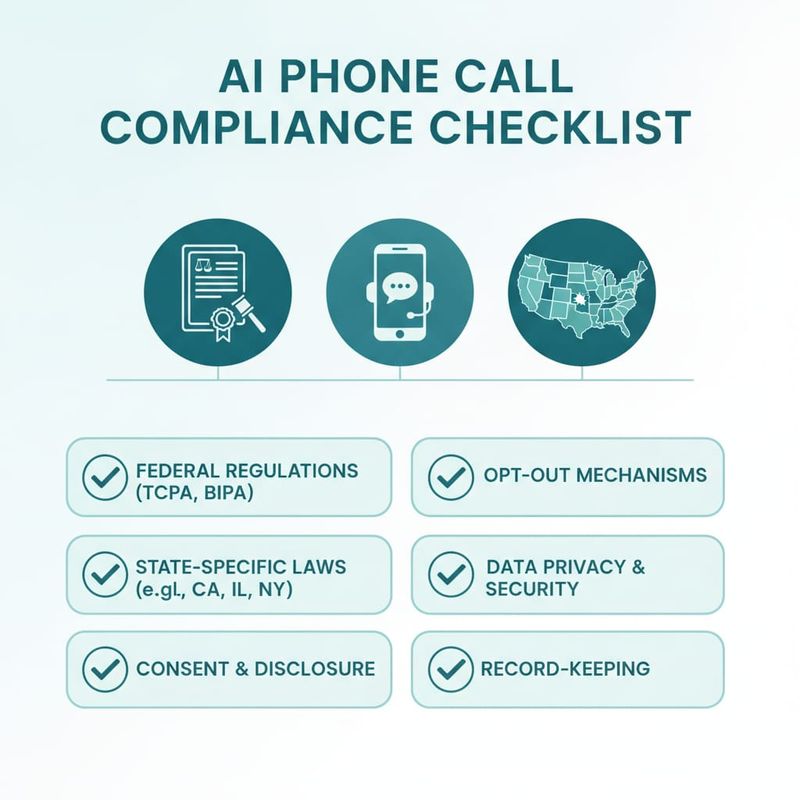
Yes, in most US outbound calling scenarios. Federal TCPA rules, as clarified by the FCC in February 2024, require prior express written consent before you use an AI-generated voice on a robocall. Several states go further and require a verbal disclosure at the start of each call, before any substantive conversation begins. The short version: if you're running AI voice campaigns in the US, disclosing the AI isn't optional.
The FTC adds another layer through the Telemarketing Sales Rule (16 CFR Part 310). It requires prompt disclosure of the seller's identity, call purpose, and the nature of what's being sold, at the call's opening. The FTC made its stance explicit in September 2024 when it launched Operation AI Comply with five enforcement actions. Chair Lina Khan said: "Using AI tools to trick, mislead, or defraud people is illegal. There is no AI exemption from the laws on the books."
The timing matters too. You can't disclose mid-call after the prospect has already answered your opener. California's AB 2905 is explicit: the disclosure goes at the beginning, not after you've confirmed they're interested.
For a full breakdown of what AI calling is legally allowed to do in the US, including TCPA consent requirements, calling hour rules, and Do Not Call scrubbing, see our guide on AI cold calling legality.
Which states require AI disclosure?
As of 2026, at least five states have passed or enacted AI disclosure requirements covering phone calls and chatbot interactions. California's law is the most immediate, it's been in force since January 2025. Colorado's higher-penalty law takes effect in 2027. More states are moving quickly: Massachusetts and Hawaii have passed or proposed bills, and Illinois has active legislation in committee.
| State | Law | Requirement | Effective Date | Max Penalty |
|---|---|---|---|---|
| California | AB 2905 | Verbal AI disclosure at call opening | Jan 1, 2025 | $500/call |
| Utah | AI Policy Act | Disclose AI in high-risk interactions; disclose upon consumer request | 2024-2025 | TBD |
| Colorado | SB 26-189 | Disclose AI to consumers; exemption if obviously a bot | Jan 1, 2027 | Up to $20,000 |
| Texas | TRAIGA (HB 149) | Bans AI behavioral manipulation; no prescribed disclosure wording | Jan 1, 2026 | AG enforcement |
| Hawaii | HB 1782 | Disclose AI involvement in voice interactions | 2025-2026 | TBD |
Two things stand out. First, Colorado's $20,000 maximum penalty is the highest state-level fine in the US, 40 times California's $500 per-call cap. Second, most state laws apply to any consumer-facing AI call, regardless of whether you're reaching a residential or mobile line. B2B teams calling consumer-facing roles in these states need to disclose too.
Topcalls' secure infrastructure bakes compliance checkpoints into the campaign layer. AI disclosure is part of the opening script template, not a setting you toggle on manually.
What did the FCC rule on AI voice calls?
On February 8, 2024, the FCC declared that AI-generated voices, voice cloning, deepfakes, and any synthetic voice that resembles a real person, qualify as "artificial" under the Telephone Consumer Protection Act. That ruling closed the loophole some robocallers were using to argue their AI-voiced calls weren't covered by TCPA consent requirements.
The ruling came in response to political robocalls that used AI-cloned voices of public figures. The FCC acted fast, issuing a declaratory ruling the same week the issue became national news. The practical effect: any outbound campaign using a text-to-speech or AI voice model now needs prior express written consent from every recipient before dialing, the same standard that applied to robocalls with prerecorded human voices.
In August 2024, the FCC proposed an expanded definition. An "AI-generated call" would include any call where the voice is produced using computational technology, machine learning, predictive algorithms, or large language models. The proposed rule would require callers to identify AI involvement at the start of each call, codifying what California already mandates at the state level. The full FCC declaratory ruling on AI-generated voices is publicly available on the FCC website.
What the ruling doesn't settle is the B2B question. TCPA primarily covers calls to residential and mobile lines, not direct-dial business lines. But state laws like California AB 2905 don't make that distinction. If you're calling mobile numbers in California (which most B2B outbound does), the FCC ruling and the state law both apply.
How do you word an AI disclosure on a call?
Keep it short and front-load it. California AB 2905 requires the disclosure before any substantive exchange, your AI agent's opening line must include it. One sentence is enough. The law doesn't prescribe exact wording, but it needs to be clear enough that a reasonable person understands they're speaking with an AI, not a human.
Three templates that meet California's beginning-of-call requirement and the FTC's identity-plus-purpose standard:
- Basic: "Hi, I'm an AI assistant from [Company Name]. I'm calling about [specific reason]. You can ask to speak with a human at any time."
- Sales: "Hello, this is an AI agent from [Company]. I'm reaching out about [offer/product]. If you'd rather talk with someone on our team, just say so."
- Healthcare: "Hi, I'm an AI assistant from [Clinic Name] calling to remind you about your appointment. Press 1 to confirm, or say 'agent' to reach a human."
Three things to get right in every disclosure: name the AI nature upfront, identify the company, and offer a human transfer option. Utah's AI Policy Act requires that you be able to disclose upon the caller's request that they're speaking with "generative AI, not a human." Offering that option proactively covers the Utah requirement without needing separate state-by-state logic in your script.
When you build campaigns with Topcalls AI voice agents, the campaign editor includes a mandatory disclosure field in the opening script. You can customize the wording for your brand and use case, but the disclosure itself can't be removed, it's a platform-level compliance gate.
What's the penalty for not disclosing AI?
TCPA violations run $500 to $1,500 per call for standard violations and up to $10,000 per call for intentional violations under the TRACED Act. California's AB 2905 stacks $500 per undisclosed AI call on top of any TCPA exposure. A campaign of 10,000 calls without disclosure could face $5 million in California fines alone, before class action lawyers get involved.
| Law / Authority | Violation Type | Penalty Per Call / Violation |
|---|---|---|
| TCPA | Standard TCPA violation | $500 to $1,500 |
| TRACED Act | Intentional robocall violation | Up to $10,000 |
| California AB 2905 | Undisclosed AI call | $500 (CPUC enforcement) |
| Colorado SB 26-189 (2027) | AI disclosure violation | Up to $20,000 |
| TCPA class actions (2025-2026) | Class settlement range | $5M to $20M |
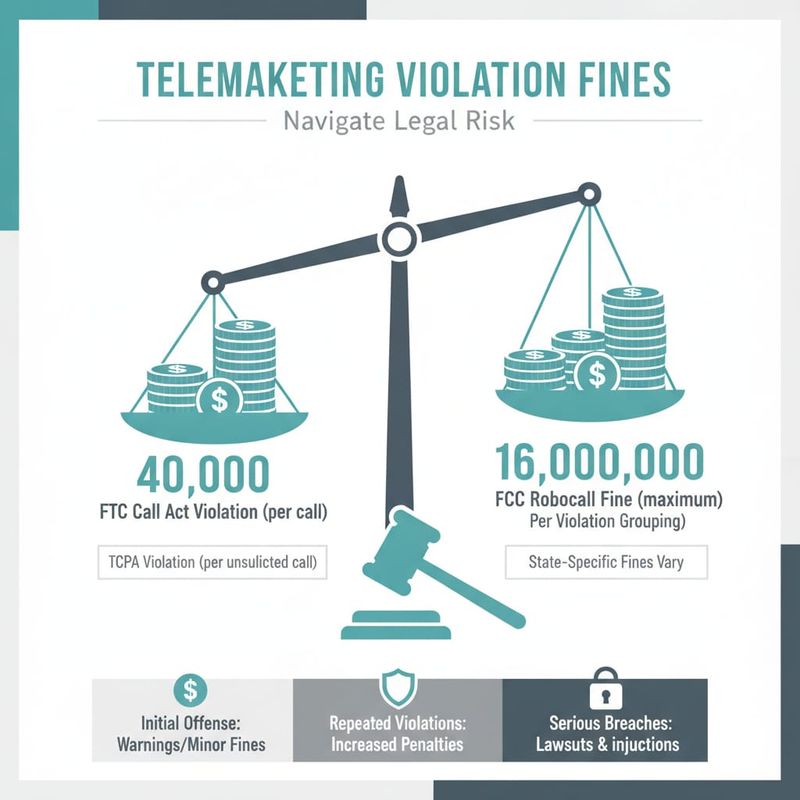
Class action exposure is where the real numbers come from. TCPA class actions cover every call in the campaign, not just the ones someone complained about. One vendor running 50,000 undisclosed AI calls could face a $75 million class action even if individual call violations are only $1,500 each. The largest TCPA settlements have exceeded $925 million.
The FTC adds a separate enforcement channel through Section 5 of the FTC Act. Deceptive AI calls, including calls where the AI nature is hidden, qualify as unfair or deceptive practices. FTC enforcement actions typically result in cease-and-desist orders, disgorgement of revenue, and civil penalties that compound quickly.
Our TCPA compliance guide for AI cold calling covers the full consent structure, opt-out requirements, and calling hours that apply on top of the disclosure rules.
AI disclosure law is moving fast and the compliance gap is already costing companies seven-figure settlements. Topcalls builds disclosure into every campaign by default, the opening script template meets FCC, California AB 2905, and Utah requirements before your first call goes out. Talk to our team about compliance-ready AI calling.
Frequently Asked Questions
Get AI calling tips in your inbox
No spam. One email per week with actionable sales automation tips.