
A CFD broker's dormant book is the cheapest revenue it owns and the hardest to reach by hand. AI calling for CFD brokers puts a live voice on every inactive account that email and push already gave up on, at $0.35 per minute all-inclusive, in up to 78 languages, with replies in real time. Topcalls runs 63,000+ AI calls a day on exactly this kind of list. Below: how the calls work, what they cost, how they stay inside ESMA, FCA, ASIC and TCPA rules, how they work from MT4 and MT5 exports and plug into your CRM, and where they don't belong.
Key Takeaways
- Topcalls runs AI calling for CFD brokers at $0.35 per minute all-inclusive, with no per-seat, setup, telephony or transcription add-ons.
- Sub-500ms response latency means a dormant trader can interrupt with a question about spreads or margin and get an answer, not a pause.
- ESMA found that 74-89% of retail CFD accounts lose money, so a reactivation call needs a compliance gate and a soft objective, never a hard sell.
- The FCC ruled on February 8, 2024 that AI-generated voices are "artificial" under the TCPA, so any US-facing CFD campaign needs prior express consent on file.
- A CFD broker can build a first campaign in about 15 minutes and have live calls running within roughly two weeks of a strategy call.
- Topcalls reports a 60%+ connect-rate lift and 3-10x the call volume of a human team, at 63,000+ AI calls a day platform-wide.
1. Why do dormant CFD accounts go quiet?
Dormant CFD accounts go quiet because the trader hit a loss, a margin close-out or a KYC wall, and nobody followed up in a channel they'd actually answer. Email gets ignored within weeks, push notifications get muted, and a three-person retention desk can't work 20,000 names. The account still exists. The relationship doesn't. A phone call is the only channel left that forces a real answer.
The loss story is real and regulators have measured it. When ESMA restricted CFDs for retail clients in 2018, its analysis found that 74-89% of retail accounts typically lose money, with average losses per client between EUR 1,600 and EUR 29,000. That's the trader you're calling. Some of them are angry. Most of them just stopped logging in.
It cuts the other way too. After ASIC's product intervention order took effect on 29 March 2021, the regulator recorded an 87% decrease in margin close-outs affecting retail client accounts per quarter on average, and 51% fewer loss-making accounts. A trader who went dormant in 2020 after a close-out is a different prospect from one who funded in 2024, placed two gold trades, and forgot. Segment them before you dial, or the AI agent will open every call the same way and get the same hang-up.
If you want the segmentation detail first, read how to reactivate inactive CFD traders and the earlier piece on AI voice agents reactivating dormant trading accounts. This article stays on the calling itself.
2. How does AI calling for CFD brokers work?
AI calling for CFD brokers works by exporting a segment of inactive accounts from MT4, MT5 or the CRM, loading it into a campaign with a written objective and suppression rules, and letting an AI voice agent dial, talk, answer questions and log an outcome for every number. Topcalls covers the voice model, telephony, recording, transcription and analytics inside the $0.35 per minute rate, so there's no separate dialer or telephony bill.
Four pieces have to be in place before the first call goes out.
- The list and its segments: dormancy age, last deposit, KYC status, base currency, language and region. Anyone on a do-not-call list, anyone who opted out, and any account under review gets suppressed before the campaign sees it.
- The instructions: what the agent may say and, more important for a CFD desk, what it may not. No leverage promises, no bonuses, no "the market's moving today" urgency. The compliance desk signs the instructions the same way it signs a financial promotion.

- The call: the agent introduces itself, states the reason, asks one open question and handles interruptions at sub-500ms. It speaks the trader's language, one of 32.
- The outcome: every call ends with a disposition (interested, callback booked, KYC link sent, not interested, wrong number), a recording and a transcript, pushed back to the CRM through Integrations.
That's the whole loop. The broker's customer reactivation team stops dialing and starts reviewing outcomes, taking the warm handoffs, and tuning the instructions between runs. For the forex-specific version of the same setup, see the companion post on AI voice agents for forex brokers.
3. What does an AI call sound like to a CFD trader?
To the trader, a good AI reactivation call sounds like a short, direct call from the broker: it names the firm, says it's an AI assistant, explains why it's calling, asks one question about what stopped them, and offers a single concrete next step such as a callback from a named account manager or a KYC link by SMS. It never pitches an offer, and it ends inside two minutes if the trader isn't interested.
A typical opening, in the trader's own language: "Hi Daniel, this is the AI assistant from [broker]. You opened an account with us last year and haven't traded since March. I'm not calling to sell you anything. I wanted to ask whether something on our side got in the way." Then silence. The agent waits.
The answers fall into a handful of buckets, and each one has a branch. "I lost money" gets acknowledged, not argued with, followed by a question about whether the trader wants the risk tools walked through by a person. "I couldn't get verified" gets a KYC link sent while the trader is still on the line. "Is this a robot?" gets a straight yes and the option to speak to a human. Scripts for each branch are in AI caller scripts for dormant traders.
What the trader notices most is the pause, or the lack of one. The agent responds in real time, so a trader who cuts in with "what's the spread on EURUSD now" gets a reply, not a scripted continuation. That responsiveness is a big part of why Topcalls reports a 60%+ connect-rate lift for its customers.
4. What does AI calling cost a CFD brokerage?
Topcalls charges $0.35 per minute all-inclusive for AI calling, covering the voice model, telephony, recording, transcription and analytics. There are no per-seat fees, no setup fees and no pre-purchased minute bundles. A three-minute reactivation conversation costs about $1.05, and a no-answer costs only the seconds it took to ring out, because billing is by the second.
The comparison brokers actually make is against the retention desk they already pay for, or the call center they've been quoted.
| Approach | Pricing basis | Volume | Languages | Records |
|---|---|---|---|---|
| Topcalls AI calling | $0.35/min all-in, billed by the second | 3-10x a human team, 63,000+ calls/day platform-wide | 32 | Recording plus transcript on every call |
| In-house retention desk | Salaries, seats, telephony, QA time | Limited by headcount and shift hours | Whoever you hired | Depends on your own recording setup |
| Outsourced call center | Per hour or per seat, plus onboarding | Fixed by contract, slow to scale up or down | Per contract | Varies by vendor and jurisdiction |
The per-minute rate is the small number. The big one is what a reactivated trader is worth against what it cost to reach them. Put your own dormant book, average deposit and expected reactivation rate into the dormant trader revenue calculator and it returns the recovered revenue and the calling spend side by side.
5. How do CFD brokers keep AI calls compliant?
CFD brokers keep AI calls compliant by treating the call as a financial promotion and a marketing contact at the same time: get consent that covers automated calls, screen against do-not-call lists, disclose that the voice is AI, keep the standardised risk warning available in the script, and record everything. Topcalls is built around TCPA, TSR, DNC and GDPR requirements, and the broker's compliance desk approves every instruction set before launch.
The rules are specific, and they change what the agent is allowed to say. Since 1 August 2019 the FCA has permanently restricted CFD sales to retail consumers: leverage capped between 30:1 and 2:1, close-out when funds fall to 50% of required margin, negative balance protection, a standardised risk warning that states the percentage of retail accounts losing money, and a ban on "monetary and non-monetary inducements to encourage trading." So the AI agent cannot offer a deposit bonus to come back. It can offer a conversation.
ESMA's product intervention set the same leverage tiers across the EU, from 30:1 on major currency pairs down to 2:1 on cryptocurrencies, and the same 50% margin close-out. In Australia, ASIC's order runs to 23 May 2027. ASIC Commissioner Cathie Armour described the result as "a substantial reduction in harm to retail clients". Your reactivation script is a downstream artefact of these rules: no leverage talk, no urgency, and a risk warning ready for anyone who asks about trading again.
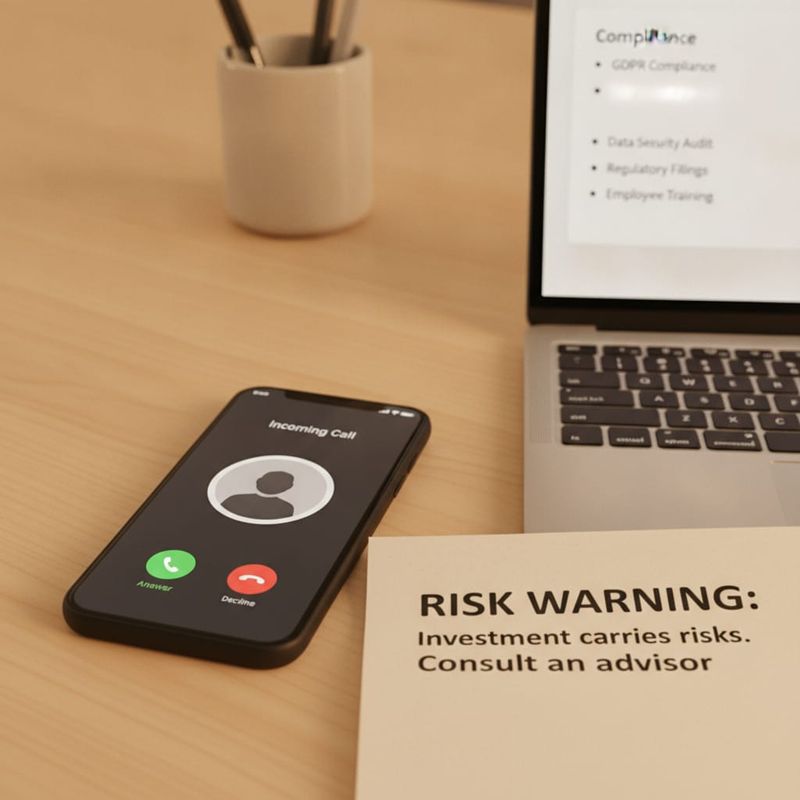
For US-facing lists there's a separate gate. On February 8, 2024 the FCC adopted a Declaratory Ruling that calls made with AI-generated voices are "artificial" under the TCPA, which means prior express consent from the called party. FCC Chairwoman Jessica Rosenworcel put it plainly: "We're putting the fraudsters behind these robocalls on notice." A CFD broker with a clean consent record already has what that ruling asks for. A broker calling a purchased list doesn't.
The full setup, jurisdiction by jurisdiction, is in compliant AI calling for forex brokers, and the UK-specific promotion rules in FCA financial promotions for outbound calls.
6. How do AI calls work with MT4 and MT5 exports and the CRM?
AI calls work from MT4 and MT5 exports and connect to the CRM through Topcalls Integrations, which reaches 764+ tools, plus webhooks for anything custom. The broker syncs a dormant segment in, and every call outcome, transcript and recording flows back to the account record, so the retention desk sees who said what without opening a second dashboard.
In practice the connection runs in both directions. Inbound triggers start calls: 60 days since last trade, a failed deposit, a KYC document rejected, a demo account that never funded. Outbound events close the loop: a disposition written to the CRM contact, a callback task assigned to a named agent, a suppression flag set when a trader says stop.
The real-time analytics view shows connect rate, average call length, dispositions and spend as the campaign runs, so a compliance officer can pause a segment mid-morning if a branch is misfiring. Topcalls holds a 99.9% uptime figure across the platform, which matters when a campaign window is a two-hour slot after the London open.
7. When doesn't AI calling fit a CFD broker?
AI calling doesn't fit a CFD broker when the consent trail is missing, when the account is under AML or dispute review, when the client is a professional or institutional trader with a named relationship manager, or when the broker wants the agent to pitch inducements that regulators have banned. In those cases the right move is a human call, a letter, or no contact at all.
- No consent record: if you can't show how each number agreed to marketing calls, don't dial it. Fix the data first with customer reactivation planning, then run the campaign.
- Accounts in review: anything flagged for AML, chargeback or a complaint stays suppressed. An AI agent calling a trader mid-dispute is a regulatory letter waiting to happen.
- Professional clients: a prop desk or a fund with an assigned account manager expects that person, not an assistant. Keep AI calling on the retail book.
- Bonus-led strategies: if the plan depends on "deposit $500, get $100," the FCA and ESMA rules already closed that door for retail clients, and no calling tool reopens it.
- Very small books: a few hundred dormant names is a week of human calls. AI calling earns its keep from a few thousand upward.
8. How fast can a CFD broker go live?
A CFD broker can go live with AI calling in roughly two weeks. The first campaign setup takes about 15 minutes, a written proposal arrives within 48 hours of a strategy call, and the remaining time goes into compliance sign-off on the instructions, list cleaning and suppression, and mapping the CRM fields the outcomes write back to.
The sequence most brokers follow: pick one segment (funded, no trade in 90 days, KYC complete, consent on file), write the instructions with the compliance desk in the room, run a small batch, read the transcripts, adjust, then open the full list. The transcripts are where the campaign gets good.
If you'd rather see it than read about it, book a 30-minute call and bring a sample of your dormant list. You'll leave with the segments worth calling first and a proposal within 48 hours.
Frequently Asked Questions
Get AI calling tips in your inbox
No spam. One email per week with actionable sales automation tips.