A dormant-trader call that mentions a deposit is a financial promotion, and the FCA treats it like one. Search "FCA financial promotions outbound calls" and you get the Handbook, not an answer. This article gives you the answer: which rules bite on a broker's outbound call, when a call to a quiet account is allowed at all, what the agent has to say about risk on a CFD call, and how an AI voice agent stays inside an approved script when the trader wanders off it. The FCA had 19,766 promotions amended or withdrawn in 2024, almost double the year before. Your reactivation campaign shouldn't be one of them.
Key Takeaways
- Under COBS 4.8.2R a broker may cold call only a person with an established existing client relationship who envisages receiving such calls, so purchased lists are out.
- COBS 22.5.20R bans monetary and non-monetary incentives when marketing CFDs to retail clients, so a deposit-bonus script fails before the first dial.
- The prescribed CFD risk warning in COBS 22.5.6R carries your firm's own loss percentage, recalculated every 3 months, with records kept for 5 years.
- PECR regulation 19 requires prior consent before an automated calling system plays recorded marketing, and regulation 21 requires TPS screening and a visible caller number.
- The FCA had 19,766 promotions amended or withdrawn from authorised firms in 2024, up 97.5% from 10,008 in 2023.
- Topcalls records and transcribes every call at $0.35 per minute all-inclusive, so the campaign file a compliance officer asks for exists by default.
1. Is an outbound broker call a financial promotion?
Yes, in almost every case a broker cares about. A financial promotion is a communication that invites or encourages someone to engage in investment activity, and a call that asks a trader to deposit, trade, reopen an account or claim an offer does exactly that. Only a KYC reminder that says nothing about trading may sit outside the rules, and only if the agent stays inside that boundary on every call.
The practical test is one sentence long. Write down what the campaign asks the trader to do. If the sentence contains deposit, trade, offer or reopen, treat the campaign as a promotion until your compliance officer says otherwise. Most dormant trader marketing consent questions start here, because the consent you hold for a service message won't cover a promotion.
Two details trip brokers up. First, every product the agent may name is its own promotion: an agent approved for spot FX that answers a question about crypto CFDs has just promoted crypto CFDs without approval. Second, client category matters. The restrictions below bite hardest for retail clients, so the list has to carry the category your CRM records, and the agent has to run the retail script on retail records. Our guide to UK PECR compliance for AI calling covers the marketing-consent side of the same list.
2. What are the FCA financial promotions outbound calls rules?
Three parts of the FCA Handbook do the work. COBS 4.2.1R requires every financial promotion to be "fair, clear and not misleading". Then COBS 4.8.2R restricts unsolicited real-time promotions, which a phone call is, and 4.8.3R governs the call itself: identify the firm and the purpose at the outset, call at an appropriate time, end the call when asked. For CFDs, COBS 22.5 adds a risk warning and an incentive ban.
Fair, clear and not misleading sounds soft until you read it against a script. The guidance at COBS 4.2.4G says a promotion for a product that puts the client's capital at risk should make that clear. On a call that means no prediction about where EUR/USD is heading, no "you've missed three good months", no countdown on the offer, and no benefit mentioned without the matching risk in the same breath.
Those conduct rules map neatly onto an AI agent's opening line: the agent names the broker and says why it's calling before anything else. And when the trader says "not now", the call ends, with a note in the CRM rather than a second attempt to keep them talking. Time of day matters too: a compliant script dialed at 22:40 is still a problem.
3. Can a broker cold call a dormant trader?

Only when the dormant trader has an established existing client relationship with the firm and that relationship is one where the trader envisages receiving cold calls, which is the COBS 4.8.2R test. A funded account that went quiet last quarter usually passes. An expo sign-up from 2023 or a purchased list doesn't. And the FCA test is only one of two, because PECR applies to the same call.
PECR regulation 19 prohibits transmitting recorded marketing through an automated calling system, defined as a system capable of automatically initiating a sequence of calls to more than one destination, unless the subscriber has previously consented. Whether a live, conversational AI agent counts as recorded matter is a question for your compliance officer, and the safe planning assumption is that it does. Regulation 21 then bans unsolicited marketing calls to any number on the TPS register or to anyone who has told you not to call, and requires that the caller's number isn't withheld.
There's a third moving part. HM Treasury consulted in 2023 on extending the pensions cold-calling ban to all consumer financial services and products. Check the current status of that ban with compliance before planning any call to someone who isn't already a client, because the existing-relationship exemption is where the argument will sit.
| Rule | What it requires | What it means for the call | What to keep on file |
|---|---|---|---|
| COBS 4.8.2R | Cold calls only to existing clients who envisage receiving them | No purchased, affiliate or stale expo lists | Relationship evidence per record, with date |
| COBS 4.8.3R | Identify firm and purpose at the outset; appropriate time; stop on request | Opening line names the broker; agent ends the call when asked | Approved opening line, dial windows, transcripts |
| PECR reg 19 | Prior consent before recorded marketing via an automated calling system | Consent basis decided before the AI agent dials | Consent record and compliance conclusion |
| PECR reg 21 | TPS screening, honour opt-outs, don't withhold caller number | Screen close to the dial date, present a real number | TPS screen date, suppression list version |
| COBS 22.5.6R | Prescribed CFD risk warning with the firm's own loss percentage | Warning spoken before the offer, in the trader's language | Loss-percentage calculation, 5 years |
Where campaigns actually fail is the gap between these rules and the list. The list gets screened at planning time and dialed six weeks later. Or the relationship evidence is "they had an account once", which isn't the same as envisaging a call. And sometimes the FCA test passes and nobody asked the PECR question. Each is a per-record check, not a per-campaign one.
The FCA Financial Promotions Campaign Checklist walks a campaign through seven sections: scope, approval and version control, unsolicited calls, fair clear and not misleading, risk warnings, AI script controls, and records, with sign-off blanks for each.
4. What must the agent say about risk on a CFD call?
The prescribed warning from COBS 22.5.6R, with your firm's own figure in it: "CFDs are complex instruments and come with a high risk of losing money rapidly due to leverage. [X]% of retail investor accounts lose money when trading CFDs with this provider. You should consider whether you understand how CFDs work and whether you can afford to take the high risk of losing your money." Say it before the offer, not after.
The percentage isn't a marketing choice. COBS 22.5 requires the figure to be recalculated every 3 months over the preceding 12-month period, to include all costs, fees and commissions, to exclude accounts with no open positions in the period, and the records to be kept for 5 years. The number the agent speaks on Tuesday has to match the website on Tuesday, so pull it from the same source, not from last quarter's script.
Then the incentive ban. COBS 22.5.20R says a firm must not offer a retail client a monetary or a non-monetary incentive when marketing, distributing or selling a restricted speculative investment. So the reactivation bonus that works on a list in another jurisdiction can't lead a UK retail CFD script. Rebates, credits and prizes fall on the same side of the line. Get compliance to rule on the offer before anyone writes a script around it.
One more trap for a talkative agent: margin. COBS 22.5.11R sets minimum margin for retail clients at 3.33% on major currency pairs and 5% on major indices and gold. An agent that answers "how much can I trade with £500" from a professional-client table has misstated the product. Our AI call disclosure requirements for brokers guide covers what else has to be said in the first 20 seconds, and the wider AI disclosure laws piece covers the non-UK side.
5. How does an AI voice agent stay inside the approved script?
By running one frozen instruction set that compliance approved, and by recording every call so the transcript proves what was said. A human caller is coached. An AI agent is instructed and tested. Topcalls AI voice agents keep the opening line, the risk warning, the offer wording, the objection responses and the handoff triggers in one campaign, so the version the agent runs is the version that was signed off.
The approval package on an AI campaign is bigger than a human script, and reviewers routinely miss the biggest part of it. Reviewers read the opening line. The objection responses, where most of the promotional content actually lives, go unread. So the package is: opening line and AI disclosure, agent instructions with the banned phrases, every scripted response to a question, offer wording, risk warning wording and placement, the voicemail, and the SMS or email the agent triggers. One version label. Any edit goes back through approval.
- Banned topics, written down: predictions, returns, trade suggestions, guarantees, other clients' results, products not on the approved list.
- A refusal response for each: the agent declines, offers written information or a human, and never improvises an answer about where the market is going.
- Handoff triggers: a request for advice, a complaint, a vulnerability signal, or a question about a product the call wasn't approved for.
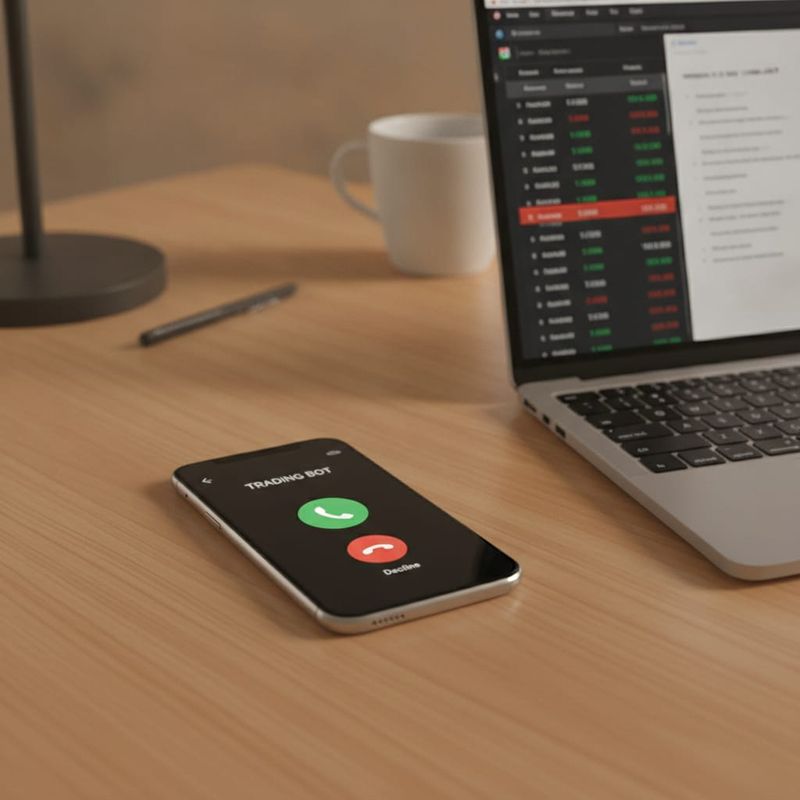
- Break-the-script test calls: ask for a tip, push for a bigger bonus, claim to be a professional client, ask about crypto. Read the transcripts with compliance in the room.
Two product facts matter here. Topcalls answers in real time, so the risk warning sits inside a real conversation at a normal pace. And it speaks up to 78 languages, so a warning to a Polish or Portuguese trader on a UK book carries the same content as the English version. The rest is on the secure infrastructure page: 99.9% uptime, with the broker's own compliance desk approving every instruction set. TCPA, TSR, DNC and GDPR duties stay with the broker. A deeper walk-through of the whole process sits in compliant AI calling for forex brokers.
Cost fits on one line of the campaign file. $0.35 per minute all-inclusive covers the voice model, telephony, recording, transcription and analytics, with no per-seat, setup or bundle fees. A three-minute reactivation conversation that carries the full risk warning costs about $1.05. Put your dormant count and average deposit into the dormant trader revenue calculator and compliance stops looking like the expensive part. The customer reactivation page covers the deposit and KYC follow-ups too.
6. What records does the FCA expect after the campaign?
The approved package with its version label and approver, the list version and the screening dates, every recording and transcript, and the loss-percentage calculations behind the risk warning, which COBS 22.5 requires firms to keep for 5 years. Retention for the rest follows your financial promotions and call recording policies. If a promotion is challenged, the record is what you show.
And the regulator is looking: the FCA's financial promotions data for 2024 reports 19,766 promotions amended or withdrawn by authorised firms following its interventions, an increase of 97.5% on the 10,008 in 2023, plus 2,240 alerts about unauthorised firms. Lucy Castledine, Director of Consumer Investments at the FCA, put it this way: "Over the past year, we have seen a growing number of misleading and illegal financial promotions."
Monitoring is the part of the record that gets skipped. Read a sample of transcripts daily for the first week and weekly after that, looking for off-script promotional content, a missing warning and advice-shaped answers. Log every complaint, opt-out and handoff against the call reference, and name who can pause the campaign and on what evidence. Every Topcalls call produces a recording and a transcript, and the outcomes write back to the CRM through Integrations, which reaches 764+ tools. If MiFID II recording rules also apply to your book, MiFID II call recording for AI voice covers the overlap.
7. When this doesn't fit
If any of the following is true, fix it first or don't dial.
- No relationship on the list: purchased data, affiliate lists, old expo sign-ups. COBS 4.8.2R doesn't bend for a good offer.
- The offer is a bonus: a UK retail CFD campaign built around a deposit credit fails COBS 22.5.20R before the script is written.
- No named approver: if nobody in the firm holds the competence and authority to approve the package, the campaign has no promotion approval.
- PECR consent is missing: if compliance concludes the agent is an automated calling system and you hold no prior consent, the FCA test passing doesn't save the call.
- The objective is urgency: "get them trading this week" produces a script that can't be fair, clear and not misleading.
A KYC reminder, a document-expiry notice or a callback the trader requested is a different animal: often not a promotion at all, and a fine first campaign while the promotion package is still in review. If you want to work out which of your lists sits where, book a 30-minute call and bring the list definitions and the offer.
The rules aren't the obstacle. An unversioned script and an unscreened list are.
Frequently Asked Questions
Get AI calling tips in your inbox
No spam. One email per week with actionable sales automation tips.