A text message can't answer "why should I come back?" That one gap settles most of the AI calls vs SMS for forex brokers question, because a dormant trader who replies to a text still has to be walked to a deposit, and a text can't do the walking. An AI call can hold the whole conversation: the reason the account went quiet, the MT5 question, the deposit.
This comparison puts the two channels side by side on what a brokerage retention desk cares about: what a "response" is worth, cost per conversation at $0.35 per minute, the consent rules in the US and the UK, and how to run both inside one 14-day sequence. It closes with the cases where the text should win.
Key Takeaways
- An SMS reply is a tap. An AI call reply is a conversation, and Topcalls AI voice agents answer in real time, in up to 78 languages, so a reply can become deposit intent on the same call.
- Topcalls reports a 60%+ connect-rate lift on its calling campaigns and prices every minute at $0.35 all-inclusive, with no per-seat, setup, bundle or telephony add-ons.
- In the US, 47 CFR 64.1200 requires prior express written consent for telemarketing to a mobile number by autodialer or artificial voice, and the rule text says the term "call" includes an SMS.
- In the UK, PECR regulation 22 bars marketing texts to individuals without specific consent or the soft opt-in, while live marketing calls under regulation 21 run on TPS screening.
- A 14-day sequence that sends the SMS before and after the AI call, never instead of it, is the shape most broker reactivation campaigns settle into, and Topcalls has a first campaign live in about two weeks.
1. What's the difference between an AI call and an SMS for a broker?
SMS is a one-way nudge: 160 characters, no voice, and no follow-up unless the trader types one. An AI call is a two-way conversation that can ask why the account went quiet, answer a question about MT4 or MT5 spreads and book a callback with an account manager. For a forex broker the difference is where each channel stops. SMS stops at the reply. The AI call keeps going toward the deposit.
| What's compared | SMS | AI voice call (Topcalls) |
|---|---|---|
| What the trader gets | A short text read in seconds | A spoken conversation, replies inside 500 ms |
| What a response looks like | A typed reply or a tapped link | A stated reason, an answered question, a booked callback |
| Objection handling | None unless a human picks up the thread | Handled live, with handoff to a human agent when needed |
| Languages | Whatever you write it in | up to 78 languages on one campaign |
| Price | Per message, set by country and carrier | $0.35 per minute, all-inclusive |
The two channels also fail differently. A text that lands in a filtered folder or gets swiped away costs the broker one message. When a call reaches voicemail, it costs a few seconds of a $0.35 minute. But when the call connects, the broker gets something no text delivers: the trader's own words about why they left, recorded and transcribed for the retention desk. Topcalls AI voice agents include recording, transcription and analytics in the per-minute rate.
2. AI calls vs SMS for forex brokers: which gets more responses?
Measured as raw replies, SMS looks like the easy winner because a reply costs the trader two seconds. Count conversations that move a dormant account toward a deposit instead and AI calls win, which is the number a brokerage should track. Topcalls reports a 60%+ connect-rate lift on its calling campaigns, and a connected call ends with a stated reason, an answered question or a booked callback.
A usable response, for a broker, has to contain at least one of four things. Texts almost never carry them. Two-minute calls usually carry two or three.
- Reason for dormancy: "I lost on gold in March" or "I moved to a broker with tighter EURUSD spreads." That sentence tells the retention desk which offer, if any, is worth sending. A text reply of "ok" tells it nothing.
- Deposit intent: whether the trader would fund again this month, next quarter or never. The AI call asks the question directly and logs the answer as a disposition the CRM can filter on.
- KYC status: an expired proof of address blocks a deposit even from a trader who wants back in. The call surfaces the block and the compliance desk clears it before any retention offer goes out.

- Platform question: "Do you still run MT4?" or "Can I switch to a raw-spread account?" Answered on the call in the trader's language, one of 32 Topcalls supports, instead of bouncing to a support ticket.
SMS replies come with their own noise: "Who is this?", STOP, a number that changed hands since signup. Each still costs a human minute to read and file, and none moves the account. The pattern brokers see in dormant trading account reactivation is that the call earns the reply the text was hoping for, on the first connect.
That's why customer reactivation campaigns put the conversation on the call and leave the text to carry facts.
The Omnichannel Trader Reactivation Sequence Template lays out the 14-day voice, email and SMS sequence for one dormant segment: the day and channel of each touch, the intent of each message, stop and branch rules, and consent notes per channel.
3. What do AI calls and SMS each cost a forex broker?
SMS is priced per message, and the rate depends on the destination country and carrier, so a broker with traders in 20 countries never pays one rate. Topcalls prices AI calls at $0.35 per minute all-inclusive: voice model, telephony, recording, transcription and analytics, with no per-seat, setup or bundle fees. The comparison that matters is cost per usable response, not cost per attempt.
The per-minute rate makes the AI side easy to model. A two-minute connected conversation costs $0.70, a 20-second voicemail drop about $0.12. Ten thousand dormant traders, one attempt each, averaging 1.5 minutes across connects and voicemails, comes to about $5,250. Put your own list size and average deposit into the dormant trader revenue calculator to see what those conversations are worth against the deposits they bring back.
The SMS bill for the same 10,000 traders will be lower per attempt in almost every market. And that's the trap. Cheap attempts with no conversation at the end still cost the retention desk the follow-up: a human reads the reply, looks up the account, writes back, waits. The text saved money on the send and spent it on the desk.
Cost per usable response is the line for the budget. Divide channel spend by the contacts that ended with a reason, a deposit intent, a cleared KYC block or a booked callback, for SMS and for AI calls over the same segment and the same fortnight. Whichever channel wins earns the conversation slot in the sequence; the other earns the notice and follow-through slots. The AI calls vs email comparison runs the same test for the third channel.
4. Which consent rules apply to SMS and AI calls for brokers?
In the US, 47 CFR 64.1200 requires prior express written consent before a telemarketing call to a mobile number that uses an autodialer or an artificial or prerecorded voice, and the rule's own text says the term "call" includes an SMS. The UK's PECR regulation 22 bars marketing texts to individuals without specific consent or the soft opt-in, while live marketing calls under regulation 21 run on TPS screening and an opt-out basis.
United States. The FCC rule at 47 CFR 64.1200 prohibits initiating any telemarketing call "using an automatic telephone dialing system or an artificial or prerecorded voice" to a cellular number "other than a call made with the prior express written consent of the called party." The same section limits telephone solicitations to residential subscribers to between 8 a.m. and 9 p.m. at the called party's local time, and requires the national do-not-call registry to be honored. In its exemptions the rule states that "the term 'call' includes a text message, including a short message service (SMS) call," so a broker should not treat the text as the lighter channel.
United Kingdom. The ICO's PECR guidance on electronic mail marketing is blunt: "You must not send marketing emails or texts to individuals without specific consent. There is a limited exception for your own previous customers, often called the 'soft opt-in'." The same page notes that there is no text equivalent of the TPS, because texts may only be sent with consent or an already-offered opt-out. Its guidance on telephone marketing separates live calls under regulation 21, which must be screened against the TPS, from automated calls under regulation 19, "a call made by an automated dialling system that plays a recorded message," which need specific consent.
Where an AI voice conversation sits between regulation 19 and regulation 21 is a question for the brokerage's compliance desk and counsel, and the guidance above doesn't answer it. A safe planning assumption is specific consent for the call, specific consent or the soft opt-in for the text, and a consent record the desk can produce per trader. The UK PECR compliance guide walks through the live-call side, and the marketing consent for dormant traders post covers what a soft opt-in still covers once an account has been quiet for a year.
Topcalls records and transcribes every answered call, so the recordings and transcripts a regulator may ask for sit on secure infrastructure, while TCPA, TSR, DNC and GDPR compliance stays with the broker. That doesn't replace the compliance desk's sign-off on the segment. It makes the sign-off faster.
5. How should brokers combine SMS and AI calls in one sequence?
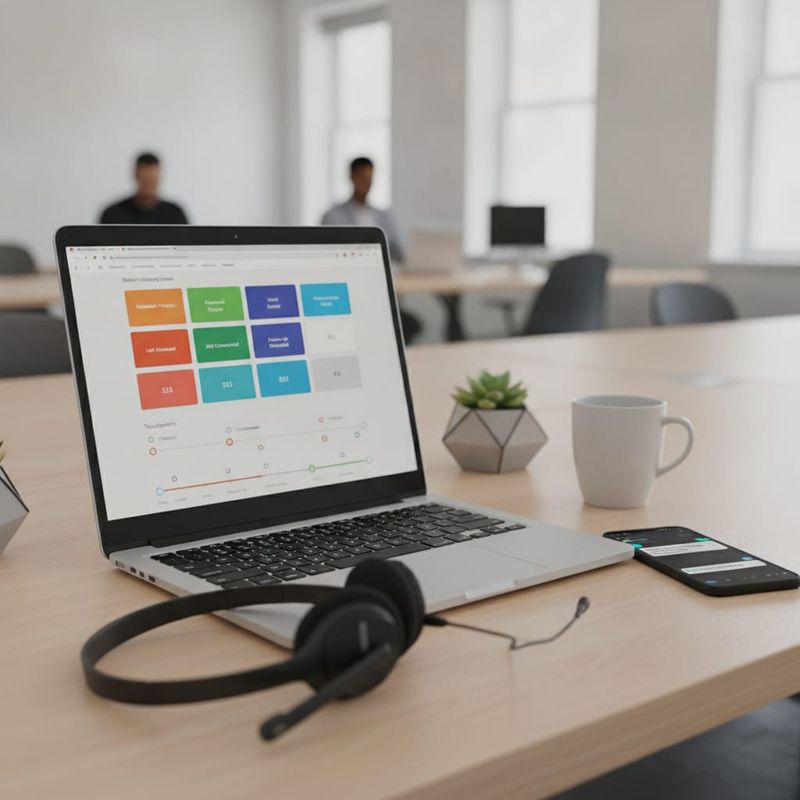
Send the SMS before and after the AI call, never instead of it. A short text the day before names the broker and says a call is coming, so the call reaches someone half expecting it. The AI call does the conversation. A text afterwards carries what the call promised: a deposit link, a KYC upload link or the account manager's callback time. Topcalls has a first campaign live in about two weeks.
- Day 1, SMS notice: broker name, the trader's first name, "we'll call tomorrow about your account" and an opt-out. No offer yet. The text exists so the call isn't a cold surprise.
- Day 2, AI call: the conversation. Reason for dormancy, platform questions, KYC check, deposit intent, callback if the trader wants a human. Busy numbers retry within minutes, no-answers within hours.
- Day 3, SMS follow-through: only for traders who asked for something on the call. The upload link, the callback time, the account manager's name. A fact, not a pitch.
- Day 7, second AI call: for the no-answers only. Different call window from day 2, so a trader who works nights gets a daytime attempt and vice versa.
- Day 14, close-out: one email to whoever never connected, then the segment is parked and the sequence stops. The call cadence template covers the retry windows in detail.
Stop rules keep the sequence out of trouble. A STOP reply ends the SMS track and flags the number. "Don't call me" on the call ends everything and writes the number to the suppression list. A deposit ends the sequence the same hour; a trader who just funded shouldn't get a day-7 call asking why they left. Topcalls pushes each call outcome through Integrations and its 764+ tools, so the SMS tool and the CRM see the disposition before the next touch fires.
The full voice, email and SMS flow, including what the email touches do, is in the omnichannel trader reactivation guide. Brokers who want to see the sequence running on their own segment can book a 30-minute call and get a proposal within 48 hours.
6. When does SMS beat an AI call for a broker?
SMS wins when the message is a fact, not a conversation: a margin call notice, a KYC document expiry date, a deposit confirmation, a login code. It also wins where the trader's consent record covers texts but not calls, and for segments so small that a 14-day sequence costs more than the accounts are worth. An AI call is the wrong tool for any of those.
More cases where the call stays in the drawer.
- High-balance professional clients already handled by a named account manager. The trader expects that person's voice, and a 60%+ connect lift on a segment of forty accounts isn't the point.
- Traders who opted out of calls but not texts, or the reverse. The consent record decides the channel, not the channel's response rate.
- Open complaints or disputes. A retention call into an unresolved chargeback or a margin dispute makes the complaint file longer. Route those to a human first.
- Markets with no shared calling window. If the 8 a.m. to 9 p.m. rule at the trader's location never overlaps with the compliance desk's hours for handoffs, the sequence needs a desk in that timezone before it needs a calling channel.
Pick the channel by what you need back. If a tap is enough, send the text. When you need the reason the account went quiet and a path to the next deposit, make the call and use the text to set it up. Book a 30-minute call at topcalls.ai/book and Topcalls sends a proposal within 48 hours of the strategy call.
The Omnichannel Trader Reactivation Sequence Template holds the day-by-day voice, email and SMS plan above, with the message intent per touch, the stop and branch rules and the consent notes per channel, ready for the retention lead and the compliance officer to sign.
Frequently Asked Questions
Get AI calling tips in your inbox
No spam. One email per week with actionable sales automation tips.