Omnichannel trader reactivation breaks at the handoff, not at the message. A dormant trader answers the AI call on Tuesday, says he moved his money to another broker, and on Thursday your email tool sends him "three reasons to come back" as if the call never happened. This omnichannel trader reactivation flow makes voice, email and SMS read the same CRM record: one job per channel, a 14-day sequence, stop rules, consent per channel, and the calling cost at $0.35 per minute.
It's for the retention or ops lead at a forex or CFD brokerage who already sends email, is testing AI calls, and wants SMS to do more than generate STOP replies.
Key Takeaways
- Give each channel one job: the AI call holds the conversation, email carries the links, and SMS sends the missed-call note within the hour.
- The default sequence runs 14 days with four call attempts, four emails and two SMS touches; any answered call cancels every remaining touch.
- Topcalls runs AI calls at $0.35 per minute all-inclusive, so a three-minute reactivation conversation costs $1.05 with recording and transcription included.
- Under UK PECR regulation 22, marketing email and SMS need prior consent or the soft opt-in; regulation 21 covers the calls and the TPS check.
- Every stop trigger, from "not interested" to a STOP reply, has to reach all four tools the same day. A nightly sync is how a declined trader gets email 2.
1. What is omnichannel trader reactivation?
Omnichannel trader reactivation is one sequence that uses AI voice calls, email and SMS against a single dormant segment, with every touch reading and writing the same trader record in the CRM. The channels don't compete for the same job. The AI call finds out why the trader stopped, email leaves the deposit or KYC link the trader acts on later, and SMS covers the missed call.
Most brokerages already run all three channels (see win-back campaigns for inactive trading users for the case for working the book). What they don't have is the join. The email tool holds one list, the SMS provider another, the dialer a third, and the three meet only in a monthly report. So a trader who declined on a call still gets the countdown offer, and one who clicked the funding link on day 4 still gets the courtesy close on day 12.
The dormant book needs a conversation more than most segments do. When ESMA introduced its CFD product intervention measures, it reported that 74-89% of retail accounts typically lose money. A large share of any dormant list left after a loss, and a link in an inbox won't learn whether that trader wants a smaller position size or the account closed. A customer reactivation call can, and the email after it carries the right link because the call asked.
2. Which job does each channel do in the flow?
The AI call carries the conversation: why the account went quiet, what changed, and whether the trader wants a callback, a KYC refresh or the account closed. Email carries setup and reference, meaning the heads-up before the first call and the links a trader acts on later. SMS carries the missed-call note and a one-line reply prompt. A human account manager takes over once the trader has said yes to something.
| Channel | Job in the sequence | Use it for | Don't use it for | Consent to check |
|---|---|---|---|---|
| AI call | The conversation | Asking why they stopped, objections, live handoff, KYC and deposit walkthroughs | Reading out terms, delivering links, chasing a trader who said no | Marketing call consent per country, DNC and suppression, calling hours |
| Setup and reference | Heads-up before day 1, what changed since they left, deposit or KYC link, close-out note | Urgency, countdown offers, anything they must reply to | Email opt-in or existing-customer basis, working unsubscribe | |
| SMS | The short nudge | Missed-call note within the hour, one reply-to-book question, the link asked for on the call | Offers, product news, anything over two sentences, first contact | Separate SMS opt-in, STOP handling, sender ID rules |
| Account manager | The close | Callbacks booked by the AI agent, complaints, large-balance accounts | First contact on a long dormant book | Same call consent as the AI call, recording notice |
The failure mode is drift. Email starts trying to persuade, SMS starts trying to explain, and within a week the sequence is noise and the opt-outs climb. Our comparison of AI calls vs email for trader reactivation covers why the inbox loses the first-contact job; Topcalls AI voice agents handle that opening: the AI disclosure, the brokerage name, one question about what changed, then a callback or a transfer.
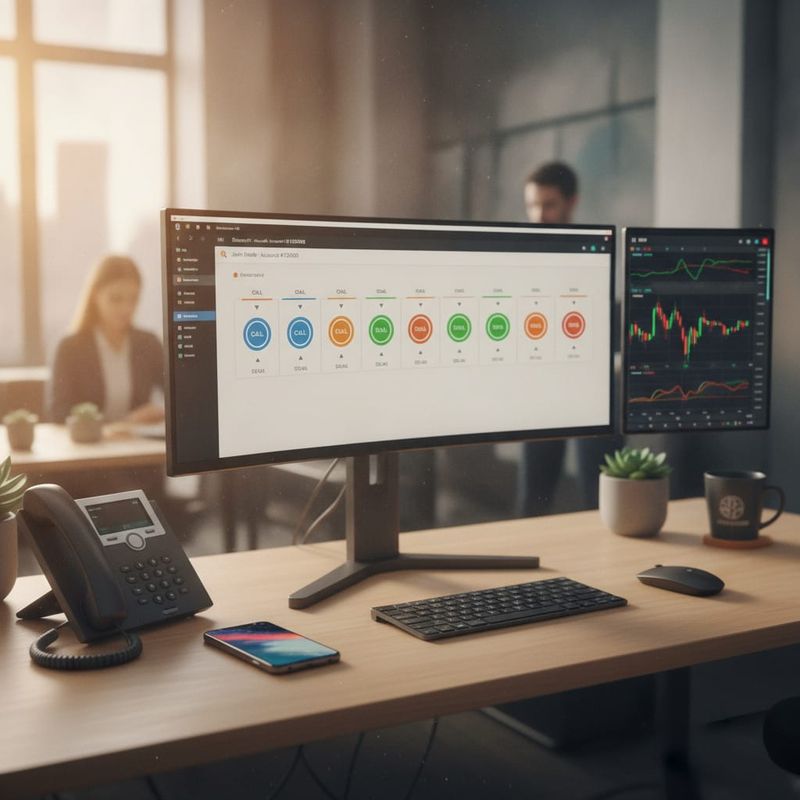
The omnichannel reactivation sequence template lays this out as a fill-in document: setup block, channel roles, the 14-day sequence, message intent per touch, stop and branch rules, consent notes per channel, CRM fields and a day-15 review.
3. What does a 14-day voice, email and SMS sequence look like?
The default sequence runs 14 days. Email 1 on day 0 warns that a call is coming and shows the number. AI call attempts land on days 1, 3, 6 and 12 across three time windows, SMS 1 follows an unanswered call 1 within the hour, SMS 2 asks one question on day 7, and emails 2, 3 and 4 land on days 4, 10 and 14. Any answered call cancels the rest.
| Day | Channel | Intent | Skip or stop if |
|---|---|---|---|
| 0 | Email 1 | Warm the number: a call is coming, here is the number, reply or unsubscribe | No email consent, hard bounce, unsubscribe |
| 1 | AI call 1 | Reach and listen: still trading? What changed? | Outside calling hours, DNC or suppression hit, email reply said do not call |
| 1 | SMS 1 | Missed-call note: who called, why, reply YES or STOP | No SMS consent, call 1 answered, country restricts marketing SMS |
| 3 | AI call 2 | Second window; becomes the booked callback if SMS 1 got a YES | Call 1 answered, opt-out on any channel |
| 4 | Email 2 | Three things that changed: platform, instruments, spreads or funding | Unsubscribe, any answered call already has an outcome |
| 6 | AI call 3 | Third window, evening or weekend where legal | Either earlier call answered, cadence allows fewer than 4 attempts |
| 7 | SMS 2 | One question: keep the account open? YES or STOP | SMS 1 got any reply, no SMS consent, opt-out anywhere |
| 10 | Email 3 | Practical help: KYC refresh, funding methods, account manager direct line | Unsubscribe, outcome already recorded |
| 12 | AI call 4 | Courtesy close: we stop calling after today, keep or close? | Any earlier answer, opt-out, attempt cap reached |
| 14 | Email 4 | Close-out with one live link; mark unreachable in the CRM | Unsubscribe, already reactivated, do not contact |
Two details do most of the work. Call attempts rotate across three time windows, so a trader who never picks up at 10am gets tried at 6pm, and every send hour is set in the trader's local time from the country in the CRM, not the phone prefix. An SMS that lands at 2am local is the fastest route to a STOP and a complaint.
Four attempts over 12 days is the default. If your forex reactivation call cadence says three, drop call 3 and keep the day 12 courtesy close, because that last call produces clean opt-outs instead of complaints. On the calling side, Topcalls runs the opening in any of up to 78 languages picked per account, and its real-time replies keep the pause after the trader speaks from sounding like a machine thinking.
4. How do stop and branch rules keep the channels in sync?
A stop rule names a trigger, what it cancels, what it starts, the CRM status it writes and the deadline. "Not interested" on any call cancels every remaining touch on every channel the same day. A STOP reply or a do-not-contact request suppresses the trader across the calling platform, the email tool, the SMS tool and the CRM. An email unsubscribe stops email only, and calls continue only where they're separately consented.
Branches matter as much as stops. A trader who asks for a callback gets a human at the agreed time and a reminder email that morning; remaining AI calls and SMS are cancelled. A trader who asks for a deposit or KYC link gets it within 15 minutes and emails 2 and 3 are dropped. A YES to either SMS turns the next cold attempt into a booked callback.
None of that works on a nightly sync. A trader who says "not interested" at 9am gets email 2 at 10am unless the calling platform writes the outcome to the CRM within minutes and the email tool reads it before every send. Topcalls pushes each call outcome to HubSpot, Salesforce or your broker CRM through Integrations, with 764+ tool connections, and the CRM automation tells the other two tools to stand down. The suppression rules every reactivation campaign needs cover the day-0 screening that runs before any of this.
Test every row with staff phones before launch. Answer call 1, say "not interested", and confirm email 2 never arrives. Reply STOP to SMS 1 and check that all four systems show do-not-contact the same day.
5. What consent does each channel need for dormant traders?
Each channel has its own consent basis, and consent on one doesn't cover another. In the UK, PECR regulation 22 requires prior consent, or the soft opt-in for existing customers, before marketing email or SMS. Regulation 21 bars marketing calls to TPS numbers or to anyone who asked you to stop. In the US, the Telemarketing Sales Rule governs the calls and the CTIA messaging principles set the SMS opt-in and STOP standard.
Regulation 22 of PECR says a person "shall neither transmit, nor instigate the transmission of, unsolicited communications for the purposes of direct marketing by means of electronic mail unless the recipient of the electronic mail has previously notified the sender that he consents". Texts count as electronic mail. The soft opt-in in paragraph 3 covers details obtained during a sale or negotiation, for similar products, where the trader could refuse at collection and in every message since. A funded account usually clears that bar; a lead who never deposited often doesn't.
Regulation 21 covers the calls: none to a line whose subscriber told you to stop, and none to TPS numbers after the 28-day listing period, unless the trader said in writing that your calls are welcome. The caller must also present a line identity it can be reached on, which is why email 1 shows the number before it rings. Our guide to UK PECR compliance for AI calling goes deeper on TPS and CTPS screening.
For US numbers, the FTC's guidance on complying with the Telemarketing Sales Rule states that "telemarketers may not call consumers before 8 a.m. or after 9 p.m. in the consumer's time zone", bars calls to numbers on the National Do Not Call Registry, and requires "the consumer's express written agreement before delivering any prerecorded telemarketing message". Treat an AI voice call as needing that written consent unless your counsel says otherwise. Topcalls keeps no do-not-call list, so the registry screening and the consent records are yours to hold.
For SMS, the CTIA Messaging Principles and Best Practices (May 2023) expect senders to obtain "a Consumer's express written consent to specifically receive marketing messages", to allow opt-out at any time, and to honour every opt-out "by sending one final opt-out confirmation message per campaign" and nothing after it. Normal-language opt-outs such as stop, end, unsubscribe, cancel and quit should be acted on too, so build the parser that way from day one.
Two broker-specific additions. Any message with an offer, incentive or performance claim goes through financial promotion review before it's loaded, and the AI disclosure opens every call. Your compliance officer signs the sequence, the wording and the consent notes before the first email leaves.
6. What does an omnichannel reactivation flow cost?
The calling side is the only per-minute line. Topcalls charges $0.35 per minute all-inclusive, covering the voice model, telephony, recording, transcription and analytics, with no per-seat, setup or minute-bundle fees. Billing is by the second, so an unanswered attempt costs seconds, not a minute. Email and SMS run on the tools you already pay for, which means the sequence adds a calling budget rather than a new stack.
Work the arithmetic on one segment. Take 5,000 dormant accounts cleared for all three channels. If 1,000 of them end up in a three-minute conversation with the AI agent, that's 3,000 minutes, or $1,050 at $0.35 per minute. Unanswered attempts on the other 4,000 add seconds each. Set that against your average reactivated deposit for break-even; the dormant trader revenue calculator runs it with your numbers, and cost per reactivated trader shows how to track it live.
The human desk is the second saving. Account managers stop dialing people who haven't logged in for eight months and start taking callbacks from traders who said yes. Topcalls lists a 3-10x call-volume lift for teams that put the AI agent in front of the desk, and the platform runs 63,000+ AI calls a day.
7. How do you measure the flow after the first cycle?
Hold the review on day 15, before lifting the daily cap or starting the next segment. Report connect rate and conversation rate for the AI calls, reply rate on each SMS, the action rate by channel of last touch, cost per reactivated trader, and opt-out and complaint counts per channel. Then make one decision per segment: run it again, change the mix, or retire it.
Attribution needs one field the three tools share. Record the last touch (email1, call1, sms1 and so on) and read the reactivation result from MT4 or MT5 30 days later: deposit, trade, login, KYC refreshed, callback held, or none. That's how you learn whether email 3 or call 2 did the work, instead of crediting whichever tool produced the prettiest report.
The transcripts are the part most brokerages skip. Real-time analytics in Topcalls tag each call outcome and keep the recording and transcript against the trader, so the day-15 review can read the most common reasons traders gave for going quiet and rewrite email 2 around them.
8. When this doesn't fit
An omnichannel flow is wrong for a segment that's only cleared for one channel. If the SMS opt-in isn't there, run voice and email and don't bolt on texts you can't lawfully send. If the market restricts marketing SMS to retail clients, or your compliance desk won't yet sign an AI call, run the channels you have and revisit the rest.
It's also overkill under about 500 accounts. Building the CRM fields, connecting three tools and testing every stop rule takes real ops time, and at that size two account managers with a call list finish faster. And it's the wrong tool for traders who left after a complaint or a disputed withdrawal. Those are support cases; the first contact comes from a named person. Same for a book where you can't say which country a trader is in. Clean the list first.
One sequence, one trader record, one person who can pause it. To walk through your segment, channel consents and CRM fields with someone who has built this before, book a 30-minute call; a proposal follows within 48 hours and live campaigns typically run within about two weeks.
Frequently Asked Questions
Get AI calling tips in your inbox
No spam. One email per week with actionable sales automation tips.