A "spam likely" label doesn't care whether your offer is legitimate. Carriers flag calls based on patterns, and STIR/SHAKEN attestation is one of the signals that either clears you or buries you. Sales teams running outbound campaigns in 2026 deal with this constantly, legitimate businesses losing connects because the receiving carrier can't verify who's calling. This guide covers what STIR/SHAKEN attestation is, why you're getting flagged, what it takes to reach A-level, and how much it actually moves answer rates.
Key Takeaways
- Americans received 52.5 billion robocalls in 2025, carriers now flag numbers with weak or missing attestation before a prospect's phone ever rings.
- STIR/SHAKEN has three attestation levels: A (full), B (partial), C (gateway). Only A-level confirms your carrier verified both your identity and the specific number you're calling from.
- The FCC required large US voice carriers to implement STIR/SHAKEN by June 30, 2021; small providers had until June 30, 2023 under the TRACED Act.
- B-level or C-level attestation signals the receiving carrier that number ownership can't be confirmed, one of two triggers for a spam likely label, on top of call behavior analytics.
- AI calling platforms that provision numbers through Tier-1 US carriers assign A-level attestation by default, your team doesn't manage certificates.
1. What Is STIR/SHAKEN Attestation?
STIR/SHAKEN is a call-authentication framework the FCC mandated under the TRACED Act. "STIR" is Secure Telephone Identity Revisited; "SHAKEN" is Signature-based Handling of Asserted information using toKENs. Your carrier digitally signs outbound calls with a certificate, and the receiving carrier checks that signature. The attestation level, A, B, or C, tells the receiving network how confident the originating carrier is that you're who you say you are and that the number belongs to you.
The three levels work like this. A-level (Full Attestation) means your carrier has verified your business identity AND confirmed you're authorized to use the specific calling number on this call. B-level (Partial Attestation) means the carrier knows who you are as a customer but can't confirm that specific number is yours, common with SIP trunks and reseller paths. C-level (Gateway Attestation) is the lowest tier: the call arrived from somewhere the carrier can't verify at all, typically via an international gateway or transit provider.
The framework runs on SIP (Session Initiation Protocol) and uses public key infrastructure to create a digital signature that travels with every call. When the call hits the receiving carrier, their network checks the signature against the originating carrier's certificate. A verified A-level signature tells the receiving system: this call is from who it says it's from, and the carrier stands behind it.
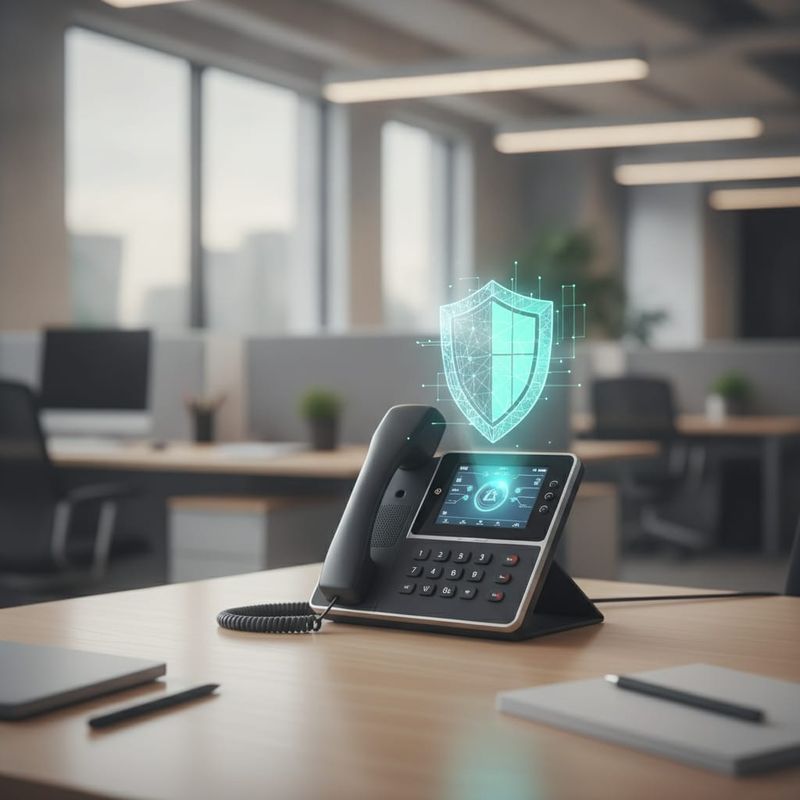
One thing to get straight before going further: STIR/SHAKEN doesn't prevent spam. It prevents caller ID spoofing, where someone fakes another number on the display. A legitimate business can still get flagged based on call volume patterns, number age, and third-party labeling services. But weak attestation makes the problem worse. And it's one of the few things you can actually fix from your provisioning setup.
2. Why Are My Cold Calls Marked Spam Likely?
Spam-likely labels come from two overlapping signals: carrier behavior analytics and weak STIR/SHAKEN attestation. If your call patterns look suspicious, high volume, lots of short calls, high unanswered rate on a new number, the carrier's system flags the number regardless of attestation. But B-level or C-level adds a second flag on top. It tells the receiving carrier it can't confirm number ownership. Both signals together nearly guarantee a label that most prospects won't answer.
The volume problem explains why carriers are aggressive. Americans received 52.5 billion robocalls in 2025 per YouMail's Robocall Index, with over 4.1 billion in December alone. Carriers can't manually review every flagged number. They rely on automated scoring systems that penalize anything resembling a robocall pattern, and B-level attestation looks like one.
The behaviors that get you flagged fastest: calling the same number repeatedly in a short window, running high volumes from a new number with no history, high call-to-answer ratios on early calls, and call durations averaging under 10 seconds. Short duration is a red flag because it signals people are hanging up immediately, the exact rejection pattern of a robocall.
There's a third source most teams don't know about: third-party call-labeling services like Hiya, First Orion, and Neustar. These companies sell call reputation data to carriers and phone manufacturers. If enough people mark your number as unwanted through their apps, or if your call patterns trip their models, your number shows as spam likely on Android and iOS before the carrier even processes the call. Attestation is the foundation, reputation management and call behavior are what you build on top.
Topcalls handles compliance at the carrier layer so your campaigns start clean. See how on our secure infrastructure page.
Wondering what spam labels are actually costing you in missed connects? Run the numbers with our ROI calculator to see what better answer rates would mean for your booked meetings.
3. How Do I Get A-Level Attestation?
A-level attestation requires your voice service provider to have verified your business identity AND confirmed you're authorized to use the specific number on the outbound call. You don't configure attestation yourself, your carrier sets it on each call automatically, based on how you provisioned the number. The path to A-level is provisioning numbers directly through a compliant US carrier that has completed proper KYC (know your customer) on your account.
| Level | What It Means | Common Source | Spam Risk |
|---|---|---|---|
| A (Full) | Carrier verified identity + authorized number | Direct provisioning via Tier-1 carrier | Low, clean delivery |
| B (Partial) | Carrier knows customer, can't confirm number | SIP trunks, reseller paths | Medium, can trigger label |
| C (Gateway) | No customer verification possible | International gateways, transit providers | High, near-certain label |
If you're running outbound on SIP trunks from a reseller, you're almost certainly at B-level. The reseller knows you, but the upstream carrier doesn't know which number in their block you're actually using at call time. That's a structural B that won't improve until you move number provisioning to a direct carrier relationship, or switch to a platform that handles this for you.
Practical steps to get to A-level:
- Use a voice platform that provisions numbers directly through a US Tier-1 carrier, not a reseller. Ask them explicitly what attestation level they assign to outbound calls from your account.
- Complete full KYC with your carrier. Business verification documents, registered business name, US address. The carrier needs this on file before they can stamp A-level on your calls.
- Register your numbers with the free caller ID registries. Some platforms handle this automatically during provisioning; others expect you to submit registration directly through your carrier's portal.
- Warm up new numbers before running volume. Even at A-level, a brand-new number with zero call history looks like a fresh spoofed line to behavior-based filters. Start low, let the number build a reputation, then scale over 1-2 weeks.
4. Does AI Calling Change My Attestation Level?
AI calling doesn't change the attestation mechanics, your carrier still sets the level based on how the number is provisioned. What it changes is which carrier you're using. AI voice platforms like Topcalls AI voice agents provision numbers directly through compliant US carriers with full KYC on file, so outbound calls get A-level attestation by default. You're not dialing through a patched SIP trunk or a reseller path that can't confirm the specific number.
When a sales team switches from a direct-dial setup on a generic SIP provider to a managed AI calling platform, their attestation level often improves automatically, not because anything changed about their script, but because the carrier relationship behind the scenes changed. The FCC's TRACED Act pushed the compliance responsibility onto the originating carrier, so the platform you choose now carries that load. If you want a broader picture of how AI calling works, our AI cold calling guide covers the full stack.
AI calling also changes call behavior in ways that help reputation scores. AI agents don't leave 2-second dead-air silences before speaking, a classic robocall fingerprint. They don't call the same number 12 times in an hour. They maintain sub-500ms response latency that keeps conversations natural, and calls run longer because the interaction is actually useful. Teams using AI for sales acceleration get better attestation AND better behavior profiles working together, which means fewer spam labels from both signal types.
One important caveat: an AI calling platform assigns attestation through its carrier relationship on the numbers it provisions. If you bring your own number (BYOC, bring your own carrier), attestation follows your carrier, not the platform's. If your carrier is at B-level, you'll stay at B-level regardless of what software you run the call through. Check this before porting numbers.
5. How Much Does Attestation Lift Answer Rates?
Attestation alone doesn't guarantee a pickup, call patterns and number reputation still matter. But getting to A-level removes one of the two main signals that trigger spam-likely labels, and the effect on delivery is real. Topcalls campaigns running on properly attested numbers see an average of 60%+ connect rate improvement versus standard outbound setups. That's measured across 63,000+ calls processed daily, not a cherry-picked result.
The ATIS STIR/SHAKEN standards were designed to make call authentication visible to end consumers through carrier call-labeling systems. When a call arrives with a verified A-level signature, the carrier's analytics system has one fewer reason to flag it. Combine that with a warm number, consistent call patterns, and an average call duration above 60 seconds, and the spam-likely label largely stops appearing.
The downstream effect on pipeline is direct. A call your prospect actually answers is the only call that matters. Teams using AI calling for lead qualification can run BANT scoring at scale, but only when the phone gets picked up. Better attestation is how you protect that pipeline at the infrastructure level.
Realistic timeline: if your numbers currently show spam likely on most devices, moving to A-level provisioning and running a proper warmup will make a meaningful difference within 2-4 weeks. You won't hit peak answer rates on day one. Carrier reputation databases update on a lag, typically 7-14 days after behavior changes. The improvement compounds rather than spikes.
If your team is losing connects to spam labels, the fix starts with how your numbers are provisioned, and that's a 15-minute conversation to sort out. Book a strategy call and we'll walk through your current setup, where the attestation gap is, and how to clean it up before your next campaign runs.
Frequently Asked Questions
Get AI calling tips in your inbox
No spam. One email per week with actionable sales automation tips.