The cold call connect rate in B2B was 9.9% per dial in 2025, according to a Belkins study of more than 175,000 dials. But 24.5% of prospects connected at least once, because the average prospect got three attempts. JustCall's 2026 guide puts the typical B2B team at 2% to 3%. Those numbers don't contradict each other. They count different things.
This guide lays out the benchmarks we checked at the source, explains why they disagree and covers what actually moves the number. It also says where AI calling helps and where no public evidence exists. For the step after the connect, see our guide to appointment conversion rate.
Key Takeaways
- In Belkins' 2025 data, 9.9% of dials connected, and 24.5% of prospects connected at least once across an average of three attempts.
- In the same data, 58% of connects became conversations and 4.6% of conversations booked a meeting: about one meeting per 370 dials.
- JustCall's 2026 guide puts an average B2B team at a 2% to 3% connect rate and top-performing teams at 6% to 10%.
- In the Belkins study, 13.5% of non-bookings were the wrong person or the wrong number, which is a list problem, not a pitch problem.
- Topcalls retries a lead 1 to 10 times on a schedule you set, and AI calls start from $0.25 a minute depending on the country.
What is a good cold call connect rate?
A good cold call connect rate depends on what you count. Per dial, Belkins measured 9.9% in 2025, and JustCall puts average B2B teams at 2% to 3% and top teams at 6% to 10%. Per prospect across several attempts, Belkins measured 24.5%. Pick one definition, hold it fixed and compare your own trend against it.
Table: Cold call connect rate benchmarks we could check at the source
| Source | Period | What it counts | Rate |
|---|---|---|---|
| Belkins cold calling study | 2025 data, published Jun 2026 | Per dial: a live human picked up | 9.9% |
| Belkins cold calling study | 2025 data, published Jun 2026 | Per prospect: connected at least once, about 3 attempts | 24.5% |
| JustCall connect rate guide | 2026 | Average B2B team | 2% to 3% |
| JustCall connect rate guide | 2026 | Top-performing team | 6% to 10% |

The sources are the Belkins B2B cold calling benchmarks, a study of SDR activity across 175,000+ dials, and the JustCall connect rate guide. JustCall sells a dialer, so read its tiers as a vendor's view. We found no independent benchmark that splits human and AI callers.The full benchmark table lists each figure with its definition and source.
How is connect rate different from conversation rate and meeting rate?
Connect rate counts live humans picking up. Conversation rate is the share of connects that go past the greeting. Meeting rate is the share of conversations that book. Belkins defines a connect as any live human, including a gatekeeper or a "not interested," while JustCall counts a connect only when you get past "hello." Check which one a benchmark uses.
- Dial: any outbound call attempt, whatever the outcome.
- Connect rate: the share of dials where a live person picked up.
- Conversation rate: the share of connects where the prospect engaged beyond the greeting. Belkins found 58%.
- Meeting rate: the share of conversations that booked a meeting. Belkins found 4.6%.
Chain them and you get the funnel. In the Belkins data, 9.9% of dials connected, 58% of connects became conversations and 4.6% of conversations booked, which works out to roughly one meeting per 370 dials. At that rate, 1,000 dials produce about 99 connects, about 57 conversations and two or three meetings.
Why do cold call connect rates vary so much?
Three things move the number: the definition, the data and the calendar. Definitions differ by source, as above. Data quality changes who picks up. And the season shifts behavior: in the Belkins data, July had the best connect rate of the year at 12.5% and the worst meeting rate at 2.7%.
That July result is the clearest warning. People pick up in summer, but they don't commit to calendars. A rising connect rate with a falling meeting rate can mean you're reaching people who aren't buying, so judge a campaign on meetings and held appointments, not on connects alone.
On data, Belkins found that 13.5% of non-bookings were the wrong person or the wrong number. A better script doesn't fix that. A cleaner list does. And 13.4% of non-bookings were gatekeepers, which is a targeting problem: reach the person, not the switchboard.
How do you raise your cold call connect rate?
Dial each prospect more than once, call from a clean list, pick hours that suit the people you call and measure the result the same way every time. In the Belkins data, repeat attempts lifted the reach from 9.9% of dials to 24.5% of prospects. That single gap is the clearest lever in the study.
- Retry on a schedule. A Topcalls campaign retries a lead only after a no-contact outcome: busy, no answer, a failed dial or voicemail. You set up to 10 attempts per lead. Each slot can be a delay such as 30 minutes after the last attempt, or a fixed time such as 6:00 PM two days after the first call, in the campaign's time zone.
- Count real people. Topcalls hangs up on voicemail and counts it as no contact, so a mailbox greeting doesn't inflate your connect numbers or your bill.
- Choose the hours. Belkins found Wednesday produced nearly twice the positive-outcome rate of Friday, and 3 to 4 PM was its most consistent daily peak. Those figures describe positive outcomes, not pickups, so test your own windows. Topcalls campaigns carry their own dispatch hours, weekdays and time zone, and the legal window is 8 a.m. to 9 p.m. at the called party's location (see our TCPA dialing compliance checklist).
- Watch the number. The Topcalls docs say to watch the connect rate and move hours or retries if it drops. Our real-time analytics page lists what the campaign dashboards report.
- Mind the caller ID. Carriers label calls, and a spam flag can stop the pickup before it starts. Our guide to STIR/SHAKEN attestation and spam flags covers it.
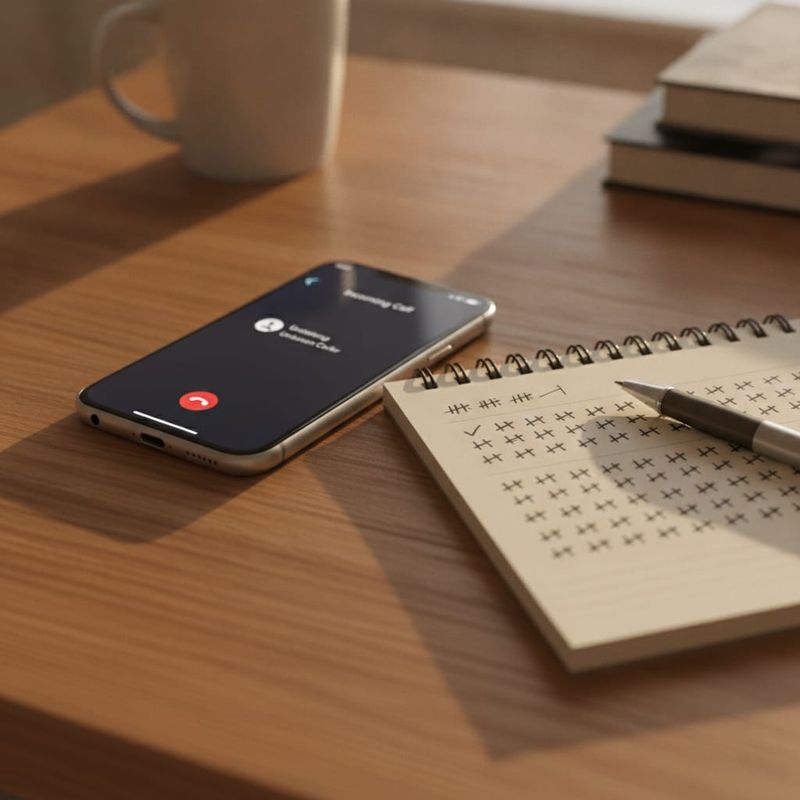
Attempts cost minutes, so the ROI calculator is the quickest way to price a higher retry count.
Does an AI caller get a better connect rate?
No public, independent study we could check compares the connect rate of AI and human callers. The pickup depends on the list, the hours and the number, which are the same for both. Where AI changes the math is attempts: it can dial a lead three, five or ten times without extra headcount, and Belkins' data shows repeat attempts are where reach grows.
Topcalls AI calls start from $0.25 a minute, depending on the country you call, billed by the second. The price includes the AI voice model, call recording, transcription and analytics. Voicemail hang-ups end the call early, so you aren't paying for a conversation with a mailbox. See AI voice agents and smart campaigns for how retries and dispatch hours work.
After the connect, the first ten seconds decide most outcomes. In the Belkins data, most connects that didn't become conversations were gatekeepers and immediate hang-ups, not pitch rejections. Our guides to AI cold call script templates and optimizing AI cold call conversion rate cover that step. To test a change safely, run 10 to 20 leads through each version and compare, as described in A/B testing AI call campaigns.
When is connect rate the wrong number to chase?
Connect rate is the wrong number when it rises and bookings don't. It also misleads on senior buyers: Belkins found that C-level prospects rarely book a meeting live on the call, while directors produce the most booked meetings. For those calls the goal is a follow-up, not an instant booking.
Track three numbers together: connect rate, conversations per connect and held appointments per 1,000 dials. Then tie them to cost with our AI appointment setting solution page and the cost per appointment breakdown.
Your own last 30 days of dial data will tell you more than any benchmark here. Bring it to a strategy call.
Frequently Asked Questions
Get AI calling tips in your inbox
No spam. One email per week with actionable sales automation tips.