TCPA dialing compliance for outbound lead generation comes down to nine checks that run before and during every call. An AI-generated voice counts as an artificial voice under the TCPA, so a telemarketing call needs the person's prior express written consent. Calls are barred before 8 a.m. and after 9 p.m. at the called party's location. And each violation can cost $500, or up to three times that if it's willful.
This is a general-information checklist, not legal advice. We read the rule text on November 15, 2026, and each source is linked. It covers federal rules only. Other countries differ, and our AI calling laws by country page lists them.
Key Takeaways
- The FCC's February 2024 ruling, FCC 24-17, confirmed that AI-generated voices are an "artificial or prerecorded voice" under the TCPA.
- Telemarketing calls to residential subscribers are barred before 8 a.m. and after 9 p.m., local time at the called party's location.
- A do-not-call registry scrub must use a version of the registry no more than 31 days old.
- TCPA damages are $500 per violation, and a court may raise that to three times the amount for knowing or willful violations.
- From November 25, 2026, callers may designate an exclusive way to revoke consent, and must honor a revocation within 10 business days.
- Topcalls never dials a number on your account's Block list. The customer owns consent, the registry scrub and opt-outs from other channels, and Topcalls AI calls start from $0.25 a minute.
How do you ensure TCPA dialing compliance for outbound lead generation?
Run nine checks: get written consent, identify the caller, offer an opt-out, call only inside the legal hours, scrub the do-not-call registry, keep your own do-not-call list, transmit caller ID, honor revocations and keep records. Consent and list hygiene sit with the seller. Dial-time settings sit with the platform. Each row below names the rule behind it.
Table: The nine checks for outbound lead-generation calls
| Check | Rule | Who owns it |
|---|---|---|
| 1. Written consent from the person you call | 47 CFR 64.1200(a) and (f)(9) | You |
| 2. Identify the caller and give a callback number | 47 CFR 64.1200(b)(1) and (2) | You, in the script |
| 3. Offer an automated opt-out on telemarketing calls with an artificial voice | 47 CFR 64.1200(b)(3) | You, in the call design |
| 4. Call only 8 a.m. to 9 p.m. at the called party's location | 47 CFR 64.1200(c)(1); 16 CFR 310.4(c) | You choose, Topcalls dispatches inside it |
| 5. Scrub the national registry within 31 days | 47 CFR 64.1200(c)(2) | You |
| 6. Keep an internal do-not-call list and written policy | 47 CFR 64.1200(d) | You own the policy. Topcalls never dials a number on your Block list |
| 7. Transmit valid caller ID | 47 CFR 64.1601(e); 16 CFR 310.4(a)(8) | You, with your number |
| 8. Honor revocations of consent | 47 CFR 64.1200(a)(10) and (11) | You. The AI adds a stop said on a call to your Block list |
| 9. Keep records for 5 years | 16 CFR 310.5 | You |
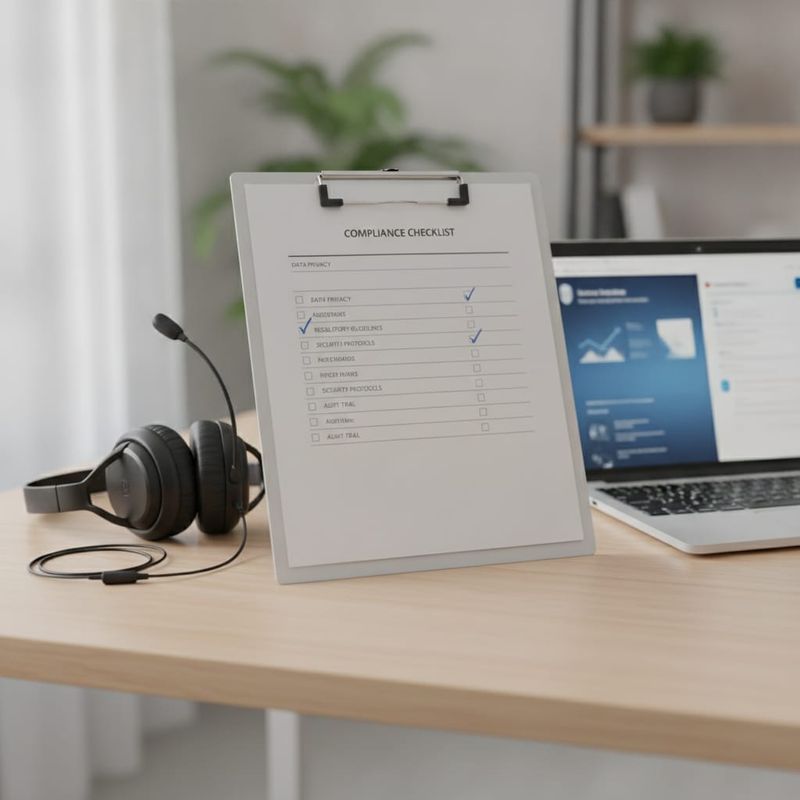
The rules come from the FCC's 47 CFR 64.1200, 47 CFR 64.1601 and the FTC's Telemarketing Sales Rule at 16 CFR 310.4 and 310.5. Our US cold calling rules spec and the guide to enforcing calling compliance in real time walk through the same list from the product side.
Does the TCPA apply to AI voice agents?
Yes. In Declaratory Ruling FCC 24-17, adopted February 2, 2024, the FCC confirmed that the TCPA's restrictions on an "artificial or prerecorded voice" cover current AI technologies that generate human voices. A call that uses one needs the called party's prior express consent, and prior express written consent if it carries a marketing message.
The ruling says it directly: "callers must obtain prior express consent from the called party before making a call that utilizes artificial or prerecorded voice simulated or generated through AI technology." It also says the identification and opt-out requirements in section 64.1200(b) apply to any AI technology that places an outbound call with such a voice.
The ruling settles the loophole question. An AI voice agent follows the same rules as any other robocall. Our earlier guide to TCPA compliance for AI cold calling and the AI disclosure laws post cover the disclosure side.
What counts as prior express written consent?
Under 47 CFR 64.1200(f)(9), prior express written consent is a signed written agreement that authorizes the seller to deliver telemarketing using an autodialer or an artificial or prerecorded voice, and that names the phone number. An electronic signature counts where federal or state contract law recognizes it.
The agreement must also carry a clear and conspicuous disclosure. It must tell the signer that signing authorizes those calls, and that signing isn't required as a condition of buying anything. For a lead-gen form, that means the consent language sits next to the phone field, not in a page footer.
One lead-gen detail changed in 2025. The FCC had adopted a rule that consent must go to one seller at a time and be logically tied to the page where the lead signed up. On January 24, 2025, the Eleventh Circuit vacated that part of the order in Insurance Marketing Coalition v. FCC, holding that the FCC had stepped beyond the statute. Whether a form that names several sellers is enough is a question for your counsel. Check current FCC action before you rely on either answer.
What are the TCPA calling hours and do-not-call rules?
Telemarketing calls to a residential subscriber are barred before 8 a.m. and after 9 p.m., local time at the called party's location. The same window appears in the FTC's Telemarketing Sales Rule. You also need to scrub against the national registry using a version no more than 31 days old, and keep an internal list for people who ask you to stop.
Under section 64.1200(e), the do-not-call rules in paragraphs (c) and (d) extend to wireless numbers to the extent the FCC described in its 2003 order, so a lead who gives a mobile number is covered too. On your internal list, section 64.1200(d) requires a written policy, trained staff and a record of each request. You must honor a request within a reasonable time that can't exceed 10 business days.
For dial-time settings, Topcalls campaigns carry their own dispatch hours, weekdays and time zone. A campaign has one time zone, so a nationwide list needs either separate campaigns per zone or a window narrow enough to be lawful everywhere you call. Our post on do-not-call lists for AI dialers explains the scrub step.

If you use predictive-style dialing, also read the abandonment rule in section 64.1200(a)(7). It caps abandoned calls at 3% of answered telemarketing calls per campaign over 30 days, and it measures whether a call connects to a live sales representative within two seconds. Ask counsel how that wording applies when an AI agent, not a person, takes the call.
What changes on November 25, 2026 for opt-outs?
An FCC order effective November 25, 2026 lets callers designate an exclusive way to revoke consent. A caller may name one or more of three methods: an automated key-press on a call, a reply to a text with a standard word such as "stop", or a website or phone number the caller sets up for opt-outs. Revocations must be honored within 10 business days.
The rule says the designated method must be disclosed "clearly and conspicuously" on the call or in the text. A caller that designates one isn't required to process revocations made another way. A caller that doesn't must accept any reasonable method. And a revocation made in response to a marketing call or text ends consent for all future marketing calls and texts from that caller.
The source is the FCC's Report and Order FCC 26-67, published in the Federal Register on October 26, 2026. Until the effective date, the current rule text says a caller may not designate an exclusive means. Build your opt-out handling now so it works under both.
For a cost estimate at your volume, use the ROI calculator.
What are the penalties for getting it wrong?
Under 47 U.S.C. 227(b)(3), a person who receives a call that violates the rules can sue for actual losses or $500 for each violation, whichever is greater. If the court finds the violation was willful or knowing, it may increase the award to as much as three times that amount, which is $1,500 per call.
Because the award is per call, volume multiplies the exposure. A 10,000-call campaign with a defective consent process is 10,000 potential violations. That's why consent and list hygiene come first in the checklist, ahead of any dialer setting.
What does Topcalls control, and what do you own?
Topcalls controls dispatch hours, weekdays and the retry limit of each campaign, and you set them. You own consent and the registry scrub. Topcalls keeps a Block list for your account and never dials a number on it: the AI adds anyone who asks on a call to stop, and you add revocations that arrive by email, text or to a rep. A voicemail counts as no contact, so a lead can be retried inside the limit you set, from 1 to 10 attempts.
A Block list entry never expires, and only an account owner can remove one, with a reason that's logged. That covers the 5-year rule in 64.1200(d) for requests made to you, though the written policy and the training behind it are still yours. Our guide to honoring "stop calling me" with an internal do not call list walks through the setup.
That split is deliberate. A platform can enforce when a call leaves, because it controls dispatch. It can't know whether a person agreed to be called. So the proof of consent for each lead stays in your system, and a lead without proof shouldn't be uploaded.
Topcalls AI calls start from $0.25 a minute, depending on the country you call, billed by the second. The price includes the AI voice model, call recording, transcription and analytics, with no seat fees for AI calling. See AI voice agents and lead qualification for how a campaign works, and the secure infrastructure page for how Topcalls handles data.
Which leads shouldn't you dial?
Skip any lead with no record of written consent, any number on the registry that you can't tie to a consent record, and any lead who revoked. Skip numbers outside the hours window for their location. And skip a purchased list unless the seller can show each lead's signed consent naming you.
Our recommendation: keep a consent record per lead with the date, the form wording and the number. If a regulator or a plaintiff asks, you can answer in minutes. If you'd like to map your consent flow onto campaign settings, book a strategy call.
Frequently Asked Questions
Get AI calling tips in your inbox
No spam. One email per week with actionable sales automation tips.