
A reactivation campaign that costs $2,400 and brings back 60 traders is a bargain; the same spend for six traders is a problem. Cost per reactivated trader is the KPI that tells you which of the two you ran last quarter, and most brokerages can't produce it without a fight over what "reactivated" means. This guide settles the definition, lists the five cost lines that belong in the total, works an example at Topcalls' $0.35 per minute, and shows how to set the ceiling that tells your ops desk when to stop dialing.
Key Takeaways
- Cost per reactivated trader equals total campaign cost divided by dormant traders who deposited or traded again inside a fixed window, never by dialer outcome codes.
- Topcalls bills $0.35 per minute all-inclusive, so 4,000 calling minutes on a dormant book cost $1,400 before a single hour of human follow-up.
- In the worked example, $2,400 of total spend and 60 reactivated traders give a loaded cost of $40 per trader and a call-only cost of $23.33.
- ESMA found 74% to 89% of retail CFD accounts lose money, so the ceiling for this KPI should rest on the next deposit, not a five-year lifetime.
- UK CFD providers must recalculate their client loss percentage every three months over a trailing 12 months under FCA rules; a reactivation count deserves the same rigor.
1. What is cost per reactivated trader?
Cost per reactivated trader is the total cost of a reactivation campaign divided by the number of dormant traders who came back inside a fixed window. A brokerage that spends $2,400 on calls, follow-up time and list preparation, and sees 60 redeposits within 30 days, has a cost per reactivated trader of $40. The figure only means something next to what a reactivated trader is worth to the desk.
Two versions of the number exist, and you'll want both. The loaded version divides every cost the campaign caused, including account managers' callback hours, by reactivations. The call-only version divides just the calling spend. Report the loaded figure to the board. Keep the call-only figure for comparing vendors and channels, where the human time doesn't change.
The KPI sits at the end of a chain. Cost per connect comes first, then cost per conversation, then cost per reactivated trader, and each should be larger than the one before it. If your reactivation cost lands below your conversation cost, someone counted "interested" dispositions as reactivations. The wider metric set, connect rate through redeposit per dollar, is covered in our forex reactivation campaign metrics guide, and the return side of the same math is in AI calling ROI for brokers.
2. What counts as a reactivated trader?
A reactivated trader is a dormant account that completes one event you chose before launch: a deposit above a minimum amount, a closed trade, or both, inside an attribution window of 30 to 90 days after the last call attempt. Logins, app opens and a positive call disposition don't count. The source of truth is the MT4/MT5 manager report or the CRM deposit object, never the calling platform's own success flag.
Most arguments about this KPI are arguments about definitions in disguise. Retention wants logins to count because the number looks better. Finance wants deposits net of withdrawals. Compliance wants to know whether the deposit came from a jurisdiction where the offer was allowed. Settle all three before the first dial, write the answer down, and don't change it mid-campaign, or week one and week four stop being comparable.
Your compliance desk already runs this kind of count under rule. Under FCA COBS 22.5.6R, a UK CFD provider must publish the percentage of retail accounts that lose money, recalculated every three months over the preceding 12 months, counting realised and unrealised net profit, excluding accounts with no open positions, with records kept for five years. In the US, 17 CFR 5.5(e) makes a retail forex dealer disclose the number of non-discretionary retail forex accounts and the share that were profitable and unprofitable for each of the most recent four calendar quarters. Borrow that discipline, and borrow the person who owns the data.

One more input belongs in the definition: a control group. Hold back a random 10% of the dormant list, don't call it, and count its redeposits over the same window. Some dormant traders come back on their own when gold moves. Subtracting the control's rate from the called group's rate is the difference between a campaign result and a market result.
The KPI worksheet that goes with this article holds the definition page, the five cost lines, the outcome inputs, the formula table with a worked example, a value ceiling, a per-segment breakdown and the stop line your ops lead signs before launch.
3. Which costs belong in the total?
Five cost lines make up the total: AI calling minutes, human follow-up time, list preparation, any offer or incentive actually redeemed, and the share of platform costs the campaign used. With Topcalls the calling line is minutes times $0.35, all-inclusive, so there's no telephony, transcription, recording or per-seat charge to add back. Keep the call-only figure separate from the loaded total, because the two answer different questions.
| Cost line | What goes in | Example |
|---|---|---|
| AI calling minutes | Every billed minute across all attempts | 4,000 min x $0.35 = $1,400 |
| Human follow-up | Callbacks, KYC help, deposit assistance | 30 hours x $25 = $750 |
| List preparation | Export, suppression, formatting, number validation | 4 hours x $30 = $120 |
| Offer or incentive | Only offers redeemed, only where permitted | $0 |
| Platform and other | SMS deposit links, QA reviewer time, CRM seats used | $130 |
The human line is the one brokerages forget and the one that moves most. An AI agent can reach a trader who stopped depositing in March, hear that the deposit failed on a card block, and book a callback. Someone on the onboarding desk still spends 20 minutes walking the trader through a new payment method and a refreshed KYC document. Count those minutes, or the loaded number is fiction.
The offer line needs a compliance check before it needs a budget. The FCA's permanent CFD restrictions, in force since 1 August 2019, ban monetary and non-monetary inducements to retail clients, so for a UK retail segment that line is zero by rule. Other jurisdictions differ. Ask your compliance officer which segments may see an offer at all before you plan one.
Calling spend itself is the easiest line to get right. For a breakdown of what sits inside a per-minute rate on other platforms, and what gets billed separately, read our voice agent cost breakdown. With Topcalls AI voice agents the invoice is one line, minutes at $0.35, and that's the whole calling cost.
4. How do you calculate cost per reactivated trader?
Add the five cost lines, count reactivated traders against the definition from section 2, and divide. Then take the calling cost alone and divide again for the call-only version. Run an order check: cost per reactivated trader should exceed cost per conversation, which should exceed cost per connect. When the order is wrong, an input is wrong, and the usual culprit is a reactivation count pulled from the dialer instead of the deposit report.
Here's the arithmetic with illustrative inputs. The numbers are chosen to show the mechanics, not to describe any specific brokerage, so replace every one with your own.
| Line | Input | Result |
|---|---|---|
| Total campaign cost | Five cost lines summed | $2,400 |
| Reactivated traders | Deposit report, 30-day window | 60 |
| Cost per reactivated trader (loaded) | $2,400 / 60 | $40 |
| Cost per reactivated trader (call-only) | $1,400 / 60 | $23.33 |
| Total redeposits | Deposit report, same window | $18,000 |
| Redeposit per dollar spent | $18,000 / $2,400 | 7.5x |
Two ratios fall out of the same table and both are worth watching. Minutes per reactivated trader, 4,000 divided by 60, is about 67 minutes; that's the number that moves when you change retry rules or shorten the opening. Human time as a share of total cost, $750 over $2,400, is about 31%. If that share climbs past half, the handoff process is your cost driver, not the calls.
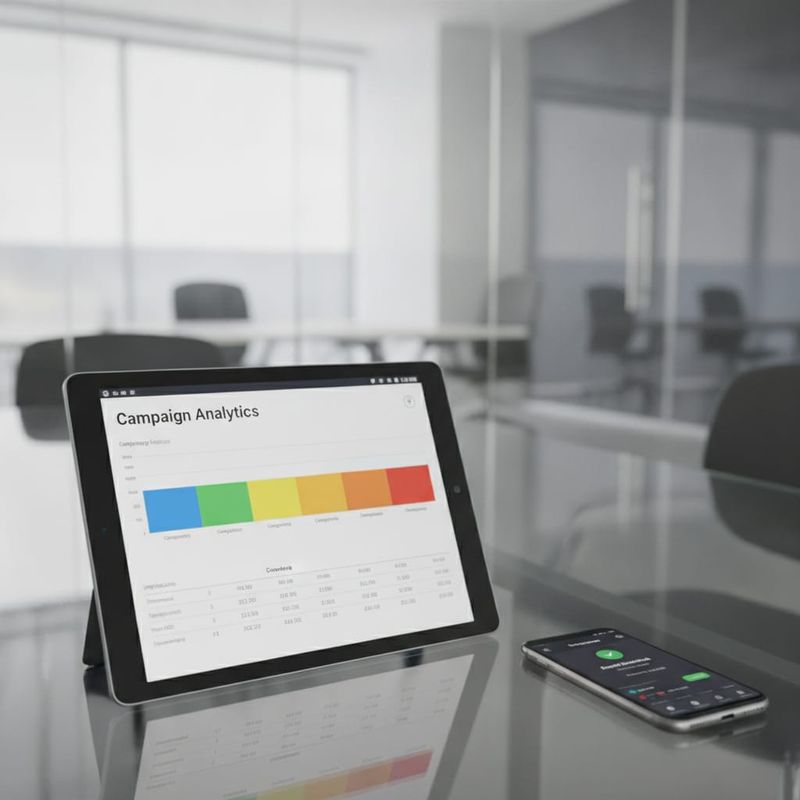
Minutes, connects and conversations come straight out of the campaign dashboard. Topcalls real-time analytics shows billed minutes, connect counts and dispositions per campaign and per list, so the numerator's calling line and the two order-check denominators are one export. The reactivation count still comes from the deposit source. Don't let the dashboard's outcome code stand in for it.
5. What is a good cost per reactivated trader?
There's no cross-broker benchmark worth trusting; deposit sizes, spreads and dormancy definitions differ too much between desks. A good cost per reactivated trader is one below your own ceiling: expected net revenue from a reactivated trader over the value window, times the share still trading at the end of it, divided by the value-to-cost ratio you require. At $300 expected value and a 3:1 target, the ceiling is $100, and the $40 example clears it.
Keep the value window short. When ESMA restricted CFDs in 2018, its product intervention decision recorded that 74% to 89% of retail accounts lose money, with average losses per client between €1,600 and €29,000. A reactivated trader who redeposits $300, trades for six weeks and stops is real revenue to the desk, but a five-year lifetime value on that trader is a spreadsheet wish. Value the next deposit and the spread on the trades that follow it, over 60 to 90 days, and let finance sign the number.
The value side needs its own model, and there's a page for it. Put your dormant account count, average deposit and current reactivation rate into the dormant trader revenue calculator and you get recoverable revenue next to campaign cost. For the break-even view, where the question is how many reactivations pay the campaign back rather than what each one costs, see our guide to reactivation campaign break-even analysis.
6. Why should you cut the KPI by segment?
A blended cost per reactivated trader hides the segment that's losing money. Recently quiet funded accounts, zero-balance accounts, accounts dormant 90 to 365 days, year-plus dormant accounts and registered-never-funded accounts each connect, convert and redeposit at different rates. One row per segment, same formula. The segment with the lowest cost is what you scale in the next run; a segment over the ceiling gets a new opening line, a different call window, or gets dropped.
The segment column comes from the list upload, which comes from the MT4/MT5 export or the CRM. Tag it before the campaign, not after, because reconstructing which dormancy bucket an account sat in on launch day is painful once deposits start landing. How to build those buckets, and which signals separate a trader worth calling from one worth leaving alone, is in trader segmentation for reactivation.
Cut by language and country too when the list spans several. Connect rates and call lengths differ enough between a Spanish-speaking LatAm segment and a German one to move the KPI by itself, and Topcalls runs the same campaign in up to 78 languages, so the comparison costs nothing extra. Our customer reactivation solution page walks through the campaign setup, and this earlier piece on win-back campaigns for inactive trading users covers the messaging side that segments respond to.
7. When doesn't cost per reactivated trader fit?
The KPI misleads in five situations: fewer than about 30 reactivations in the period, campaigns where an incentive does the work, calls whose goal is compliance rather than revenue, reporting before the attribution window has closed, and comparisons across brokerages. In each case the arithmetic still runs, but the number it produces doesn't mean what a board reader will think it means.
- Small counts: with 12 reactivations, one large redeposit or one mis-tagged account swings the KPI by 10% or more. Report connects and conversations, and wait for a bigger cohort.
- Incentive-led campaigns: when a deposit match drives the redeposit, the calling cost is a rounding error next to the offer cost, and the number measures offer generosity, not campaign efficiency.
- Compliance calls: KYC document reminders and dormant-fee notices exist to keep the account in good standing. Measure completion rate, not cost per reactivation.
- Open windows: a 60-day attribution window reported on day 14 understates reactivations and overstates cost. Publish the KPI only for cohorts whose window has closed.
- Cross-broker comparisons: a $40 result at one desk and $90 at another says more about deposit minimums and dormancy definitions than about either campaign.
None of these mean you skip the measurement. They mean you label the number for what it is and pair it with the metric that fits the situation.
Agree the definition with finance and compliance, run one campaign on one segment, and fill the worksheet with real minutes and real deposits. That first page is worth more than any benchmark. If you'd rather size the dormant book and the pilot minutes with us, book a 30-minute call and you'll have a proposal within 48 hours, with a live campaign about two weeks after that.
The worksheet below carries every input from this article, including the worked example, the ceiling calculation and the segment table, so your first result is comparable with your second.
Frequently Asked Questions
Get AI calling tips in your inbox
No spam. One email per week with actionable sales automation tips.