A dormant book of 20,000 accounts isn't one audience, and calling it with one script spends the minutes on traders who'd have answered anyway. Trader segmentation for reactivation is the step that splits that book by dormancy age, deposit history, recent activity and country before anyone dials. Done in a spreadsheet in an afternoon, it decides who gets called first, what the agent opens with, and which accounts never get called at all.
This guide covers the fields to export from MT4/MT5 and the CRM, the six segments most brokers end up with, a priority score you can compute in the export sheet, and the exclusions your compliance desk will insist on. It's written for the retention or CRM lead who has the list and needs a defensible calling order by Friday.
Key Takeaways
- Segment on four fields first: last closed trade date, lifetime deposits and withdrawals, a login or support ticket in the last 90 days, and phone country. Everything else is refinement.
- ESMA's 2018 review of national regulators' data found 74-89% of retail CFD accounts lose money, so most of a dormant book left after a loss and needs an opening line that respects that.
- Six segments is the practical ceiling. Below a few hundred accounts per segment the results swing too much to compare between waves.
- US calls to a residence are limited to 8:00 a.m. to 9:00 p.m. local time under the Telemarketing Sales Rule, which makes phone country a segmentation field rather than a footnote.
- A Topcalls AI agent runs each segment's script at $0.35 per minute all-inclusive in up to 78 languages, so a wrong segment costs minutes, not a headcount.
- Sample 20 accounts by hand before trusting the score. If an account manager disagrees with the order, the weights are wrong, not the manager.
1. Why does trader segmentation for reactivation come before the script?
Because the script depends on why the trader left, and the export already tells you. A trader who withdrew to zero after three losing months and a trader with $4,000 still sitting in an MT5 account need different first sentences. Trader segmentation for reactivation groups accounts by the reason they went quiet, so the agent can open with something specific instead of a generic "we miss you".
The size of that first group isn't a guess. When ESMA restricted CFDs for retail clients in 2018, its review of national regulators' data found that 74-89% of retail accounts lose money, with average losses per client between €1,600 and €29,000. Most of a dormant CFD book, in other words, left with less than they arrived with. An opener that promises a bonus to those traders lands badly, and in most EU and UK jurisdictions it isn't permitted anyway.
Segmentation also fixes the calling order. Without it the list runs by account number, so the high-value trader who logged in yesterday gets dialled on day nine. With it, the accounts most likely to fund again get the first two weeks of minutes. The dormant trader reactivation campaign guide covers the campaign around the list; this article is the list itself.
2. What data do you need to segment a dormant trader book?
Five fields from MT4/MT5 and the CRM cover most of the value: last closed trade date, lifetime deposits and withdrawals, last login, phone country plus platform language, and the marketing consent flag. Add the payment provider's failed-deposit log and support ticket subjects if you can get them. One sheet, one row per account, pulled on a named date, because segment counts drift within a week.
- Last closed trade date: Better than last login. A trader who logs in to check a balance hasn't come back. Pull it from the MT4/MT5 server report, not the CRM copy, which lags.
- Deposits and withdrawals: Total, count and net position. Five deposits over a year is a different trader from one large deposit. Net negative, meaning they withdrew more than they put in, means they left as a winner and the call should say so.
- Recent activity: A login, a demo trade, a support ticket, or a KYC document started and not finished, any of them inside the last 90 days. These are the warmest accounts in the book and usually need a fix rather than persuasion.
- Phone country and platform language: Country sets calling hours and the registry you scrub against. Language comes from the platform or portal setting, never the country. A German speaker registered in Spain wants German.
- Consent flag: From the CRM, not from memory. If it lives in two systems, take the stricter one, and keep the date and source next to it.

Missing fields are normal. Failed-deposit data often needs a ticket to the payment provider, and login history on an older MT4 server may only go back a few weeks. Segment on what you have and write down what you couldn't get. The reactivation list data post covers phone formatting, duplicates and dead numbers before the export goes anywhere.
The Dormant Trader Segmentation Plan Template is a fill-in sheet with the dormancy bands, deposit tiers, activity signals, a country table, a weighted priority score, a final segment table with a message angle per segment, and the exclusion list your compliance officer signs.
3. Which dormant trader segments should a broker build first?
Six segments cover nearly every dormant book: warm and funded, payment blocked, KYC stalled, cooling mid-to-high value, withdrew as winners, and long-dormant courtesy. Each one gets a single primary action and one owner for the follow-up. Brokers who build twelve segments end up with segments of 80 accounts and results nobody can read.
| Segment | Definition | Primary action | Follow-up owner | Opening angle |
|---|---|---|---|---|
| Warm and funded | Last trade 30-90 days ago, balance held, login in last 30 days | Place a trade or book an account manager call | Account manager | Your balance is still on the account; anything we can help with? |
| Payment blocked | Failed or abandoned deposit in last 90 days | Complete the deposit | Payments or support | Your deposit didn't go through; want a hand finishing it? |
| KYC stalled | Any band, document renewal started and not finished | Upload the missing document | Onboarding | Your account is paused until we get one document; here's the link |
| Cooling, mid or high value | Last trade 91-365 days ago, mid or high deposit tier | Accept an account manager call back | Account manager | What changed since you last traded? Here's what's new on our side |
| Withdrew as winners | Net positive withdrawals, any band | Fund again on current conditions | Account manager | You closed out ahead; the account's open if you want it |
| Long dormant courtesy | Last trade over 12 months ago, low or unknown value | Confirm keep open or close | Support | Still trading? Want us to keep the account open? |
Two of those segments aren't reactivation at all. Payment-blocked accounts need a payments fix, and KYC-stalled accounts can't trade even if they want to, so both belong to onboarding or support with their own script. Keep them in the plan because they're the warmest groups in the book. Just don't let them inflate the reactivation numbers.
Merge anything under a few hundred accounts into the nearest larger segment and note it. Small segments produce noisy numbers, and noisy numbers turn the second wave into a coin flip.
4. How do you score dormant accounts so the calling order is a rule?
Give every account a score out of 100 from five weighted factors: dormancy age (30), deposit tier (25), recent activity signal (25), a failed or abandoned deposit in the last 90 days (10), and data quality (10). Compute it in the export sheet, sort descending, and set the cutoff where the accounts above it fit two weeks of calling capacity. Everything below waits for wave two.
Those weights are a starting point. A broker whose book is mostly small retail accounts might drop deposit tier to 15 and push activity to 35, because a login last week says more than a $300 lifetime deposit ever will. Keep the total at 100 so scores stay comparable from one wave to the next.
Then write the overrides. A high-value trader with an open support ticket goes first regardless of score. Anyone with a complaint in the last 30 days never gets called regardless of score. Two or three overrides is plenty; past that, the score isn't doing its job.
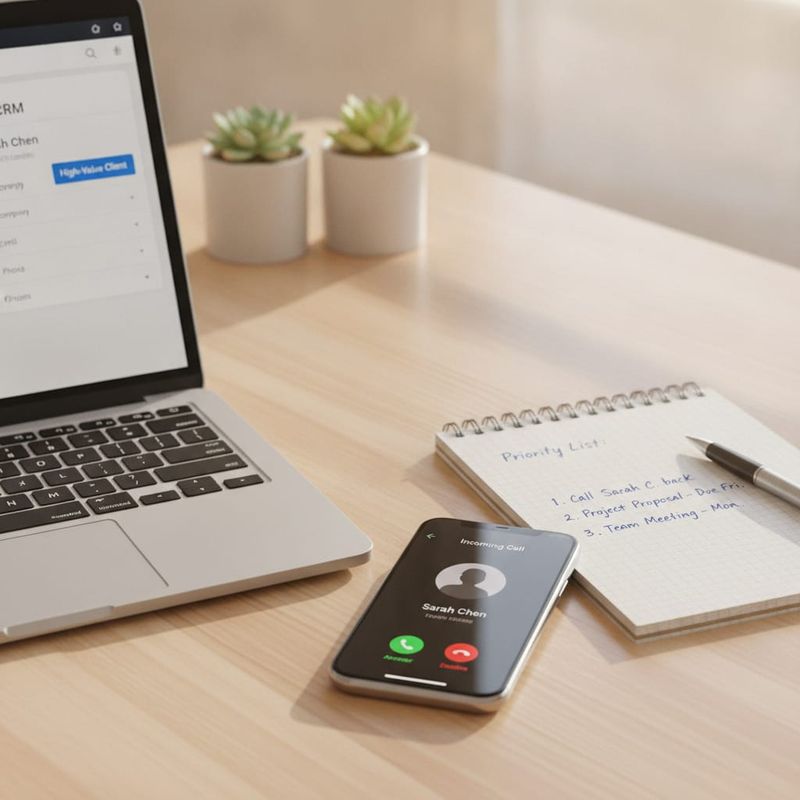
Before you trust the order, sample 20 accounts by hand with an account manager. Read the history, look at the rank, ask whether it feels right. If it doesn't, fix the weights. To put money on what the top segments are worth, run your dormant count and average deposit through the dormant trader revenue calculator before the weights meeting. It shortens the argument about who gets called first.
5. Which accounts must be excluded before the list reaches the dialer?
Remove opt-outs, national registry matches, open complaints or chargebacks, accounts under regulatory or AML restriction, and any vulnerable or self-excluded markers before segmentation, not after. Exclusions applied last leak back in the moment someone re-runs the export. Record the count removed at each step so the final list size can be audited.
The rules also decide which fields you can't skip. In the US, the FTC's Telemarketing Sales Rule limits outbound calls to a residence to 8:00 a.m. to 9:00 p.m. local time at the called person's location, which is why phone country and time zone sit in the export. In the UK, PECR regulation 21 bars unsolicited marketing calls to any number on the register kept under regulation 26 (the TPS), with a 28-day grace period for newly listed numbers. And under GDPR Article 21 a trader can object to direct marketing at any time, after which their data can no longer be processed for it, so the consent flag needs a date and a source, not a tick.
None of that is legal advice. Confirm the registries, the consent basis and any AI disclosure wording for each country in the book with your compliance officer or counsel before the campaign is built. The suppression rules post lists the flags to union across the CRM, the calling platform and the email tool so an opt-out in one system blocks the call in all three.
6. How does segmentation change the AI reactivation call?
Each segment gets its own opening line, its own single ask and its own handoff. The agent tells the warm-and-funded trader the balance is still there, asks the payment-blocked trader whether they want help finishing the deposit, and asks the long-dormant trader whether the account should stay open. Same campaign, six scripts, one outcome field written back per segment.
On Topcalls the segment code travels with the lead into the campaign. The AI voice agents read it and pick the script, answer in real time so the pause after "I'm calling about your trading account" doesn't sound scripted, and speak the language from the platform setting across up to 78 languages. Every minute costs $0.35 all-inclusive, with recording, transcription and analytics in the price, so a two-minute courtesy call to the long-dormant segment costs $0.70 and a mis-segmented account costs minutes rather than an agent's afternoon.
The outcome writes back to the CRM field you named in the plan, tagged by segment. That's what makes wave two possible: you can see which segment booked the most account manager calls per 100 dials and move the minutes there. The customer reactivation solution shows the setup end to end, the reactivation offer post covers what to say to each segment without offering a bonus your regulator won't allow, and AI caller scripts for dormant traders has the script structure.
7. When doesn't trader segmentation fit?
Skip it when the dormant book has fewer than about 500 callable accounts, when the export has no trade or deposit history, or when compliance hasn't cleared calling in the main countries yet. In those cases a single courtesy script on the whole list, or no calls at all, beats a segmentation plan built on missing columns.
- Books under about 500 accounts: Six segments of 80 tell you nothing. Call the whole list with one script, then segment on the results of the first wave.
- No history in the export: If all you have is a phone number and a registration date, those are cold leads, not dormant traders. Treat the list as new-lead outreach. The dormant trading account reactivation post covers the case where history exists.
- Compliance hasn't signed: A perfectly scored list with an unconfirmed consent basis is a liability. Get the country table and the exclusion list signed before anything else.
- IB-referred or institutional accounts: A partner's clients usually need the partner in the loop. The segment for them is "ask the IB", not a call.
Segment on Monday, score on Tuesday, get compliance to sign on Wednesday, and the first wave can go out within about two weeks. If you'd rather walk through your own export with someone who has built these lists, book a 30-minute call and you'll have a proposal within 48 hours of it.
The segmentation plan template gives you the bands, the score and the exclusion list in one sheet, ready for the compliance signature.
Frequently Asked Questions
Get AI calling tips in your inbox
No spam. One email per week with actionable sales automation tips.