The do-not-call screening forex campaigns rely on is usually one scrub at list build, three weeks before the last call goes out. A dormant trader registers on a do-not-call list on Monday, and the retention dialer, still working the old file, calls them Thursday. That gap is what regulators fine. The US rule is a re-sync at least every 31 days, the UK bars calls once a TPS listing is 28 days old, and a trader who says "stop" to your AI agent has to be blocked from the sales floor's dialer the same morning. This guide covers the registers, the refresh cadence, the opt-out path and the evidence a broker's compliance desk keeps for every call.
Key Takeaways
- US sellers must sync calling lists with the National Do Not Call Registry at least every 31 days; the FTC penalty runs up to $53,088 per violating call.
- The FTC's registry held over 258 million active registrations in fiscal year 2025, so a dormant-trader list with US numbers will hit it.
- PECR regulation 21 in the UK bars marketing calls to a TPS-listed number once the listing is 28 days old, and to anyone who has told you to stop.
- A retry or callback scheduled days after the first attempt is a new call, and it needs a screen no older than the register's allowed interval.
- Topcalls runs calls at $0.35 per minute all-inclusive, and writes each call's opt-out outcome to the CRM through Integrations and webhooks.
1. What Do-Not-Call Screening Forex Campaigns Need Before Dialing?
Do-not-call screening for a forex campaign checks three lists before every dial: the external registers for each country on the list, the brokerage's own internal opt-out list, and the campaign's exclusions by account state. Each list needs an owner, a refresh date and a place where the result lands on the trader record. A screen that lives in a spreadsheet on an ops manager's laptop leaves no evidence.
- External registers: the national and state do-not-call registers that cover the numbers on the list. A file mixing UK, German and US traders needs three sets of rules.
- Internal opt-outs: every trader who told anyone at the brokerage to stop calling, whether they said it to the AI agent, a retention rep, the support inbox or the client portal.
- Campaign exclusions: accounts kept out for reasons unrelated to a register. KYC under review, an open complaint, a chargeback dispute, a self-excluded trader, anyone the retention desk is already working by hand.
Three lists, three owners. Most brokerages have the first, half of the second and none of the third written down. The exclusion rules for reactivation campaigns get their own article, so this one stays on the registers and the opt-out path. Before either, decide which system is the single place a trader's do-not-call status lives. If the answer is "all of them", a trader will be suppressed in one and dialable in another.
2. Which Do-Not-Call Registers Apply to a Broker's List?
The registers that apply depend on where each trader's number is, not where the brokerage is licensed. US numbers are screened against the FTC's National Do Not Call Registry plus the relevant state lists. UK numbers go against the TPS and CTPS under PECR, French numbers against Bloctel, Canadian numbers against the National DNCL, Australian numbers against the ACMA register. Compliance confirms which apply to your entity and legal basis.
| Country | Register | Operator | Refresh rule |
|---|---|---|---|
| United States | National Do Not Call Registry plus state lists | FTC | Sync at least every 31 days |
| United Kingdom | TPS and CTPS | ICO under PECR | Listing binds after 28 days |
| France | Bloctel | French government | Confirm the interval with compliance |
| Canada | National DNCL | CRTC | Confirm the interval with compliance |
| Australia | Do Not Call Register | ACMA | Confirm the interval with compliance |
The FTC's National Do Not Call Registry Data Book for fiscal year 2025 reports that "the Registry included over 258 million active registrations" and that the agency "received over 2.6 million Do Not Call complaints" in the year. A dormant-trader file with a few thousand US numbers will match.
The existing-customer question is where brokers get it wrong. The FTC's Q&A on the do-not-call provisions says: "A company with which a consumer has an established business relationship may call for up to 18 months after the consumer's last purchase or last delivery, or last payment, unless the consumer asks the company not to call again." A trader dormant for three years is outside that window; a lead who never funded falls under the three-month inquiry rule instead. Compliance decides the bucket per segment; the consent position for dormant traders and the TCPA rules for financial services calls are covered in their own guides.
The UK is stricter on the internal side. PECR regulation 21 bars unsolicited marketing calls where "the called line is that of a subscriber who has previously notified the caller that such calls should not for the time being be made on that line" or where the number is on the TPS register, with a carve-out only while a listing is under 28 days old. The PECR guide for AI calling covers the rest.

The Do-Not-Call and Suppression Audit Checklist walks a compliance officer and a retention lead through one campaign in about two hours: the register per country, the download date actually used, the opt-out path, the exclusion table and the evidence for ten real calls.
3. How Often Should a Forex Campaign Re-Screen Its List?
Re-screen before the campaign starts, again inside any campaign that runs longer than the register's allowed interval, and on every retry or callback scheduled days after the first attempt. In the US the FTC requires a sync with the registry at least every 31 days. In the UK a TPS listing binds after 28 days. The internal opt-out list refreshes faster than either, within minutes of the call.
The FTC's wording leaves no room: "If you are required to use the registry, you must synchronize your lists with an updated version of the registry at least every 31 days." A six-week reactivation campaign screened once at import runs its last two weeks on an expired screen. The file date matters, not the subscription date. Brokerages have paid for a subscription and kept scrubbing against the previous quarter's download.
Retries are the part dialers miss. A busy signal retried in minutes is the same call. A callback booked for next Tuesday is a new one, and if the trader registered on Monday, Tuesday's call needs a fresh check. The do-not-call rules for AI dialers cover the mechanics.
- Every 31 days for US numbers: re-download the registry and re-screen every number still in the campaign, including ones waiting on a retry.
- Every retry more than a day out: if the number's screen date has passed the allowed interval, pause it rather than dialing.
- Every minute for internal opt-outs: a flag from a call this morning has to block the afternoon batch.
4. Where Does a Trader's Opt-Out Go After the Call?
A trader's opt-out goes to one owning system, the CRM or back office that holds the do-not-call flag, and every other system reads from it. The flag is write-once. It suppresses the trader on every calling path: the AI campaign, the sales floor, the retention desk, an affiliate's dialer. The time from the words "stop calling me" to the flag showing in the CRM should be minutes, and someone should have measured it.
On the AI side, the agent has to recognize an opt-out in every language the campaign runs in, including the indirect versions. "Take me off your list" and "I'm not interested, stop" both set the flag, and so do their equivalents in each of the up to 78 languages Topcalls calls in. Test each one on your own number and read the transcripts. Don't take any vendor's word for it, ours included.
Then the write-back. Topcalls sends the call outcome, opt-out included, to the CRM through Integrations and webhooks, with 764+ tool connections. Time it on a test call. Then check the next nightly import: a CRM sync that overwrites the contact record is the most common way an opt-out disappears. GDPR erasure requests get their own path, and the suppressed number or a hash of it stays behind after the record is deleted, or the trader comes back on the next partner file.
5. How Do You Wire Screening Into an AI Calling Platform?
Wire screening in as a dial-time gate, not an import step. Your list feed should hold back any number whose screen date is older than the allowed interval, whose internal do-not-call flag is set, or whose account state is on the exclusion list. Topcalls dials only inside the calling hours you set, while TCPA, TSR, DNC and GDPR duties stay with you; a campaign is usually live within about two weeks.
- Normalize the file. Convert every number to E.164 with country code, no spaces, no leading zeros. A number stored as 07700 900123 in MT5 and +447700900123 in the register never matches. Log how many failed and don't dial those.
- Screen per country. Run each number against every register that covers its country and against the internal opt-out list in the same pass. Both results and the screen date go onto the trader record.
- Apply the exclusions from the CRM. KYC under review, open complaint, chargeback, self-exclusion, already being worked by a human. Anything on the exclusion table stays out of the import.
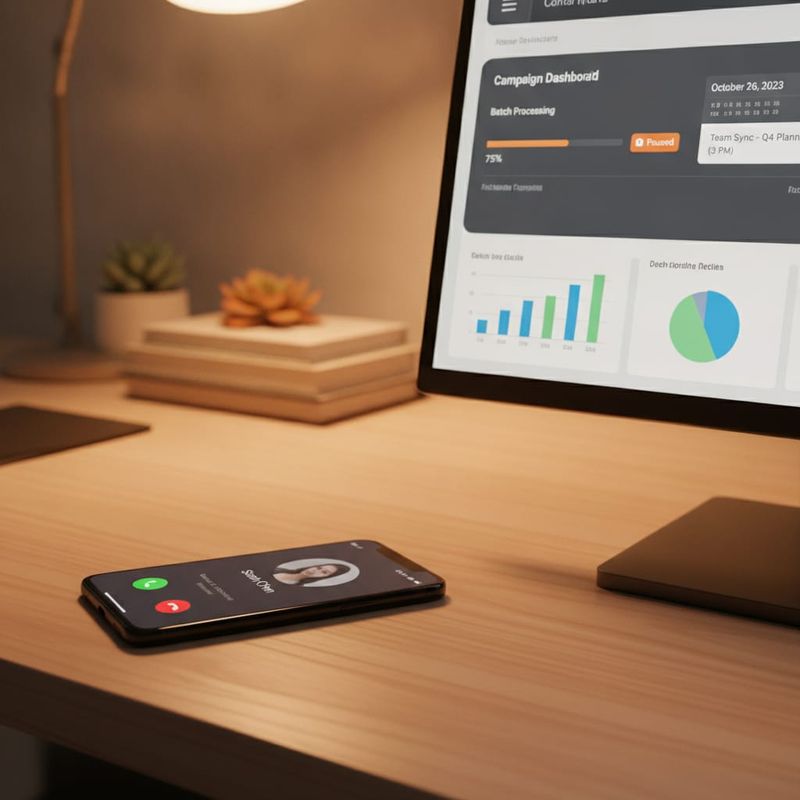
- Import the survivors and set the calling window per country. For US numbers the Telemarketing Sales Rule's window is 8 a.m. to 9 p.m. in the trader's local time, so the platform has to know the time zone of the number, not the desk.
- Route the opt-out outcome back to the CRM. Set the do-not-call outcome to write the flag through the connector or a webhook, then test it with your own phone and a stopwatch.
- Pause on expiry. Stop dialing any batch whose screen date has passed the allowed interval, and put the re-screen on a calendar.
The gate belongs in the platform because volume makes a manual check impossible. Topcalls handles 63,000+ AI calls a day across its customers, and one broker's campaign can dial thousands of dormant accounts in an afternoon. Secure infrastructure covers how recordings and outcomes are stored; customer reactivation shows the campaign shape most brokers start with. Disclosure, recording and promotions rules sit in the compliant AI calling setup for forex brokers.
6. What Evidence Does the Compliance Desk Keep per Call?
For every call, the compliance desk should be able to produce the screen date and source for that number, the legal basis recorded for the list, the campaign's exclusion rules on the day, the recording and transcript, and the opt-out outcome if the trader gave one. Topcalls records and transcribes every call inside the $0.35 per minute rate, so the last two are there by default. The first three are the brokerage's job.
A useful test: pick ten real calls from last month and reconstruct the evidence for each. Time it. If the answer is "a day, and we'd have to ask three people", the process isn't audit-ready, whatever the policy says.
The real-time analytics view in Topcalls shows outcome by call, opt-outs included, so a compliance officer can pull a trader's history without asking the retention desk. The register download date, the scrubbing report and the legal-basis sign-off live in the compliance folder, tagged with the campaign name.
7. What Does Screening Cost Versus Getting It Wrong?
Screening costs a register subscription, a scrubbing run and a few hours of an ops manager's week per campaign. Getting it wrong costs up to $53,088 per call under the FTC's Telemarketing Sales Rule, plus the trader. At $0.35 per minute all-inclusive, a reactivation call to a dormant trader is one of the cheapest things a brokerage does. A call to a suppressed trader is the most expensive.
The FTC's Q&A puts the per-call number plainly: if a company calls a consumer who asked to be put on its do-not-call list, "it may be subject to a fine of up to $53,088." Nobody prices a campaign that way, so the gate has to be automatic.
The other side of the ledger is what a clean list is worth. Run your dormant book through the dormant trader revenue calculator to see the deposit recovery a compliant campaign can reach, then compare that with the cost of the scrub. Or book a 30-minute call and bring the list size, the countries and the CRM.
8. When This Doesn't Fit
Screening fixes one problem: calling people who said no or who are on a register. It doesn't fix a list with no legal basis. If compliance hasn't recorded a basis for the segment, don't dial it.
- No decision on existing-customer treatment. If compliance hasn't confirmed whether traders dormant for three years still count as customers under each register's rules, wait for the decision.
- Countries with no register access. If part of the list sits in a country where you can't get a register subscription, cut those numbers rather than dialing them unscreened.
- A CRM that can't hold a write-once flag. If every import overwrites the contact record, fix the CRM before any AI campaign. A platform-side suppression list on its own doesn't stop the sales floor.
The software runs the gate on every dial; the compliance desk decides what it checks. Write the second part down, then automate it.
Frequently Asked Questions
Get AI calling tips in your inbox
No spam. One email per week with actionable sales automation tips.