A dormant trader who filed a complaint on Monday should not get a reactivation pitch on Thursday. Reactivation campaign suppression rules are the checks that stop that call, and at most brokerages the reactivation campaign suppression rules live in three places that don't talk to each other: a do-not-call scrub at import, a compliance memo, and the retention lead's memory.
This article covers the rules that belong in the campaign itself: which account states to exclude, what to do with a trader who deposited after the list was built, how many attempts and how long a cool-off, where an opt-out goes, and what the platform should do when a check can't run. The register scrub has its own guide in How to add do-not-call screening to forex campaigns; this one starts where that scrub ends.
Key Takeaways
- A US consumer's request to a specific company not to call overrides an established business relationship, and the FTC says that request stays on the company's own list for at least 5 years.
- The FTC's Telemarketing Sales Rule bars calls before 8 a.m. or after 9 p.m. in the consumer's local time, so a calling window must be set per trader, not per desk.
- UK PECR regulation 21 bars marketing calls to any line whose subscriber has objected, and to TPS-listed numbers once the listing is 28 days old.
- The FCA's FG21/1 guidance found 53% of UK adults showed a characteristic of vulnerability in October 2020, which is why a vulnerability flag needs its own exclusion rule.
- Topcalls writes each call's opt-out outcome to the CRM through Integrations, and bills $0.35 per minute all-inclusive, so a skipped call costs nothing.
1. What Are Reactivation Campaign Suppression Rules?
Suppression rules are the conditions that remove a trader from a reactivation campaign before the dial, or stop a dial that's already scheduled. They sit in three layers: the legal floor (do-not-call registers and objections), the brokerage's own opt-out list, and business exclusions by account state, recent activity, attempt count, jurisdiction and vulnerability. Each rule needs a system of record, a check time and an owner.
The first layer gets all the attention because a regulator can fine it. The FTC's do-not-call Q&A for sellers puts the penalty at up to $53,088 per violation, and each call can count as a separate one.
But the other two layers are where reactivation campaigns actually go wrong. Nobody gets fined for calling a trader whose KYC is under review. They just lose the trader, and the compliance desk finds out from the complaint.
2. Which Account States Should a Reactivation Campaign Exclude?
Exclude every account whose state makes a deposit pitch wrong: closed or blocked accounts, accounts under KYC review, accounts with an anti-money-laundering flag, accounts with an open complaint, dispute, chargeback or regulatory inquiry, and self-excluded traders. The state comes from MT4, MT5 or the back office, not the CRM, and the calling platform should read it at import and again at dial time.
The reason to name the source system is that the CRM is usually a day behind. A back-office analyst freezes an account at 10:00 for a document mismatch. The CRM sync runs at midnight. The campaign, working from a CRM export, calls that trader at 14:00 and asks them to fund.
- KYC under review: the trader can't deposit until the review clears, so the call asks for something they can't do. Hold them until the state changes, then route them to a KYC reminder flow instead of a reactivation pitch.
- Open complaint or dispute: a reactivation call mid-complaint reads as pressure, and it will be quoted back to you. The flag usually lives in the ticketing system, which means a third integration.
- AML or fraud flag: the compliance desk owns this one outright. Ops doesn't get to decide it's stale.
- Closed, blocked or self-excluded: a closed account has nothing to reactivate, and a self-excluded trader asked you to end the relationship, which covers the calls too.

Write each of those as a rule with a field name, not as a sentence in a policy. "Exclude where back_office.account_status in (closed, blocked, kyc_review, aml_hold)" can be configured and tested. "Don't call anyone with problems" can't.
The audit checklist behind this article walks through every one of those states with the system of record, the check timing and the owner beside each, plus the opt-out trace and the dial-time test.
3. Why Does a Trader Who Deposited Yesterday Need a Rule?
A reactivation list is a snapshot, and traders keep trading after it's taken. Any trader who deposited, placed a trade or logged in after the list was built should drop out of the campaign automatically, because the dormant pitch is now wrong and the trader knows it. Refresh activity data daily at minimum, and at dial time where the platform supports it.
The failure looks like this. A list of 4,000 traders with no login in 90 days goes to the campaign on the 1st. By the 10th, a few dozen have come back on their own, some because an email landed, some because gold moved. The agent calls one of them and opens with "we noticed you haven't traded in a while." The trader traded that morning.
The fix is a recency exclusion tied to the trading platform, not the CRM. Topcalls reads campaign lists through Integrations with 764+ tool connections and accepts webhook updates mid-campaign, so a "last_activity" field can be refreshed without rebuilding the list. The data-side of this, including how to keep the activity fields honest, is in trader reactivation data hygiene.
And there's a second recency rule most brokerages miss: exclude anyone the retention desk is already working by hand. Two people calling the same trader in one week is the fastest way to earn an opt-out.
4. How Do Attempt Limits and Cool-Off Periods Work?
An attempt limit caps how many times one campaign dials one trader; a cool-off period bars the trader from the next campaign for a set time after they declined. Both are numbers the compliance officer sets and the calling platform enforces, and both need a calling-hours rule in the trader's local time zone beside them.
The FTC's Telemarketing Sales Rule compliance guide says telemarketers may not call consumers before 8 a.m. or after 9 p.m. in the consumer's local time zone. A brokerage in Limassol calling a list that spans Manchester, Dubai and Johannesburg has three windows to honor, so the window has to be derived from the number or the address per trader.
| Rule | Trigger | System of record | When checked |
|---|---|---|---|
| Attempt limit | Nth dial on this campaign | Calling platform | Before each dial |
| Cool-off after decline | Declined on a prior campaign within N days | CRM outcome field | At list import |
| Calling window | Local time outside the permitted hours | Number or address country | Before each dial |
| Human-desk overlap | Retention rep has an open task on the trader | CRM task queue | At import and daily |
| Retry after voicemail | Retry scheduled for a later day | Calling platform | Fresh screen before retry |
A retry is a new call. If the trader registered on a do-not-call list between attempt one and attempt two, attempt two needs a fresh check. The same applies to a callback the AI agent books for next Tuesday and to the human transfer that follows a warm conversation. How many attempts and how far apart they sit is a cadence question, covered in forex reactivation call cadence; suppression is what stops the cadence when the trader's state changes.
5. Where Does a Trader's Opt-Out Go After They Say It?
A trader who says "stop calling me" to the AI agent, a retention rep, the support inbox or the client portal must land on one internal do-not-call list within minutes, and that flag must be write-once. The FTC's do-not-call Q&A says a specific request to a company not to call overrides an established business relationship, and the compliance guide says the request stays on the company's list for at least 5 years.
The UK rule is the same shape. PECR regulation 21 bars unsolicited marketing calls to any line whose subscriber has notified the caller that such calls should not be made, and to TPS-listed numbers once the listing is 28 days old. The objection is the trader's, so it doesn't expire when the campaign does.
Three things break this in practice:
- The nightly import overwrites the flag. A CRM sync that replaces the contact record replaces the do-not-call field with whatever the source file had. Test it by importing a suppressed trader and checking the flag survives.
- The opt-out only suppresses one campaign. A trader who objected to calls has objected to calls from the brokerage, not from campaign 14. The flag has to apply at the platform level, and compliance decides whether it also covers SMS and email.
- The agent keeps pitching. Continuing to sell after "stop" is the moment a complaint gets written. Pull three transcripts with an opt-out and read the next thirty seconds.
Script an opt-out on an AI call as a terminal outcome: the agent confirms it and ends the pitch, and the call outcome goes back to the CRM through Integrations and webhooks so your own rules can mark every copy of the record do-not-call. The consent side, including what a dormant trader agreed to when they signed up, is in dormant trader marketing consent.
6. Which Traders Do You Exclude for Vulnerability or Jurisdiction?
Exclude any trader carrying a vulnerability flag, a deceased marker or a number tagged as a shared or business line, and exclude any trader whose country field is blank, is outside the entity's permitted marketing territory, or doesn't match the phone number's country code. Vulnerability flags are set by compliance; ops honors them at dial time.
The FCA's FG21/1 guidance on the fair treatment of vulnerable customers names four drivers: poor health, life events, low resilience to financial or emotional shocks, and low capability. The same guidance cites FCA research showing 53% of UK adults displayed a characteristic of vulnerability in October 2020. For a CFD brokerage, low resilience to a financial shock is the one that matters: a "come back and fund" call to a trader who blew up their account during a life event isn't a retention win.
Jurisdiction is a data-quality rule as much as a legal one. A UK address with a +971 number is either a trader who moved or a record that's wrong, and in both cases somebody should look before the dial. The cross-border rules by entity and licence are in cross-border AI calling compliance for brokers.
7. What Should the Platform Do When a Check Can't Run?
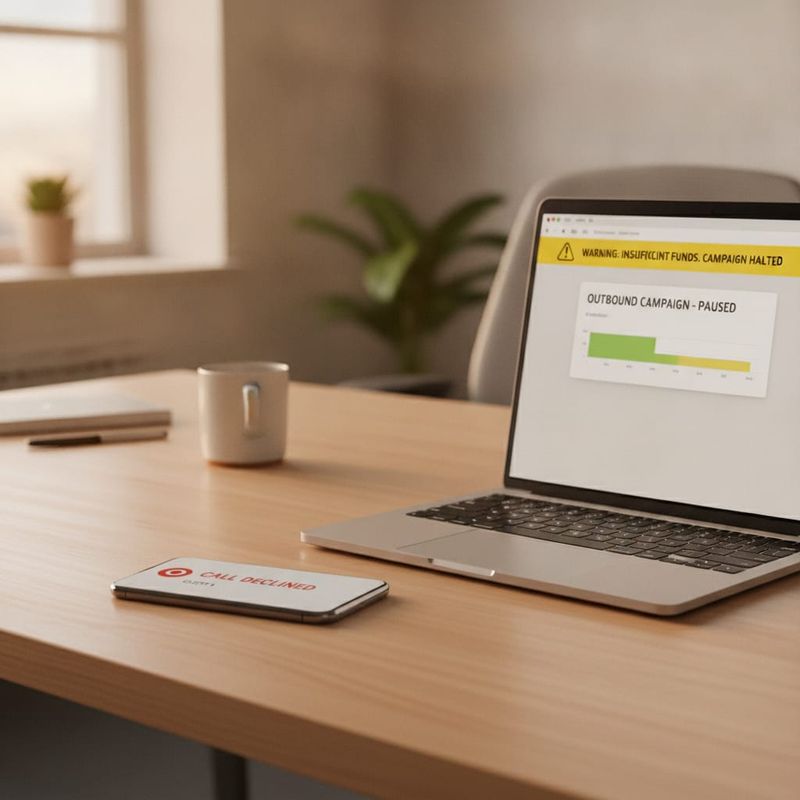
Fail closed. If a suppression source can't be reached, the screen date has expired, or the account-state feed is stale, the calling platform should pause the batch rather than dial. A platform that dials because the check couldn't run has turned every outage into a compliance event.
Ask a vendor for the mechanism, not a yes. The test is small: import a list of your own numbers, flag one contact as do-not-call after import, run the campaign, and confirm the flagged number was never dialed. Keep the call log. That single log answers most of what an auditor or a complaining trader will ask.
Whatever platform you pick should re-check the do-not-call flag and the exclusion flags immediately before each dial as well as at import. On Topcalls, every call carries a recording, a transcript and a disposition in real-time analytics so the compliance desk can reconstruct any call in minutes. The recording and retention side runs on secure infrastructure with 99.9% uptime. An older piece on do-not-call lists and AI dialers covers the mechanics from the dialer's side.
8. What Do Suppression Rules Cost a Reactivation Campaign?
Suppression costs list size, not money. A rule set like the one above typically removes a share of the raw dormant list, and every removed trader is one the campaign would have annoyed, breached or wasted a minute on. At $0.35 per minute all-inclusive, the calls Topcalls doesn't place cost nothing; the one call that shouldn't have been placed can cost up to $53,088 under the FTC's rule.
The revenue side is unchanged by suppression, because the traders you removed weren't going to fund anyway. Run the remaining list through the dormant trader revenue calculator to see what a cleaner, smaller list is worth, and put the customer reactivation flow next to it. If the numbers hold, book a 30-minute call and bring the campaign configuration; a proposal follows within 48 hours.
9. When This Doesn't Fit
Suppression rules at this depth don't fit a brokerage with one list, one country and one person doing the calling. The rules still apply, but a spreadsheet column and a weekly check will hold for a list of a few hundred traders.
They also don't fit a campaign built on a purchased list. If the trader never had an account with the brokerage, there's no account state to exclude on, no established relationship, and the legal floor is far higher. That's a different campaign with a different consent basis, and most of this article assumes the trader is yours.
And they don't replace legal advice. Which registers apply, how long a cool-off should be, what counts as vulnerability: those are answers the compliance officer or counsel gives, in writing, for each country on the list.
A reactivation campaign is judged by the traders it brings back and by the ones it left alone. Start with the second group.
Frequently Asked Questions
Get AI calling tips in your inbox
No spam. One email per week with actionable sales automation tips.