An account that never finishes verification never deposits. KYC reminder calls for brokers exist to close that gap: the trader registered, installed MT5, maybe uploaded a blurry passport photo, then went quiet. Most onboarding desks send two emails and move on.
This guide covers how to automate KYC reminder calls for brokers from the CRM trigger to the disposition written back. What UK, EU and US rules say about verification timing, in their own words. Which four events deserve a call. What the agent may say and must never ask for. How objections and handoffs work, what a call costs at $0.35 a minute, and how the outcome lands in your CRM.
Key Takeaways
- UK regulation 30 lets a broker finish identity verification after first contact only if it's done "as soon as practicable", so an unverified backlog has a legal clock on it.
- US broker-dealers under 31 CFR 1023.220 verify identity "within a reasonable time before or after" account opening, and FINRA says that time isn't defined.
- Four CRM events cover most of the queue: no documents after signup, a rejected document, an expiring document, and a deposit held pending verification.
- A KYC reminder call has one job, getting the trader to the upload page. It never takes document numbers, passwords or card details over the phone.
- Topcalls runs KYC reminder calls at $0.35 per minute all-inclusive, so a two-minute reminder costs $0.70 and three attempts cost $2.10.
1. Why do KYC reminder calls for brokers matter?
KYC reminder calls for brokers matter because an unverified account can't trade, can't withdraw and at most brokers can't deposit either. Every day it sits in the queue is a day of zero revenue from a trader who already chose you. Email reminders get filed. A two-minute phone call gets the document uploaded while the trader is still on the line, or at least gets the link to the right inbox.
The onboarding funnel leaks at exactly this step. Marketing paid for the click. The trader created an MT5 login, reached the document upload, and stalled: wrong utility bill, cropped ID photo, phone died. Then the CRM shows "pending documents" for three weeks and nobody owns it, because onboarding thinks compliance has it and compliance thinks it's a sales lead.
A verification that never finishes is also a compliance question, because the regulator set a clock when it let you open the account first and verify second. Brokers already running dormant trader reactivation calls find the unverified queue is the easier list: these traders signed up last month, not two years ago.
2. What do regulators require on KYC verification timing?
Regulators in the UK, EU and US all allow a trader to register before identity verification is complete, but each sets a clock and a consequence. UK regulation 30 and EU Article 14 both require verification to be completed "as soon as practicable" after first contact. The US broker-dealer CIP rule says "within a reasonable time before or after" the account is opened. Miss the clock and the account has to be restricted or closed.
| Jurisdiction | Rule | Timing language | If verification fails |
|---|---|---|---|
| UK | Money Laundering Regulations 2017, regulation 30 | Verify before the relationship starts, or "as soon as practicable after contact is first established" where there is "little risk" | Financial institutions may open the account early only with safeguards so no transactions run before verification is completed |
| EU | Directive (EU) 2015/849, Article 14 | Verification may be completed during onboarding "if necessary so as not to interrupt the normal conduct of business", then "as soon as practicable after initial contact" | Article 14(4): don't carry out the transaction, terminate the relationship, consider a suspicious transaction report |
| US | 31 CFR 1023.220 (broker-dealer CIP) | "Within a reasonable time before or after the customer's account is opened" | The CIP must state when to close an account after verification attempts fail and when to file a SAR |
Regulation 30 of the UK Money Laundering Regulations 2017 allows verification during the establishment of a business relationship only where "this is necessary not to interrupt the normal conduct of business" and "there is little risk of money laundering and terrorist financing". Article 14(2) of the EU's Fourth Anti-Money Laundering Directive uses almost the same words. In the US, 31 CFR 1023.220 requires a name, date of birth, address and identification number before the account opens, and FINRA's AML FAQ states plainly that "the term 'reasonable time' is not defined by the rule".
What this means for the reminder call: it's a service call in support of a legal obligation, not a marketing call. That changes the tone, the lawful basis you document under GDPR, and what the agent may say. It doesn't remove the need to check calling hours, do-not-call lists and AI call disclosure requirements, and US numbers still carry TCPA obligations. Confirm the wording of every disclosure with your compliance officer or counsel before the first call.
3. Which accounts should trigger a KYC reminder call?
Four CRM events cover most of a broker's verification queue: an account opened with no documents after a set number of days, a document rejected by the KYC provider, a document about to expire, and a deposit held pending verification. Each trigger gets its own wait period, attempt cap and call goal, and every trigger fires from the CRM or onboarding platform, never from a manual export someone runs on Friday.
- Registered, no documents: the largest bucket. Call goal is an ID and proof-of-address upload. Wait a few days, not an hour.

- Document rejected: call within hours, while the trader still remembers uploading. Goal is a corrected upload, with the rejection reason in plain words.
- Document expiring: call a set number of days before expiry. Goal is a renewed document before the account gets restricted.
- Deposit held pending verification: the most urgent and the most welcome call. The trader wants to trade; the goal is to unblock the deposit by finishing verification.
Calling an hour after registration feels pushy. Calling three weeks later means the trader has forgotten why they signed up. Pick a number per trigger and revisit it after 200 calls. Cap attempts too: a trader who didn't pick up twice should get an SMS or an email, not a fourth call.
Write the exclusion list before anyone dials: accounts flagged by compliance, traders on your internal do-not-call list, anyone who withdrew consent, anyone already talking to a human agent. Use the trader's country for the calling window, not the office timezone. The same rules apply to incomplete registration follow-up, which usually runs as a sister campaign one funnel stage earlier.
The KYC Reminder Call Flow Template lays out this trigger table with blanks for your wait periods and attempt caps, plus the identity check, the script points, seven objection branches, handoff rules and nine CRM disposition codes.
4. What should an automated KYC reminder call say?
An automated KYC reminder call says who's calling and why, confirms it's speaking to the account holder with one soft identifier, names the document category still missing, explains where to upload it, offers to send the link by SMS or email, and closes on one next step. The call never reads out personal data, never takes document numbers or passwords, and never pitches a product.
The identity check comes first
The agent opens with the broker name and says the call is about finishing account verification. Nothing about balances, deposits or document types until the identity check is done. Where a jurisdiction expects it, the agent says it's an AI agent up front, in a sentence compliance has approved word for word.
For the check itself, ask for one soft identifier: the email used at signup, or the month the account was opened. Never a full date of birth, a document number, a password or a card number. If the person says the account isn't theirs, the agent apologises, doesn't confirm an account exists, and ends the call. If calls are recorded, the notice goes in the script, and MiFID II firms log where the recording is stored.
Five talking points, not a script
- Why we're calling: the account is open but verification isn't finished, and what that blocks. Don't threaten closure with a deadline compliance hasn't confirmed.
- What's missing: photo ID, proof of address, or both. For a rejection, give the reason in plain words. Don't read back data that came from the document.
- How to finish: client portal, mobile app, or the link the agent can send now. Quote the same review time your KYC team publishes, or traders call support twice.
- Send the link: SMS or email to the contact details on file. Don't take a new email or phone number and change the record on the call.
- Close: repeat the one next step, thank the trader, say what happens if nothing arrives. No bonuses, no trading ideas. Service call, not promotion.
Tone matters most on rejected-document calls. Most rejections are a blurry photo or a cropped corner, and the agent should sound like it's helping fix a small problem, not like the trader failed a check. Topcalls AI voice agents respond in under 500ms and speak up to 78 languages, so a trader who registered in Spanish or Arabic hears the reminder in the language they signed up in.
5. How do you handle objections and hand off to a human?
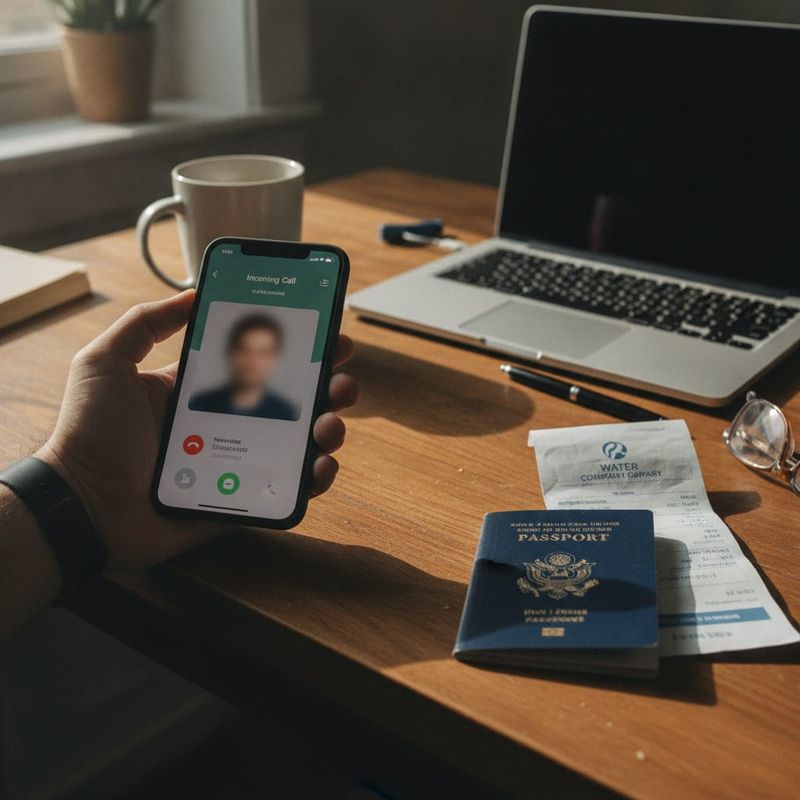
Handle objections with one response and one next action per branch, and hand off to a human on a fixed list of triggers: the trader asks for a person, raises a complaint, disputes a held deposit, mentions a regulator or a lawyer, or asks about a document status the agent can't see. Anything outside the branch table goes to handoff, not improvisation.
| Trader says | Agent branch | Next action |
|---|---|---|
| I already uploaded it | Thank them, say the system shows it pending or missing, offer a fresh link to check status | Disposition: says uploaded. Task for the KYC team within the working day |
| Is this a scam? | Give the broker name, say the agent won't ask for passwords, card or document numbers, invite them to log in to the portal directly | Disposition: verification concern. No further calls until the trader logs in or contacts support |
| I don't have it with me | Ask when it'd be convenient, send the link now so they can do it later | Disposition: callback requested, date and time captured |
| I want to talk to a person | Agree immediately, transfer or book a callback with a named team | Handoff |
| Stop calling me | Confirm the request, say it'll be actioned, end politely | Disposition: do not call. Number suppressed the same day |
A vague "if the trader gets upset" rule produces inconsistent calls and inconsistent CRM data, so the handoff triggers are written down. Warm transfer suits deposit disputes during office hours. A callback suits document questions the KYC team answers from the queue. Either way the receiving person sees the trigger, what the trader said and which branch fired. The full mechanics are in the guide to human handoff on AI calls.
Out of hours, the agent books a callback slot and sends a confirmation, and the CRM task goes to a named queue with a due time. That's the same follow-up automation pattern brokers use for deposit reminders, pointed at a different queue.
6. What does automating KYC reminder calls cost?
Topcalls prices AI calls at $0.35 per minute all-inclusive, covering the voice model, telephony, recording, transcription and analytics with no per-seat, setup or telephony add-ons. If a KYC reminder lasts two minutes, one attempt costs $0.70. Three attempts on an account that never answers cost $2.10.
For the human side, pull last month's dial count and hours from your onboarding team and divide. Topcalls customers see a 3-10x lift in call volume for the same team and a 60%+ lift in connect rate once retries follow the trader's timezone. The dormant trader revenue calculator was built for reactivation lists, but the inputs are the same: your unverified backlog as the list size, your first-deposit average as the value per account.
The bigger number is downstream. An account that verifies today enters the first-time deposit follow-up sequence tomorrow. An account that doesn't verify enters nothing.
7. How does the call outcome get back into the CRM?
Every KYC reminder call ends in exactly one disposition, written to the CRM automatically through Integrations or a webhook: link sent, says uploaded, callback requested, handoff, verification concern, not interested, do not call, no answer, or wrong number. Each code maps to a CRM field and one follow-up, so the KYC queue and the calling campaign stay in step without anyone re-keying call notes.
- Link sent: KYC status set to reminder sent, timestamp and channel logged. Check for an upload after a set number of hours, then one more reminder by SMS or email.
- Says uploaded: a task lands with the KYC team to check the queue. They confirm or re-request within the working day.
- Verification concern: flag on the record, calls paused. Support sends a note from the official email address, and nothing dials until the trader responds.
Topcalls posts the transcript, summary and disposition through Integrations, which connects to 764+ tools including HubSpot, Salesforce and the webhook your onboarding platform exposes. Before go-live, run one test call per disposition and check the record. A code that doesn't land in the CRM is a call nobody follows up. Mapping codes to fields is covered in AI call disposition automation. A live campaign with compliance sign-off takes around two weeks.
8. When doesn't automating KYC reminder calls fit?
Automated KYC reminder calls don't fit when the queue is tiny, when the KYC provider can't tell you why a document was rejected, when the CRM can't fire the trigger or accept the disposition, or when compliance hasn't signed off on AI disclosure and calling hours for every country on the list. A few dozen accounts a month is a job for one person and a phone.
High-risk accounts don't belong in the campaign either. A politically exposed person, a sanctions screening hit, or anyone flagged for extra due diligence gets a compliance analyst, not an automated reminder.
And if traders can deposit or trade before verification completes, the reminder call isn't your problem. Regulation 30 and Article 14 both expect transactions to stop until verification is done. Fix the gate first, then chase the queue.
Start with one trigger, usually registered with no documents, and one country. Run 200 calls, read the transcripts, fix the objections you didn't plan for, then add the next trigger. To size the backlog and map the triggers with us, book a 30-minute call. You'll have a proposal within 48 hours.
Frequently Asked Questions
Get AI calling tips in your inbox
No spam. One email per week with actionable sales automation tips.