A trader who created an account on Tuesday and never uploaded a passport is the cheapest client you'll ever recover, and most brokerages let that trader go cold. This is the incomplete registration follow-up forex brokers skip most often: a phone call inside the first hour, one question about where they got stuck, and the fix sent by SMS while they're still on the line. Signicat's Battle to Onboard survey of 7,600 European adults found that 68% had abandoned a financial application in the past year.
This guide covers the five points where forex sign-ups stall, the timing window for each, what the call has to achieve, the consent gates, and what it costs at $0.35 per minute on Topcalls. It's written for the onboarding lead who can see 400 half-finished registrations in the CRM and has two people to call them.
Key Takeaways
- Signicat's 2022 survey of 7,600 adults across 14 European countries found 68% had abandoned a financial services application in the past year.
- The same survey timed the typical abandonment at 18 minutes 53 seconds into the application, which is deep inside the KYC step at most brokers.
- 38% of respondents quit because they didn't have the right identity credentials to hand, a problem one call and a resent upload link can fix.
- The US Telemarketing Sales Rule limits calls to a residence to 8:00 a.m. to 9:00 p.m. local time, so a midnight stall gets called when the next window opens.
- Topcalls runs incomplete registration follow-up calls at $0.35 per minute all-inclusive, so a two-minute call costs $0.70 and a voicemail costs less.
- FCA rules stop UK firms offering cash or other inducements to retail CFD clients, so the recovery call removes friction rather than adding a bonus.
1. Where do forex registrations actually stall?
Forex registrations stall at five points: email or phone verification, the personal profile, the appropriateness test, the KYC document upload, and the first deposit. The KYC upload is the deepest drop, because it's the first step that asks the trader to leave the screen and go find a passport or a utility bill. Each stage needs its own trigger, its own timing window, and its own call goal.
- Verification: the trader typed an email and a phone number, got a code, and never entered it. Often a typo in the number, sometimes a spam folder.
- Profile: name, address, date of birth, employment, source of funds. The source-of-funds question is where a lot of first-time traders close the tab.
- Appropriateness test: the questionnaire on trading experience and product knowledge. A trader who quit halfway needs a different conversation from one who finished and failed.
- KYC upload: proof of identity and proof of address. Signicat timed the typical financial-application abandonment at 18 minutes 53 seconds, and at most brokers that's the document screen.
- First deposit: the account is approved and sits unfunded. That's its own workflow, covered in abandoned deposit follow-up and first-time deposit follow-up.
Pull last month's registrations and tag each one with the last step it completed. Two of the five stages usually hold most of the stalls, and those two are where the calling budget goes first.
2. Why do traders abandon a broker sign-up?
Traders quit a broker sign-up for three reasons in roughly equal measure: the application takes too long, it asks for too much personal information, or they change their mind. Signicat's 2022 survey put each of those at 21% of abandoners, and 38% said they lacked the right identity credentials at the time. Only the last group needs a document. The rest need a reason to come back.
For a forex or CFD broker, the "too much information" complaint lands on the appropriateness test and the source-of-funds question. You can't remove either step; the regulator put them there. But you can explain them, and a 40-second explanation on the phone does more than a tooltip. "The key to creating a better onboarding experience is an in-depth knowledge of the market, an understanding of consumer behaviour and the ability to offer multiple onboarding methods," said Asger Hattel, CEO of Signicat, in the report's press release.

"Changed their mind" usually means a competitor's ad landed while your form was open. That's why the first hour matters more than the first week. The speed-to-lead research that applies to web leads applies harder to half-finished accounts, because the trader has already shown intent twice: once by clicking, once by typing.
3. When should incomplete registration follow-up forex calls happen?
Call inside 60 minutes of the stall for verification and profile drop-offs, inside 24 hours for a KYC upload that never arrived, and once more at 72 hours if the documents are still missing. Every call sits inside the trader's local calling window. The US Telemarketing Sales Rule allows residential calls only between 8:00 a.m. and 9:00 p.m. local time, and most brokers apply a similar window in every market.
- Same hour: verification and profile stalls. The trader is often still at the laptop with the tab open. One call, a resent code or a deep link back to the form, done.
- Next morning: KYC stalls. Give the trader the evening to find the document, then call at 10:00 local. Calling a passport reminder at 11 p.m. gets you a hang-up and a complaint.
- Day three: one last attempt on missing documents, then move the record to email and stop dialing. Three unanswered attempts in three days is the ceiling; the reactivation call cadence post covers retry rules in detail.
A campaign built this way calls each stalled registration one to three times. Nobody gets called at midnight, nobody gets called five days running, and the compliance desk can see every attempt with a timestamp.
The Incomplete Registration Follow-Up Checklist walks through the funnel stages, the timing windows, the call goal per stage, the consent checks before the first dial, and how to measure recovery rather than dials.
4. What should the call achieve at each stage?
Each stage gets one call goal, not a sales pitch. A verification stall needs a resent code. A profile stall needs the trader back on the form. An appropriateness-test stall needs the reason for the test explained. A KYC stall needs a list of accepted documents and a fresh upload link. One goal per call keeps the conversation under three minutes and the CRM disposition clean.
| Stage | Trigger | Call goal | Sent by SMS | Disposition |
|---|---|---|---|---|
| Verification | Code unused for 30 min | Confirm the number, resend the code | New verification link | Verified / Wrong number |
| Profile | Form open, not submitted, 60 min | Find the blocking field | Deep link to the form | Resumed / Callback booked |
| Appropriateness test | Quit or failed | Explain why the test exists | Link to restart the test | Completed / Not suitable |
| KYC upload | No documents after 24 h | List accepted documents | Upload link | Documents promised / No documents |
| First deposit | Approved, unfunded 48 h | Hand to the deposit workflow | Cashier link | See deposit workflow |
Two rules hold across every row. The AI never takes a document, a card number or a password over the phone; it sends a link to the broker's own portal and the trader finishes the step there. And every outcome writes back to the CRM the moment the call ends, so the onboarding team sees "Documents promised" in HubSpot or Salesforce rather than a voicemail log. Topcalls does that write-back through its Integrations path, which connects to 764+ tools.
The KYC row deserves its own script, because a trader who says "I don't have a utility bill" needs the alternatives read out, not a repeat of the request. The KYC reminder calls post goes through that branch line by line.
5. What does an AI follow-up call sound like?
A good incomplete registration call runs about 90 seconds. It says which broker is calling and that the caller is an AI assistant, names the account the trader opened, asks what stopped them, and offers one fix. Topcalls answers in real time and speaks up to 78 languages, so a trader in Madrid hears Spanish and a trader in Ho Chi Minh City hears Vietnamese.
- Opening: broker name, AI disclosure, the fact that they started an account on Tuesday. The AI disclosure rules vary by country, so the disclosure line is per market, not global.
- The question: "Where did you get stuck?" Then silence. Traders answer this one; they rarely answer "Would you like to complete your registration?"
- The fix: a resent code, a document list, or a plain explanation of why the appropriateness test asks about leverage.
- The close: a time to call back if the trader wants one, or a clean end. No second pitch.
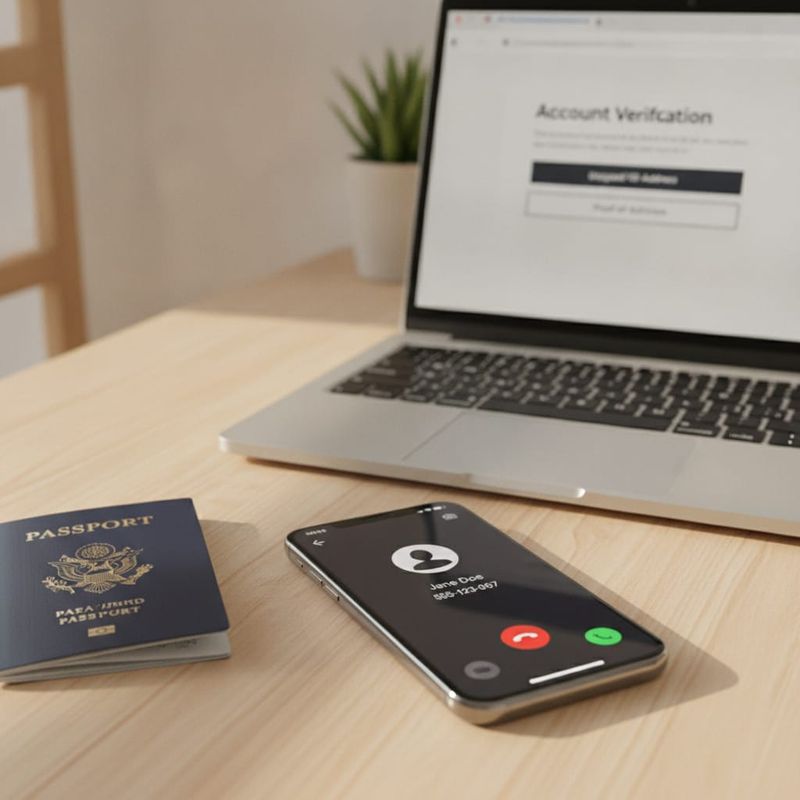
When a trader asks about spreads, swap rates or leverage, the call should stop selling and hand off. A Topcalls AI voice agent can book a callback with a named account manager or transfer the call during business hours; the human handoff post covers the trigger conditions.
6. What compliance gates come before the first dial?
Four gates: a consent record for the number, a suppression check against internal opt-outs and national do-not-call registers, a calling window per country, and a script the compliance desk has signed. Topcalls does not carry TCPA, TSR, DNC or GDPR compliance for you: the consent record and the approved script are the broker's to produce. No record, no call.
Consent is usually captured at the point the trader typed their phone number, but check the wording. A checkbox that says "contact me about my application" covers a registration follow-up call. A checkbox that says "send me trading offers" does not, and a GDPR review should confirm the lawful basis before the campaign loads. The compliant AI calling post has the per-jurisdiction list.
The script gate matters more in forex than in most industries. The FCA's permanent CFD restrictions require firms to "stop offering monetary and non-monetary inducements to encourage trading," so a UK call cannot say "finish your KYC and we'll add $50." Christopher Woolard, then the FCA's Executive Director of Strategy and Competition, put the reason plainly: "Our intervention follows evidence of firms aggressively marketing CFDs to the general public, meaning retail consumers are buying a product that isn't appropriate for them." A recovery call that removes friction is fine. A recovery call that pushes is the thing the rule was written against.
For US numbers, the same Telemarketing Sales Rule that sets the 8:00 a.m. to 9:00 p.m. window also caps abandoned calls at 3% of answered calls per campaign. An AI agent that answers in real time doesn't produce the dead-air abandonments a predictive dialer does, which is one reason brokers pick it over a dialer for this work. Recording, transcription and storage on Topcalls run on secure infrastructure so the compliance desk can pull any call by trader ID.
7. What does recovery cost and how do you measure it?
Measure recovered registrations, not dials. Three numbers matter: the share of stalled sign-ups that reach approved status within seven days of the call, the share of those that fund within 30 days, and cost per recovered account. At $0.35 per minute all-inclusive, a two-minute call costs $0.70, so 1,000 stalled registrations called twice each cost about $1,400 before a single deposit lands.
Run the math on your own numbers. Take last month's stalls, multiply by two attempts and two minutes, and you have the ceiling on the calling spend. Then take the first-deposit value of a recovered account and the dormant trader revenue calculator gives you the break-even recovery rate.
Compare it against the human alternative. Topcalls' customers see human-team call volume rise 3 to 10 times when the first-touch calls move to AI, and the agents keep the conversations that need a person: the trader who failed the test, the trader asking about a corporate account. The follow-up automation page shows how the sequence is built, and the campaign metrics post defines the 12 numbers worth putting on a dashboard.
8. When doesn't AI registration follow-up fit?
Skip the campaign when you have fewer than 50 stalls a month, when there's no consent record for the numbers, when the trader sits in a country where the broker isn't licensed, or when the KYC vendor itself is the reason uploads fail. In each case a call either can't legally happen or fixes the wrong problem. Fix the cause first and calling later is cheap.
- Under 50 stalls a month: have an onboarding agent call them by hand.
- Failed appropriateness tests: the call may explain the result and the options. It may not persuade. A pushed retake is a mis-selling finding waiting to happen.
- Unlicensed markets: a registration from a country you can't onboard is not a lead; it's a record to close politely by email.
- Broken KYC vendor: if 40% of uploads fail on the vendor's side, calling traders to re-upload is asking them to hit the same wall twice.
For everything else, the workflow above pays for itself on the first recovered accounts, and it's the same machinery brokers use for dormant account reactivation once the account is live and goes quiet.
Pull the list of registrations that stalled this week and count them. Then book a 30-minute call and we'll map your five stages to a campaign that can be live inside about two weeks, with a proposal within 48 hours of the call.
The checklist below is the same one we use on that call: funnel stages, timing windows, one goal per stage, the consent and suppression checks, and the recovery metrics your CFO will ask for.
Frequently Asked Questions
Get AI calling tips in your inbox
No spam. One email per week with actionable sales automation tips.