
A dormant book of 10,000 traders is either a liability on the KYC shelf or the cheapest deposits you'll get this quarter, and dormant trader reactivation ROI is the number that tells you which. Most brokerages never calculate dormant trader reactivation ROI properly because they count deposits instead of revenue, skip the control group, and forget the compliance hours. This guide walks through the calculation step by step, with a worked example in every section and Topcalls at $0.35 per minute on the cost side.
Key Takeaways
- Dormant trader reactivation ROI equals incremental 90-day revenue from called accounts, minus campaign cost, divided by campaign cost. Raw reactivation counts are not ROI.
- At Topcalls' $0.35 per minute all-inclusive rate, calling 7,380 dialable dormant traders twice at 1.5 minutes per attempt costs $7,749 before staff time.
- ESMA reported that 74% to 89% of retail CFD accounts lose money, so a reactivated trader should be valued on the next 90 days of revenue, not a multi-year lifetime.
- A random 10% holdback is the only way to separate campaign lift from traders who would have redeposited anyway; without it the ROI figure is inflated.
- In the worked example, break-even is 56 reactivated traders out of 7,380 called, a 0.76% incremental rate, and a 3% rate returns 297% ROI.
1. Which accounts count as dormant traders in the calculation?
A dormant trader, for ROI purposes, is a funded or previously funded account with no trade, deposit or login inside a window the brokerage picks, usually 60 to 180 days. Accounts that never passed KYC belong in a separate list with their own economics. Closed accounts, blocked accounts and traders who withdrew consent are excluded before any counting starts, because they'll never contribute revenue and they inflate the denominator.
The window matters. A trader silent for 45 days on MT5 may be waiting out a quiet EURUSD market. One silent for nine months has probably moved brokers. Both show as dormant on a report, but the second group reactivates at a fraction of the first group's rate, and blending them hides the segment that pays.
Split the book into at least three tiers by days since last activity, record the average historical deposit for each, and run the ROI calculation per tier before rolling up. Segmenting traders for reactivation covers the cut points in more detail.
Consent belongs in this step. For US-facing brokerages the Telemarketing Sales Rule defines an established business relationship as a financial transaction within the 540 days before the call, or an inquiry within 90 days. UK-facing brokerages screen against the TPS register under PECR Regulation 21, which bars unsolicited marketing calls to listed numbers unless the subscriber has told you calls are fine. Accounts outside those boundaries get an email, not a dial, and leave the ROI list.
2. How do you size the dormant book before dialing?
Sizing means turning the raw dormant count into the number of accounts you can legally and practically dial. Export from MT4 or MT5 and the CRM, dedupe on phone number, drop anything without a valid E.164 number, suppress DNC and TPS matches, then hold back a random 10% as a control. What's left is the called list, and every cost and revenue figure in the ROI model is per account on that list.
The worked example starts at 10,000 dormant accounts. Duplicates, dead numbers and suppression matches take it to 8,200 dialable. Holding back 820 as a control leaves 7,380 accounts to call. Those are illustrative; the shrink on a real book depends on data age and how many jurisdictions it spans.
Two details catch brokerages here. PECR Regulation 21 gives a 28-day grace period on the TPS register, so a number listed for 29 days is a breach: screen the list the week you dial, not the month before. And a trader with two accounts and one phone number gets one call, with the credit going to whichever account funds.
Data quality is a cost line, not a footnote. Twenty hours of list work at whatever your operations desk costs goes into the model.
3. What goes on the cost side of dormant trader reactivation ROI?

The cost side of dormant trader reactivation ROI has four lines: call minutes, staff time for list preparation and QA, compliance review, and any offer cost such as a redeposit bonus. With Topcalls the call line is minutes times $0.35, and that rate already includes the voice model, telephony, recording, transcription and analytics. There are no per-seat fees, setup fees or minute bundles to add.
Minutes per dial is the assumption that moves the number most. Voicemails and quick refusals run under a minute. A trader who wants to know why the gold spread widened keeps the line open for three or four minutes. The example blends those at 1.5 minutes; measure your own after the first 500 dials and replace it.
Worked cost: 7,380 accounts, two attempts each, 1.5 minutes per attempt. That's 22,140 minutes, which at $0.35 comes to $7,749. Add $600 for the 20 hours of list preparation and the total campaign cost is $8,349. If the offer includes a bonus, add the bonus cost times the expected number of takers, because a $50 bonus on 220 reactivations is another $11,000 and it changes the answer.
Compare that to a human retention desk, where every rep dials one number at a time, sits through ringing and logs notes by hand. Topcalls runs the 14,760 attempts concurrently and lifts call volume 3 to 10 times over a human team, which is why the per-account cost stays under $1.10 even with two attempts.
4. How do you value a reactivated trader?
Value a reactivated trader as the net revenue the brokerage keeps from that account over a fixed window after the call, usually 90 days. Net revenue means spread and commission earned, plus any swap, minus bonus paid out, minus payment processing. The redeposit amount is not revenue; a $600 redeposit that gets withdrawn untouched a week later is worth close to nothing.
Why 90 days and not a lifetime? Because the lifetime is short. ESMA's board agreed on 23 March 2018 that 74% to 89% of retail CFD accounts lose money, with average losses per client between €1,600 and €29,000. A trader who comes back after nine months quiet is not a five-year annuity. Value the next deposit and the trading around it, and treat anything after that as upside.
In the example, a reactivated trader is worth $150 of net revenue over 90 days: an average redeposit of $600 and a 25% realized-revenue share once bonus and processing are netted out. Pull both inputs from last year's reactivated cohort rather than guessing. The longer view, and why it's usually shorter than brokerages assume, is in dormant trader lifetime value.
Value differs by tier. A trader dormant 60 days with a $2,000 history is worth several times one dormant 300 days with $200, and a single blended value makes the oldest tier look profitable when it isn't.
5. How do you measure lift instead of counting reactivations?
Lift is the reactivation rate of the called group minus the reactivation rate of the control group, over the same window. Traders redeposit on their own when volatility returns or a payday lands, and a campaign that counts those as wins reports an ROI it didn't earn. Hold back a random 10% of the dialable list, don't call them, and compare the two groups at 90 days.
The worked example: 7,380 called accounts, 295 redeposit inside 90 days, a 4.0% rate. Its 820 control accounts produce 8 redeposits, a 1.0% rate. Incremental rate is 3.0%, so 221 traders belong in the revenue line. The other 74 would have come back anyway.
Attribution has to be mechanical or it drifts. The clean setup is a webhook that writes each call outcome to the CRM the moment the call ends, plus a deposit event from the payment gateway that stamps the account with the date. Topcalls posts outcomes through real-time analytics and the automation path with 764+ tool connections, so the join happens without anyone exporting CSVs on a Friday.
Pick the window before launch and don't move it. 30 days undercounts traders who take weeks to fund; 180 days drags in the next market cycle. 90 days is the usual compromise for a customer reactivation campaign, and it lines up with the quarterly reporting the compliance desk already runs.
6. What is the dormant trader reactivation ROI formula?
Dormant trader reactivation ROI equals incremental revenue minus campaign cost, divided by campaign cost, expressed as a percentage. Incremental revenue is the incremental reactivated count times net revenue per trader inside the attribution window. Campaign cost is minutes times the per-minute rate, plus staff time, compliance review and any offer cost. Break-even is campaign cost divided by value per trader, expressed as a share of the called list.
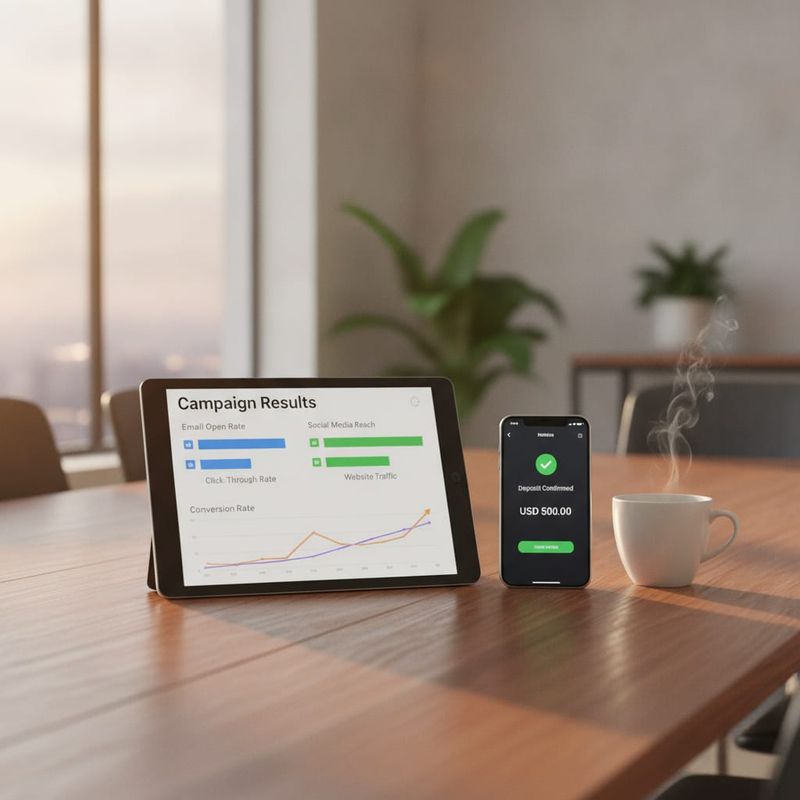
Plugging in the example: 221 incremental traders times $150 is $33,150 of 90-day revenue. Campaign cost is $8,349. ROI is ($33,150 minus $8,349) divided by $8,349, which is 297%. Break-even is $8,349 divided by $150, or 56 traders, and 56 out of 7,380 is a 0.76% incremental rate. Anything above that pays; the question is by how much.
| Scenario | Incremental rate | Reactivated traders | 90-day revenue | ROI |
|---|---|---|---|---|
| Conservative | 1.5% | 111 | $16,650 | 99% |
| Base | 3.0% | 221 | $33,150 | 297% |
| Strong | 5.0% | 369 | $55,350 | 563% |
Payback is the other number a CFO asks for. If revenue lands evenly across the 90 days, the base case recovers the $8,349 in about 23 days and the conservative case in 45. Reactivation campaign break-even analysis goes deeper on the payback math and what happens when the bonus cost scales with wins.
The dormant trader revenue calculator runs a simplified version of this model from three inputs: dormant account count, average deposit and your current manual reactivation rate. Use it for the first estimate, then swap in your own minutes per dial and per-trader value after the first 500 dials.
7. Which mistakes inflate the ROI number?
Five mistakes inflate most dormant trader reactivation ROI figures: counting every redeposit instead of the incremental ones, booking the deposit amount as revenue, leaving bonus cost off the cost line, ignoring traders who withdraw again inside the window, and reporting the best tier as the whole book. Any one of them can double the reported number.
- No control group: the 74 organic redeposits in the example would have added $11,100 of phantom revenue and pushed the reported ROI from 297% to 430%.
- Deposit counted as revenue: $600 redeposited is not $600 earned. At a 25% realized share the honest figure is $150, a fourfold difference in the numerator.
- Bonus left off the cost line: a $50 bonus on 221 reactivations is $11,050, more than the entire calling cost, and it belongs in the denominator.
- Churn-back ignored: a trader who funds on day 12 and withdraws on day 30 counts as reactivated on a deposit report and as roughly zero on a revenue report.
- Cherry-picked tier: the 60-day tier at 6% incremental looks great in a slide. The 300-day tier at 0.5% is below break-even, and the blended rate is what the budget was approved on.
One fix covers all five: one cohort, one window, one revenue definition, agreed with finance before the first dial. Topcalls records and transcribes every call, so a disputed reactivation traces back to the conversation where the trader said yes.
8. When doesn't the calculation fit?
The calculation breaks down when the book is too small for a control group, when consent has lapsed for most of the list, when the CRM can't tie a deposit back to a call, or when the brokerage doesn't know its net revenue per trader. In each case the ROI number is either statistically meaningless or built on a guess, and a guess with a percentage sign on it is worse than no number.
Under about 500 dialable accounts, a 10% holdback is 50 traders and one lucky redeposit swings the control rate by two points. Run the campaign, but report reactivations and cost, not ROI. Books where most traders are past the 540-day TSR window or listed on the TPS need an email or in-app path first; calling ROI applies only to the callable slice.
And if finance can't produce net revenue per trader from last year's cohort, fix that first. The case study on reactivating dormant trading accounts shows what the data looked like when the number was available, and the win-back campaign guide for inactive trading users covers the non-call channels for the accounts you can't dial.
Run the model once on your own tiers and the debate about calling the dormant book ends: either the incremental rate clears break-even at your value per trader or it doesn't, and you'll know inside 90 days. To walk through the inputs with someone who has seen a lot of these lists, book a 30-minute call with your dormant count, average deposit and last year's manual reactivation rate. A proposal follows within 48 hours and a live campaign in about two weeks. The broader cost model for every brokerage calling use case is in AI calling ROI for brokers.
Frequently Asked Questions
Get AI calling tips in your inbox
No spam. One email per week with actionable sales automation tips.