A trading webinar puts 200 registrants in front of your analyst for an hour, and by Friday most of them have forgotten the broker's name. Trading webinar lead follow-up is the work of turning that attendee list into demo logins, KYC completions and funded accounts before the interest fades.
Most brokers send a recording link and a thank-you email, then hand the list to a sales desk that gets to it next week. That's the expensive part. A Harvard Business Review audit of 2,241 US companies found that firms contacting a web lead within an hour were nearly seven times as likely to qualify it as firms that waited even an hour longer. Below: how to segment the attendee export, what an AI voice call should say, which rules apply, how to wire it up, and how to count the result in funded accounts.
Key Takeaways
- ON24 measured 22,922 webinars in 2018 and found 55.9% of registrants attended, so close to half of a trading webinar list is a no-show who still opted in.
- Firms that contacted a web lead within an hour were nearly seven times as likely to qualify it, per HBR's audit of 2,241 companies. A Monday call for a Thursday webinar is late.
- Split the export into five segments: asked a question, stayed to the end, left early, registered and missed it, watched the replay. Each segment gets its own call goal.
- Topcalls calls webinar leads at $0.35 per minute all-inclusive in up to 78 languages. A four-minute call to each of 200 registrants costs $280 in call minutes.
- ESMA's measures and the FCA's PS19/18 restrict incentives to trade CFDs, so the call offers a demo walkthrough or a KYC nudge, never a deposit bonus.
1. What is trading webinar lead follow-up?
Trading webinar lead follow-up is the timed, personal contact a broker makes with everyone who registered for a market-outlook or trading education webinar, in the hours and days right after it ends. The goal is one concrete next step per person: open a demo, finish KYC, make a first deposit, or book time with an account manager. Email carries the recording link. A call carries the decision.
The attendee list is the warmest list a brokerage owns. These people typed a phone number into a form to hear your analyst talk about gold or EUR/USD. A dormant book went quiet months ago; a webinar list was paying attention on Tuesday.
It's also three lists in one: funded clients who came for the analysis, demo users deciding whether to fund, and cold registrants from an ad. Same export, three different calls.
2. Why do trading webinar leads go cold so fast?
Webinar leads go cold because the follow-up arrives late and says nothing specific. In the HBR study, 37% of the 2,241 companies responded to a web lead within an hour, 23% never responded, and the average response time was 42 hours. A firm that responded within an hour was nearly seven times as likely to qualify the lead as one that responded an hour later.
The no-show half makes it worse. ON24's Webinar Benchmarks Report, built on 22,922 webinars held in 2018, put the registrant-to-attendee rate at 55.9% overall and 39.1% for marketing webinars. So a 200-registrant trading webinar leaves 90 to 120 people who opted in, never joined, and only got a replay link.
Then there's the desk. Two hundred names, three account managers, roughly eight minutes per dial cycle with the CRM note and a second attempt. That's a day and a half of calling, and the same three people also have deposits and KYC rejections to chase. By the bottom of the list, the analyst's gold setup has played out and the five-minute speed-to-lead window closed on day one.
An AI voice agent removes the queue. Topcalls dials the whole export in the hour the webinar ends, holds the conversation with real-time replies, and writes the outcome to the CRM. Human teams that add it see 3 to 10 times the call volume, which is the case for follow-up automation on any brokerage lead where speed decides the outcome.
3. How should you segment webinar registrants before calling?
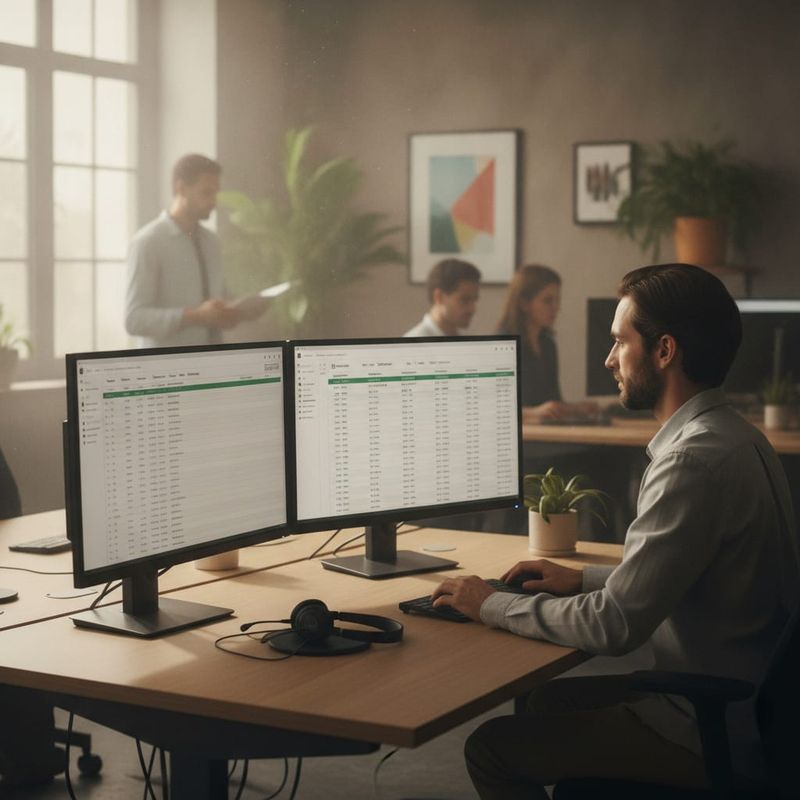
Segment by what the webinar platform already recorded: who asked a question, who stayed to the end, who left early, who registered and never joined, and who watched the replay later. Most platforms export join time, leave time and Q&A activity per registrant. Five segments, five call goals, and the segment with the most intent, the people who typed a question, gets called first.
| Segment | What the export shows | Call window | Call goal |
|---|---|---|---|
| Asked a question | Q&A entry, stayed most of the session | Within 2 hours | Answer the question, book the account manager |
| Stayed to the end | Join and leave times cover the session | Same day | Offer a demo walkthrough or funding help |
| Left early | Left before the halfway mark | Next morning | Ask what they wanted, send the part they missed |
| Registered, no-show | No join record | 24 to 48 hours, after the replay email | Confirm interest, find out what stopped them |
| Watched the replay | On-demand view, often days later | Within 24 hours of the view | Same as an attendee, referencing the replay |
The replay segment is bigger than most desks assume. ON24 found 36% of all attendees only watch on-demand, most of them registering in the week after the live event. So the campaign runs for two weeks with a trigger on each replay view; Topcalls Smart Campaigns take those views as they land.
Layer account status over the segments before anyone is dialed. A funded client who stayed to the end gets a service call, not a pitch. KYC pending gets asked what document is stuck. A cold registrant gets the demo. The webinar tells you how interested they are; the CRM tells you the next step.
4. What should the AI voice call say after a trading webinar?
The call names the webinar, names the analyst, asks one open question about what the person hoped to get from it, and then offers the single next step that fits their account status: a demo login for a cold registrant, a KYC nudge for an unverified account, a funding walkthrough for a verified one. Under four minutes. No market predictions, no bonus, and a plain statement early on that the caller is an AI agent.
- Opening line: "Hi, this is the assistant from [broker], an AI agent, calling about Tuesday's gold outlook session with [analyst]. Do you have two minutes?"
- One question: "What were you hoping to take away from it?" The answer picks the branch. "How to trade the breakout" is a demo conversation; "I just wanted the slides" is a send-and-close.
- Branch by account status: a cold registrant gets a demo login by SMS while still on the call; KYC pending gets asked which document is missing; verified and unfunded gets a walkthrough of deposit methods; a funded client gets the next session date and a handoff if they ask about strategy.
- What the call never says: no trade ideas, no "this setup can't lose", no bonus, nothing about margin multiples beyond the standard risk warning. The FCA financial promotion rules apply to an outbound call as they apply to the webinar slides.
- Objections: "Just watching for now" gets the replay plus the next session date. "Already with another broker" gets one question about what they like there, then a CRM note. "Don't call me" goes straight to the suppression list, on the call, no argument.
- Handoff: any question about spreads, swap rates, margin on a specific instrument or account tiers gets a warm transfer to an account manager, or a booked callback, with the transcript summary attached so the human doesn't restart the conversation.
Language matters more on webinar lists, because the session was probably in English and the audience wasn't all English-first. Topcalls runs one campaign in up to 78 languages, so a Dubai session gets follow-ups in Arabic, Hindi and Urdu from one export.
5. What compliance rules apply to webinar follow-up calls?
Three sets. Product rules on how CFDs are promoted, calling rules, and data rules. ESMA's 2018 measures and the FCA's PS19/18, in force for CFDs since 1 August 2019, restrict incentives to trade and require a standardised risk warning, so a follow-up call can't dangle a deposit bonus. TCPA and DNC rules govern US numbers. GDPR gives EU and UK registrants the right to object to marketing calls at any time.
ESMA cited the finding that 74% to 89% of retail accounts typically lose money on CFDs, and the standardised warning has to state the firm's own percentage. The FCA tells firms to stop offering cash or other inducements to encourage retail consumers to trade. A call that opens with "we've added $50 to your account" is a compliance incident, not a conversion tactic.
The registration form decides whether the call is allowed at all. If it said "we'll email you the recording" with no phone tick box, an EU or UK registrant hasn't agreed to a sales call. Add a line about a follow-up call for the next webinar, and give the compliance desk the script points alongside the deck. Screen US numbers against DNC lists before the export becomes a call list.
Topcalls handles the mechanics that trip up manual programs: the AI disclosure at the top of the call, recording notices where your script includes them, and calling only inside the hours you set. DNC screening stays with you. The secure infrastructure page lists what's in place. It can't fix a consent gap on the form after the fact.
6. How do you connect the webinar platform to the AI calling campaign?
Export the registrant report the moment the webinar ends, map it to a call list with phone numbers in E.164, segment tags and account status from the CRM, and launch the campaign in the same hour. Topcalls connects to 764+ tools through Integrations, so the export can flow from the webinar platform into the campaign and the call outcome back to HubSpot or Salesforce without anyone opening a spreadsheet.
- Export registrants with attendance status, join and leave times, and Q&A entries.
- Enrich each row from the CRM: account stage (registered, KYC pending, verified, funded), preferred language, country, phone consent flag.
- Suppress before loading: no phone consent, DNC match, open support ticket, or called in the last seven days.
- Load one campaign per segment with call windows set by the registrant's time zone, not the broker's.
- Write outcomes back: disposition, transcript summary, agreed next step, callback time. Let the disposition trigger the matching email.
- Retry busy numbers within minutes, unanswered ones within hours, and cap the sequence at three attempts over five days.

ON24's survey found 88% of webinar teams already integrate their platform with a CRM or marketing automation tool, but only 63% said they could pass webinar data to sales quickly. The gap is the handoff, not the plumbing. Pairing the call with an email that references what was said closes it; connecting AI calls with automated follow-up emails covers the sequence, automated follow-up after an AI sales call shows the pattern outside forex, and the Integrations page lists what plugs in directly.
7. How do you measure trading webinar lead follow-up?
Measure the funnel from registrant to funded account within 14 days of the webinar: contact rate inside 24 hours, conversation rate, next-step rate (demo opened, KYC completed, deposit made), and cost per funded account. At $0.35 per minute all-inclusive, a four-minute call costs $1.40, so 200 registrants cost about $280 in call minutes before the first deposit lands.
Work backwards from there with your own figures: how many the campaign reached, how many agreed to a next step, how many funded within 14 days. Divide $280 plus handoff time by the funded count for cost per funded account. Whether that's good depends on your average first deposit and a funded trader's yearly value, which is what the dormant trader revenue calculator asks for.
Two comparisons keep the program honest: last quarter's webinar list worked by the desk, and an A/B on the next two sessions, one export to the desk and one to the agent, same script points, same 14-day window. The real-time analytics dashboard shows contact and conversation rates as the campaign runs, so a bad opening line gets fixed on day one.
Demo signups are the metric that lies. A cold registrant who opens a demo has done the easy thing; the first deposit two weeks later is the hard one. Count the demo, then follow it, and read the demo-to-funded follow-up sequence before deciding what the second call says.
8. When doesn't AI follow-up fit a trading webinar?
It doesn't fit when the list is tiny, when the audience is institutional, when the registration form never asked for phone consent, or when a market has no workable DNC or lawful-basis path. Then the desk calls, or email does the job. The signs:
- Under 30 registrants: an account manager can call everyone by lunch and should. A small, warm room deserves the personal touch.
- IB, partner and institutional webinars: those relationships need a named person from the first touch. An AI agent as the opener reads as a downgrade.
- No phone consent on the form: fix the registration page and call the next cohort. Calling this one anyway is how a regulator learns your name.
- No DNC or consent route in the market: run the sequence on email and SMS where permitted, and hold the voice channel.
The list is sitting in your webinar platform right now, a day older than yesterday. Book a 30-minute call, bring the export from your last session, and we'll map the segments and send a proposal within 48 hours. First campaigns usually go live in about two weeks with managed setup.
Frequently Asked Questions
Get AI calling tips in your inbox
No spam. One email per week with actionable sales automation tips.