
A retention desk of six people can work through maybe 300 dormant accounts a day. AI outbound calling for brokers works through the whole dormant book before lunch, then calls the failed deposits, then the KYC stragglers. That's the practical case for AI outbound calling for brokers in 2026: not a cleverer pitch, just coverage.
Topcalls runs those calls at $0.35 per minute all-inclusive, with replies in real time and up to 78 languages. This guide covers the use cases that pay off first, how a call actually runs against your MT4/MT5 and CRM data, what setup takes, what it costs, and where the compliance desk needs to sign off.
Key Takeaways
- Dormant trader reactivation, failed deposit follow-up and KYC reminders are the three broker use cases that produce a measurable result within the first campaign.
- Topcalls charges $0.35 per minute all-inclusive: voice model, telephony, recording, transcription and analytics, with no per-seat or setup fees.
- First setup takes about 15 minutes; live campaigns typically run within about 2 weeks, with a proposal within 48 hours of a strategy call.
- The FCC ruled on February 8, 2024 that AI-generated voices count as artificial under the TCPA, so consent rules apply to every AI call.
- FCA SYSC 10A requires investment firms to record relevant phone conversations and keep them five years, or up to seven on request.
- Topcalls handles 63,000+ AI calls a day and claims a 60%+ connect-rate lift versus manual dialing.
1. What is AI outbound calling for brokers?
AI outbound calling for brokers is software that dials a list of traders or leads, holds a two-way spoken conversation with each one, and writes the outcome back to your CRM. The AI agent follows a script the broker approves, answers questions about the account, and hands off to a human when a trader wants to talk deposits or disputes. Topcalls runs these calls at $0.35 per minute with replies in real time.
The difference from a predictive dialer is who talks. A dialer connects a human agent. An AI voice agent is the agent, so a campaign isn't limited by how many people showed up to the retention floor that morning.
The difference from a robocall is that the trader can interrupt, ask why their account was flagged inactive, and get a real answer. Nobody sits through a recorded message about a deposit bonus. They do stay on a call that knows their last trade was in March.
For a broader picture of the category, the guide to AI voice agents for forex brokers covers what the technology is. This article is about what to point it at and how to get it running.
2. Which broker use cases pay off first?
Three use cases pay off first: dormant trader reactivation, failed or abandoned deposit follow-up, and KYC reminders. All three share a trigger the broker already tracks in MT4/MT5 or the CRM, a list that refreshes itself, and a next step the trader can take on the same call. Start with whichever list is largest at your brokerage.
| Use case | Trigger | Goal of the call | Handoff |
|---|---|---|---|
| Dormant trader reactivation | No trade in 60 to 180 days | Get the trader back on the platform or booked with a retention agent | Warm transfer for deposit talk |
| Failed or abandoned deposit | Card declined or deposit page abandoned | Find the blocker and resend the deposit link | Payments team |
| KYC reminder | Documents missing after 48 hours | Get the document uploaded while on the call | Compliance desk |
| Demo to funded | Demo opened, no live account after 7 days | Answer platform questions, invite to fund | Sales floor |
| Webinar and lead follow-up | Registration or form fill | Qualify and book a callback | Sales floor |
Dormant trader reactivation
Every broker has a dormant book. The accounts are verified, funded once, and quiet. That list is the best-qualified list a brokerage owns, and the customer reactivation call is the shortest path back to a trade. An earlier post on reactivating dormant trading accounts with AI voice agents covers the script side.
Failed and abandoned deposits
A declined card at 11pm is a trader who wanted to fund. By morning the intent is gone. An AI call within minutes asks one question, was it the card or the amount, and resends the link. The failed deposit follow-up guide goes through the timing.
KYC reminders
Half-finished KYC is dead revenue and a compliance headache at the same time. A reminder call that says which document is missing, and stays on the line while the trader uploads it, clears the queue faster than a third email. Details in how brokers can automate KYC reminder calls.

3. How does an AI outbound call run at a brokerage?
An AI outbound call at a brokerage starts with a trigger from MT4/MT5 or the CRM, pulls the trader's context, dials, holds the conversation in the trader's language, and writes a disposition back within seconds of hangup. Topcalls responds in real time so the pause after a question sounds like a person thinking, not a system loading. The whole loop runs without an agent touching it.
Here's the sequence for a dormant account call, step by step:
- Trigger. The account crosses 90 days without a trade. Your platform or CRM fires the event, or a nightly list export lands in the campaign.
- Context. The agent gets the trader's first name, last instrument traded, account currency and preferred language. Nothing it doesn't need.
- Dial and open. The call opens with a disclosure that the caller is an AI assistant from the brokerage, then the reason for calling.
- Conversation. The trader interrupts, asks about spreads, mentions they moved to another broker. The agent answers from the approved script and knowledge base.
- Handoff or close. Deposit intent triggers a warm transfer to a retention agent. Otherwise the agent books a callback or logs the objection.
- Write-back. Outcome, recording, transcript and a summary land in the CRM. The dashboard updates before the next call starts.
A book spread across Dubai, Lagos and Warsaw needs the call in the trader's language, with a voice that sounds local. Topcalls covers up to 78 languages and picks the voice per segment, so the Polish list doesn't hear an American accent.
The write-back step is what keeps the retention floor sane. Every call ends with a disposition in the CRM, not a sticky note. Topcalls connects to 764+ tools through Integrations, so HubSpot, Salesforce and a custom back office all get the same event.
4. What does the setup take, step by step?
Setting up AI outbound calling for a brokerage takes roughly 2 weeks to a live campaign on real traders. Most of that fortnight is the broker's own work: pulling a clean list, getting the script past compliance, and connecting the CRM. Topcalls sends a proposal within 48 hours of the strategy call, with the campaign design attached.
The setup checklist, in the order that avoids rework:
- List and suppression. Export the dormant segment with phone, country, language and last-trade date. Strip anyone on a do-not-call list, anyone who withdrew consent, and anyone with an open complaint.
- Script and disclosure. Write the opening line, the three objections you hear most, and the handoff rule. Compliance reviews the full assembled script before the first dial.
- Voice and language. Pick a voice per market. Test the accent on five real numbers from that market before you trust it on 5,000.
- Integrations. Map dispositions to CRM fields. Decide which outcomes create a task for a human and which just log.
- Call windows and retries. Set hours per country. Decide how many attempts, and how far apart, before a number rests.
- Pilot. Run 200 to 500 calls, read 30 transcripts, fix the script, then open the throttle.
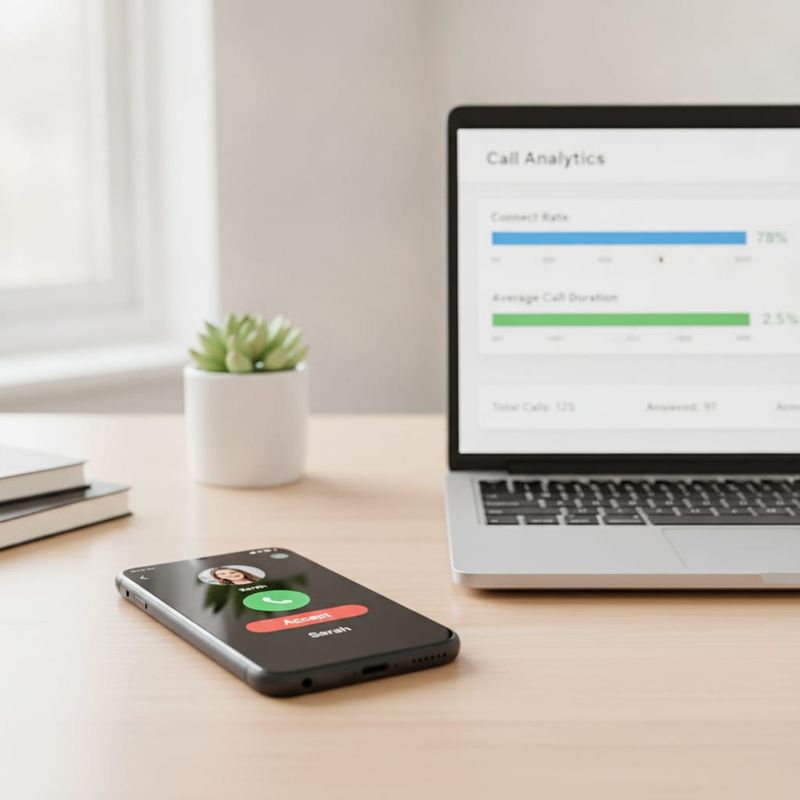
The pilot step is where brokers save themselves. Thirty transcripts will show you the objection your script doesn't handle and the segment that shouldn't be called at all. Fix both before scaling. The real-time analytics view shows connect rate, handoff rate and average duration per segment while the pilot runs.
5. What does AI outbound calling cost a brokerage?
Topcalls charges $0.35 per minute, all-inclusive. That rate covers the voice model, telephony, recording, transcription and analytics. There are no per-seat fees, no setup fees, no pre-purchased minute bundles and no separate telephony or transcription bill. A 3-minute reactivation call costs $1.05, billed by the second, whether it connects to a trader in London or Lagos.
The number that decides the budget isn't the per-minute rate, it's what a reactivated trader is worth. A trader who comes back and deposits again, then trades for six more months, covers a lot of 3-minute calls. Put your dormant count, reactivation rate and average deposit into the dormant trader revenue calculator and the arithmetic does itself.
For the volume side, Topcalls processes 63,000+ AI calls a day across its customers, and claims a 60%+ connect-rate lift over manual dialing. Brokers replacing a manual dial floor usually see the call volume rise 3 to 10 times, because the AI doesn't stop to write notes.
6. What compliance does the desk need before the first call?
Before the first AI call, a brokerage needs four things in place: documented consent for marketing calls, do-not-call suppression, call recording with the right retention period, and an AI disclosure at the start of the call. Topcalls is built around TCPA, TSR, DNC and GDPR requirements, but the broker owns the consent records and the script. Get compliance into the first meeting, not the last.
The US position is explicit. On February 8, 2024 the FCC adopted a Declaratory Ruling recognising that calls made with AI-generated voices are "artificial" under the Telephone Consumer Protection Act, and the ruling "takes effect immediately". The same FCC release notes that telemarketers must "obtain prior express written consent from consumers before robocalling them", and that AI voices are held to those same standards.
UK-regulated brokers have a recording duty on top. FCA Handbook SYSC 10A.1.6R says a firm "must take all reasonable steps to record telephone conversations" relating to designated investment activities, and SYSC 10A.1.14R sets retention at five years, or up to seven where the FCA requests it. An AI call that talks about funding a CFD account is a recorded call, and the platform has to store it for that long.
EU CFD brokers already live with ESMA's product intervention. ESMA's March 2018 decision introduced a standardised risk warning that includes "the percentage of losses on a CFD provider's retail investor accounts", citing its finding that 74 to 89% of retail accounts typically lose money. A reactivation script that talks about returns without that warning is a financial promotion problem, whoever is speaking.
The practical rules that come out of all this for a broker script:
- Disclose the AI in the first sentence. Every market, every language.
- Never pitch performance. Talk about the account, the platform, the missing document. Not about what the trader could make.
- Suppress first, dial second. DNC lists, withdrawn consent, open complaints and self-excluded clients never reach the dialer.
- Record and retain for the longest period any of your licences requires.
The compliance planning guide for AI calling at forex brokers turns this into a checklist your compliance officer can sign. Topcalls' secure infrastructure page covers where recordings live and who can reach them.
7. When doesn't AI outbound calling fit a broker?
AI outbound calling doesn't fit when the list is under a few hundred numbers, when the trader relationship is a named account manager on a $250,000 book, or when the brokerage can't document consent for the segment. In those cases a human call, or no call, is the right answer. The tool works on volume and repetition, and some broker conversations are neither.
Where it doesn't work well:
- High-net-worth and institutional desks. A trader with a personal account manager expects that person to call. An AI opener reads as a downgrade.
- Disputes and complaints. A trader with a chargeback in progress needs a human with authority, not a scripted agent.
- Cold lists with no consent trail. Bought data, scraped numbers, leads older than your consent policy allows. The FCC ruling above makes this a legal exposure as well as a bad list.
- Very small books. Under about 300 dormant accounts, an afternoon of human calls is faster than a campaign setup.
Put plainly: AI calling replaces the repetitive 80% of a retention floor's dialing so the humans can take the handoffs. It doesn't replace the relationship a good retention agent has with a trader who's been funding for four years.
If your dormant book has crossed a thousand accounts and your team is calling a few hundred a week, the maths is already in your favour. Book a 30-minute call at topcalls.ai/book, bring the count and the current deposit flow, and you'll have a campaign proposal within 48 hours. The win-back campaign guide for inactive trading users is worth a read before that call.
Frequently Asked Questions
Get AI calling tips in your inbox
No spam. One email per week with actionable sales automation tips.