Most brokerages already own their cheapest source of new deposits, and it's sitting in a dormant-accounts export nobody calls. Automated trader reactivation is how you work that list without hiring, training, or churning another retention agent. This guide covers the full setup: what the AI call says, how interested traders reach your existing desk, what a four-minute conversation costs at $0.35 per minute, and which compliance gates run before every dial.
It's written for the retention manager who's been told to grow reactivations this quarter with the same headcount as last quarter.
Key Takeaways
- Automated trader reactivation on Topcalls runs at $0.35 per minute all-inclusive, so a four-minute win-back conversation costs $1.40.
- Topcalls handles 63,000+ AI calls a day and lifts a human team's call volume 3-10x, the capacity gap new hires were supposed to fill.
- ESMA's CFD intervention measures cite 74-89% of retail accounts losing money, which is why the reactivation call leads with service, not a trading pitch.
- Under the US Telemarketing Sales Rule, outbound calls to a residence are limited to 8:00 a.m. to 9:00 p.m. local time at the called person's location.
- A live reactivation campaign typically follows within two weeks of the strategy call.
1. Why doesn't hiring more agents fix trader reactivation?
Hiring more agents fixes the wrong bottleneck. Reactivation fails on reach, not on persuasion: dormant traders sit across a dozen time zones, speak a dozen languages, and pick up on the third or fourth attempt rather than the first. A retention agent dials one number at a time inside one shift. Topcalls runs 63,000+ AI calls a day and lifts a human team's call volume 3-10x without adding a seat.
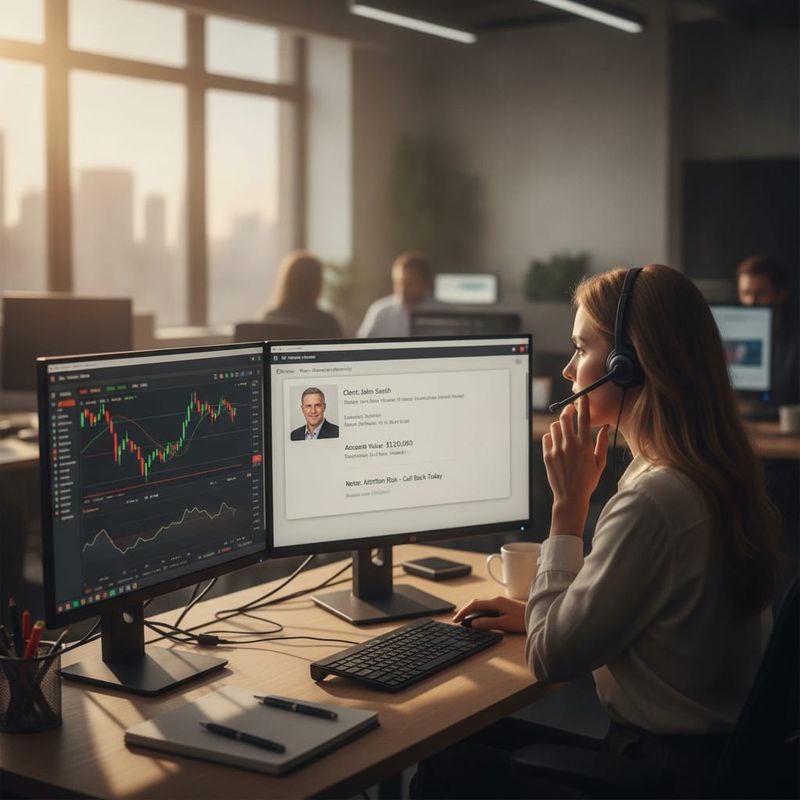
Look at what a retention desk does between nine and six. Export the dormant list from MT4 or MT5. Dial. Voicemail. Dial. Wrong number. Dial. "Not now, call me next week." Log it in the CRM. Repeat until the shift ends. The selling part, the part you hired for, is a thin slice of the day.
And the list grows faster than the desk. ESMA's product intervention measures on CFDs state that "74-89% of retail accounts typically lose money on their investments", which tells you why so many traders go quiet: they took a loss and stopped logging in. That's a service conversation, not a pitch. It needs to happen in the trader's language, at a time that suits them, and more than once.
Topcalls AI voice agents take the reach problem off the desk: every dormant account gets dialed inside its local calling window, in one of up to 78 languages, with smart retries on busy and no-answer outcomes. Topcalls reports a 60%+ connect-rate lift across its campaigns. Your agents stop dialing and start closing, which is the whole premise of customer reactivation on Topcalls.
2. How does automated trader reactivation work end to end?
Automated trader reactivation runs as a loop: export dormant accounts from your trading platform, segment them by last activity and balance, let the AI agent call each segment inside its local window, and push every outcome back into the CRM. Topcalls connects to 764+ tools through Integrations, so the loop runs without a developer. Live campaigns typically follow within two weeks.
The five steps, in the order they run:
- List pull: Export accounts with no trade or login in 30, 60, or 90+ days from MT4/MT5 or your CRM, with phone, country, language, and last-deposit date. Country and language pick the calling window and the voice. Platform-specific export steps are in our guide to MT4 dormant client reactivation.
- Segments: Split funded-but-idle, registered-never-deposited, and KYC-incomplete into separate campaigns. Each gets its own opening line, because a trader who never passed verification doesn't need a market update.
- Suppression: Remove anyone who objected to marketing, anyone on a do-not-call list, and anyone the compliance desk flagged. This runs before a single dial.
- Calls and outcomes: Topcalls dials the segment, holds the conversation, and tags each call: reactivated, callback booked, transferred, not interested, wrong number. Tags land in HubSpot, Salesforce, or your broker CRM through Topcalls Integrations.
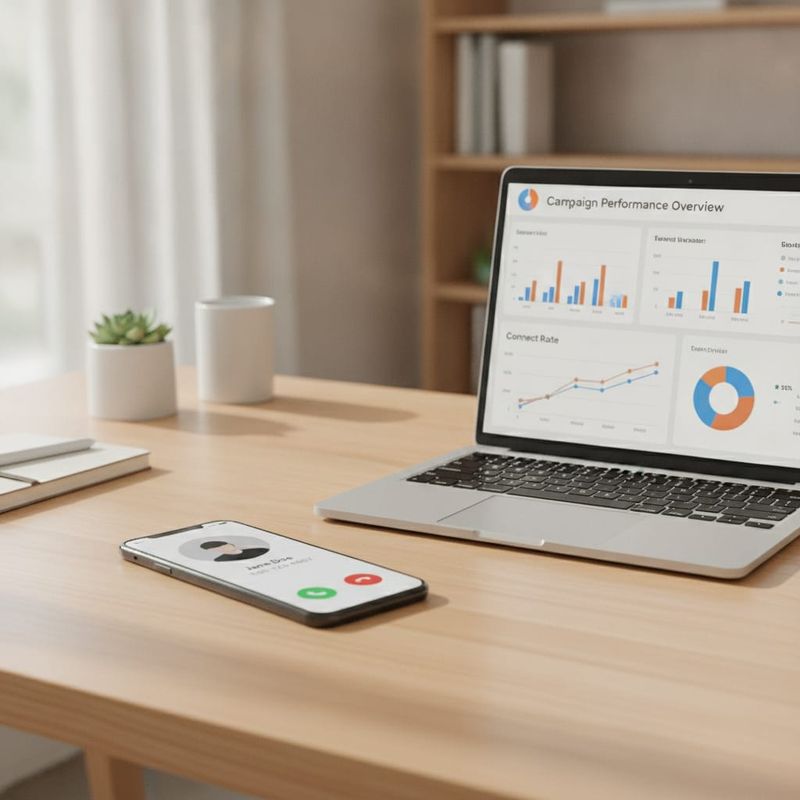
- Review: The real-time analytics dashboard shows connect rate, conversation rate, and callbacks per segment, so you cut the segments that don't pay and scale the ones that do.
If you want the campaign view before the plumbing, start with how AI voice agents reactivate dormant trading accounts.
3. What does the AI reactivation call actually say?
A good reactivation call is short, names the broker, states why it's calling, and asks one useful question: what stopped you? The Topcalls agent runs that flow with real-time responses, so pauses feel like a person thinking rather than a system loading. The conversation adapts to the answer. A KYC problem gets a document reminder, a deposit problem gets a funding walkthrough, a bad experience gets a callback from a named account manager.
A sample flow for the funded-but-idle segment:
- Open: Name the brokerage, confirm you're speaking with the account holder, and say the call is about their trading account.
- Reason: "We noticed you haven't traded since March, and I wanted to check whether anything on our side got in the way."
- Listen: Platform trouble, a slow withdrawal, a losing streak, or just life. The agent classifies the reason and logs it against the account.
- Next step: Fix what can be fixed on the call (a password reset link, a document upload link, a funding guide by SMS), or book a callback with a human.
- Close: Confirm the next step and the time, thank them, end the call. Under four minutes in most cases.
One thing the script must never do for UK retail clients: dangle a cash bonus. The FCA's PS19/18 on CFDs sold to retail clients requires providers to "stop offering current and potential customers cash or other inducements to encourage retail consumers to trade". Reactivation offers in regulated markets are about service and access, not deposit matches. The compliance desk signs off the script once, and the same script runs on every call after that, which is something a 40-person floor can't promise.
4. How do interested traders reach your existing team?
Handoff is where automated trader reactivation earns its keep. When a trader says yes, the AI agent either warm-transfers the live call to an available account manager or books a callback in their calendar, and passes the full context: why the trader went dormant, what was fixed on the call, and what they want next. Your team takes conversations that are already open. Nobody re-asks the same three questions.
Two handoff modes, and most brokers run both:
- Warm transfer: During desk hours, for funded traders who want to talk now. The agent stays on until a human picks up, then drops off.
- Booked callback: Outside desk hours, or when the trader names a time. The slot lands in the account manager's calendar with the call summary and transcript attached.
The context transfer matters more than the mode. An account manager who opens a callback already knowing about the trader's withdrawal complaint from June has a different conversation than one reading a blank CRM card. Trigger rules, fallbacks when nobody's free, and what to pass in the summary are covered in human handoff on AI calls for forex desks.
5. What does automated trader reactivation cost per funded account?
Topcalls bills $0.35 per minute, all-inclusive: voice model, telephony, recording, transcription, and analytics, with no per-seat fee, setup fee, or add-on. A four-minute reactivation conversation costs $1.40. A thousand of them cost $1,400. Cost per reactivated trader is that spend divided by the number of traders who fund again, and the dashboard tracks it per segment from the first week.
| Item | Manual dialing desk | Automated (Topcalls) |
|---|---|---|
| Who dials | Agents, one number at a time | AI agent, every account in its window |
| Cost basis | Salaries, seats, dialer licences | $0.35/min, all-inclusive |
| Languages | Whatever the desk speaks | up to 78 languages |
| Calling hours | One shift per desk | Every local window, around the clock |
| What agents do | Dial, log, chase voicemail | Take transfers and booked callbacks |
| Time to start | Hire, train, ramp | First setup ~15 min, live in ~2 weeks |
Run your own numbers before you book anything. The dormant trader revenue calculator takes your dormant-account count, average deposit, and expected reactivation rate, and sets the revenue sitting in the list against the calling spend. For the per-trader math and how to benchmark it, read cost per reactivated trader.
Uptime belongs in the cost picture too. Topcalls runs at 99.9% uptime, which matters when a calling window in Dubai opens at 09:00 Gulf time and your London team is still asleep. A campaign that doesn't run doesn't cost anything, and it doesn't reactivate anyone either.
6. Which compliance gates run before every dial?
Four gates, and each one is a hard stop: consent and objection status, do-not-call suppression, local calling hours, and a compliance-approved script with the right disclosure. Topcalls dials only inside the calling hours you set and says the approved disclosure on every call, rather than relying on an agent to check a spreadsheet at 5:45 p.m. on a Friday. Consent and do-not-call suppression stay with you, so clean the list before it is uploaded.
- Objection and consent: GDPR Article 21(2) gives every data subject "the right to object at any time to processing of personal data concerning him or her for such marketing". A trader who objects comes off the list for good, not until the next export.
- Calling hours: In the US, the Telemarketing Sales Rule limits outbound calls to a residence to between 8:00 a.m. and 9:00 p.m. local time at the called person's location, and its safe harbor requires abandoning no more than 3 percent of calls answered by a person. Rules differ elsewhere, so the window is set per country, not per campaign.
- Recording and retention: Every Topcalls call is recorded and transcribed inside the $0.35 per minute, which gives the compliance desk a searchable record of what was said. Storage and access controls run on Topcalls secure infrastructure.
- Disclosure: The agent identifies itself as an automated assistant where local rules require it. A trader who asks for a human gets one; that's a handoff trigger, not an objection.
For the offer and cadence side of the rulebook, win-back campaigns for inactive trading users covers what to say in the second and third touch.
7. When doesn't automated trader reactivation fit?
Automated trader reactivation doesn't fit a list of a few hundred accounts, a brokerage with no CRM or platform export, or a market where outbound calls to retail clients are banned outright. It also doesn't replace the licensed conversation: suitability, complaints, and account closures stay with humans. Use it to fill your team's calendar, not to empty the compliance desk.
Tiny lists. With 300 dormant accounts, an account manager with a free afternoon can call them all. Automation pays off once the list outgrows the desk.
No data plumbing. The loop depends on an export and a CRM write-back. If your dormant accounts live in a spreadsheet someone updates by hand on Fridays, fix that before you fix the calling.
High-touch VIP books. A trader with a seven-figure balance who went quiet gets a call from their relationship manager, not from a campaign. Automate the long tail and protect the top.
Complaint-driven churn. Traders who left after a dispute want a human owning the answer. Route that segment straight to callbacks and skip the AI conversation.
8. How do you start a reactivation pilot in two weeks?
Start with one segment, one market, and one success metric. A typical Topcalls pilot takes funded-but-idle accounts in a single language, runs for two weeks, and measures reactivated deposits against calling spend at $0.35 per minute. You book a 30-minute call, get a proposal within 48 hours, and the first campaign usually goes live in about two weeks.
Pick the segment with the shortest path to money: funded, idle 60 to 90 days, no open complaint. Agree the suppression rules with compliance before the list is uploaded. Decide up front what "worked" means, whether that's reactivated deposits, booked callbacks, or both. Then let the campaign run without editing the script mid-week, because you can't read a result you keep changing. The scoping steps are in trader reactivation campaign pilot.
The dormant list isn't going anywhere. Whether your agents keep dialing it or start closing it is the only decision left.
Frequently Asked Questions
Get AI calling tips in your inbox
No spam. One email per week with actionable sales automation tips.