Six people on a retention desk work about 200 dormant accounts a day. A broker sitting on 40,000 inactive accounts needs something else, and that's what dormant forex account reactivation at scale means in practice: every account gets called, retried and logged as well as the 200 with the biggest last deposit.
This guide covers the four things that break when a broker tries to scale reactivation calls: list priority, script control, compliance screening and CRM write-back. It also puts a number on the cost. Topcalls runs these calls at $0.35 a minute all-in, and a campaign is usually live within about two weeks.
Key Takeaways
- Topcalls bills dormant forex account reactivation calls at $0.35 per minute all-inclusive: voice model, telephony, recording, transcription and analytics, with no per-seat or setup fees.
- ESMA's CFD intervention measures cite 74-89% of retail accounts losing money, so most dormant traders went quiet after a loss and need a low-pressure opening line.
- Under UK PECR Regulation 21, a marketing call to a number listed on the TPS register for 28 days or more is unlawful, so every wave needs a fresh screen.
- Since 1 August 2019 the FCA has required CFD firms to stop offering monetary and non-monetary inducements to trade, so a UK reactivation offer can't be a bonus.
- Topcalls processes 63,000+ AI calls a day across its customers and hands warm conversations to a human dealer, with real-time replies on every turn.
1. Why does dormant forex account reactivation stall at 200 calls a day?
Reactivation stalls because a human desk places one call at a time, and the accounts that get dialed are the ones a manager cherry-picks. Ten agents completing 20 conversations each is 200 a day. A 40,000-account dormant book takes 200 working days at that pace, and by the time the last account is reached, the first ones have gone quiet again.
The second problem is retries. Dormant traders don't pick up unknown numbers on the first attempt. A typical retention desk logs "no answer" once, maybe twice, then moves to a fresher lead. The accounts that never answered are never called again, and they're usually the majority of the list.
And the third: nobody can measure it. Outcomes live in a spreadsheet or a free-text CRM note. The head of retention can't say which segment answered, which opening line worked, or what a reactivated trader cost, so the next campaign starts from scratch.
An AI voice agent changes the shape of the work rather than the pitch. It runs calls in parallel, retries busy and unanswered numbers on a schedule, and writes every disposition to the account record. Brokers that keep a human team see 3-10x more call volume from the same headcount, because the AI takes the first pass and the retries while dealers take the warm handoffs. The real-time analytics view shows connects, handoffs and callbacks per segment while the campaign runs, which is what makes wave two better than wave one.
Before the first dial, get the campaign on paper. The Dormant Trader Reactivation Campaign Template is a fill-in document covering objective, segments, suppression rules, opening line, call windows, retries, handoff and success metrics, so the head of retention and the compliance desk sign off the same page.
2. Which dormant forex accounts should you call first?
Call first the accounts most likely to fund again and least likely to complain: traders dormant for 30 to 180 days, who deposited more than once, whose KYC is still valid, and who haven't opted out of marketing. Push accounts dormant for over two years, single-deposit accounts and expired-KYC accounts into later waves or a different channel.
The fields you need already sit in MT4 or MT5 and the CRM: last login, last trade, deposit count, current balance and equity, country, language, KYC status and the marketing-consent flag. Export those, and a priority score falls out without a data science project. The segmentation guide for dormant traders walks through the scoring in detail.

| Segment | Signal in the platform | Wave | Opening angle |
|---|---|---|---|
| Recently quiet | Dormant 30-180 days, 2+ deposits | 1 | Check-in: anything we can help with? |
| Post-loss dormant | Last activity ended in a drawdown | 2 | Risk tools and education, no pressure |
| Registered, never funded | KYC passed, zero deposits | 3 | Ask what stopped them, log the answer |
| KYC expired | Documents out of date | Hold | KYC reminder flow, not a sales call |
| Long dormant | 2+ years, no login | Email first | Consent check, then a short reintroduction |
Post-loss dormancy is a bigger segment than most brokers expect. ESMA's product intervention measures cite 74-89% of retail CFD accounts losing money, with average losses per client between EUR 1,600 and EUR 29,000. A trader who stopped after a losing month doesn't want a market tip. That's why the segment gets its own script and a later wave.
Money talk belongs here too. Run the book through the dormant trader revenue calculator before ranking waves, so you know what a 5% reactivation on wave one is worth in deposits against what a 5% reactivation on the long-dormant tail would return. Wave order follows the answer.
3. What should the AI agent say to a dormant trader?
The agent says who it is, why it's calling and asks one open question, all inside 15 seconds. No bonus, no urgency, no trade idea. In the UK and the EU an incentive to trade CFDs is banned, so the only offer that survives a compliance review is help: a platform walkthrough, a risk-management tool, or a call with a named dealer.
That rule is explicit. The FCA's permanent CFD restrictions, in force since 1 August 2019, require firms to "stop offering monetary and non-monetary inducements to encourage trading". A reactivation script that leads with a deposit match fails on day one, and a script that leads with "the markets are moving" fails the financial promotions test right behind it.
- Opening line: "Hi, this is the assistant from [broker]. You had an account with us and it's been quiet since March. I'm calling to check whether there's anything we can help with." Then silence. Let the trader talk.
- Objection branches: "I lost money" routes to the risk tools and a dealer callback. "I moved brokers" routes to a two-question exit interview and a polite close. "Stop calling me" writes a suppression flag across every channel on the spot.
- Handoff: any trader who asks about funding, a specific instrument or account changes gets a live transfer or a booked callback with a human dealer. The AI never gives investment advice.
- Disclosure: the agent identifies itself as an AI assistant when asked, and up front in markets where the compliance desk requires it.
Latency decides whether the script lands. Topcalls' AI voice agents respond in real time and handle interruptions, so a trader who cuts in with "who is this?" gets an answer instead of a talk-over. The earlier guide on how AI voice agents reactivate dormant trading accounts has full script examples per segment.
4. How do you keep 20,000 reactivation calls compliant?
Screen the list before every wave, not once at the start. UK numbers get checked against the TPS register, US numbers against the national and internal do-not-call lists, and every EU record carries a consent or legitimate-interest flag. Any account that objected in any channel is suppressed in all of them, and the suppression list is versioned so the compliance desk can show what was screened and when.
In the UK, PECR Regulation 21 makes it unlawful to place an unsolicited marketing call to a number on the register kept under Regulation 26, the TPS, or to a subscriber who has told you to stop. The only grace is a number listed for fewer than 28 days before the call. At 20,000 records, a list screened three months ago is a list with hundreds of numbers that have since registered.
US rules bite harder for AI calls. Under 47 CFR 64.1200, a telemarketing call using an artificial or prerecorded voice to a mobile number needs prior express written consent, solicitation calls can't be placed before 8 a.m. or after 9 p.m. at the called party's local time, and a do-not-call request must be honored for five years. Consent flags in the CRM are the campaign, not an afterthought.
EU brokers usually rely on legitimate interest for existing clients, with a clear opt-out on the call itself. The GDPR guide to AI outbound calling covers the lawful-basis record and the retention schedule. Topcalls runs on secure infrastructure with 99.9% uptime, and stores recordings and transcripts so a regulator request gets answered from the log rather than from memory. For a jurisdiction-by-jurisdiction plan, see the compliance planning guide for AI calling.
5. What does dormant forex account reactivation cost at scale?
Topcalls charges $0.35 per minute, billed by the second, and that rate covers the voice model, telephony, recording, transcription and analytics. There are no per-seat, setup or minute-bundle fees. If a 20,000-account first wave produces 8,000 connected conversations averaging two minutes, the talk time comes to 16,000 minutes, or $5,600. Retries on unanswered numbers add seconds, not minutes.
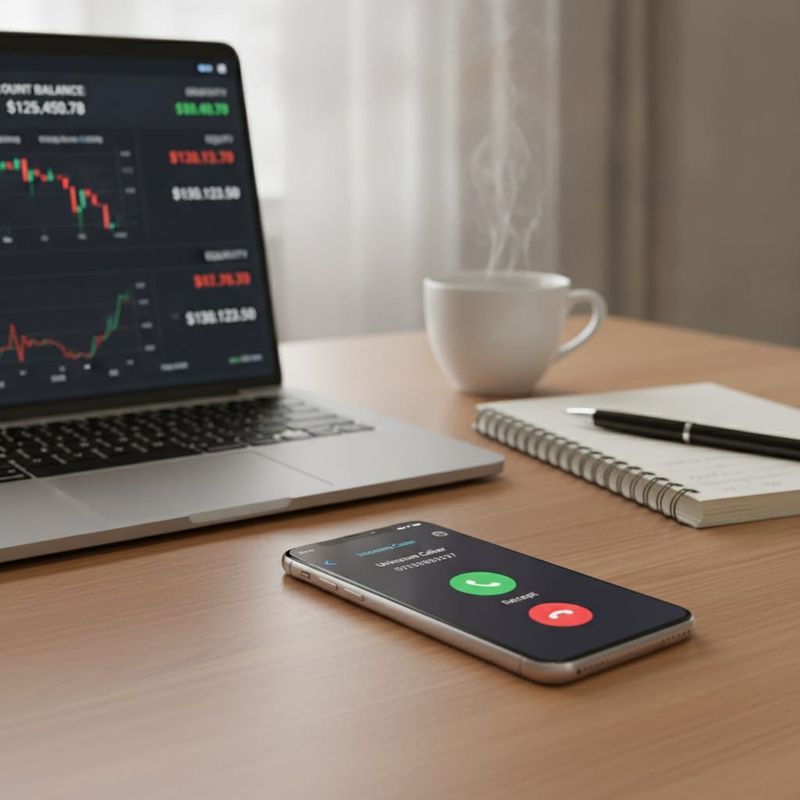
Compare that with the two ways brokers usually work a dormant list. An in-house desk is paid by the seat whether traders answer or not. Outsourced centres charge by the hour or the seat, with the script and the recordings living outside your control. Neither retries every number, and neither writes a clean disposition back to the account.
| Approach | Capacity | Cost basis | Retries | CRM write-back |
|---|---|---|---|---|
| In-house retention desk | One call per agent at a time | Salary per seat | Manual, usually 1-2 attempts | Free-text notes |
| Outsourced call centre | Depends on seats bought | Hourly or per seat | Per contract | Batch file, if agreed |
| Topcalls AI voice agent | Parallel calls, 63,000+ a day across customers | $0.35/min all-in, by the second | Scheduled per segment | Automatic, per call |
Connect rate is the multiplier on all of this. Topcalls reports a 60%+ lift in connect rate, and every extra connect on a fixed list is a reactivation opportunity that cost nothing to add. The customer reactivation solution page shows how the retry ladder is set per segment, and how to measure cost per reactivated trader turns the campaign spend into the number your CFO wants.
Put your own list size, average deposit and expected reactivation rate into the revenue calculator. It's the fastest way to see whether the campaign pays for itself on wave one or needs the full book.
6. How do the calls work with MT4 and MT5 exports and the CRM?
The dormant list leaves the trading platform or CRM as a CSV export or through a webhook, the AI agent calls it, and every outcome, transcript and callback request is written back to the account record. Topcalls connects to 764+ tools through its Integrations path, so HubSpot, Salesforce and most broker CRMs receive the disposition without anyone typing it in.
The practical loop looks like this. A nightly job exports accounts that crossed the 30-day dormancy line from MT4 or MT5 into the CRM, checks them against the suppression list, and drops them into the campaign. The agent calls in the trader's local window. A "wants to fund" outcome creates a task for a dealer; a "KYC expired" outcome moves the account to the KYC reminder flow; a "do not call" outcome updates the consent flag everywhere. The Integrations product page lists the connectors, and the MT4 dormant client reactivation guide covers the export fields platform by platform.
Setup is managed, and live campaigns typically run within about two weeks once the list, script and suppression rules are signed off, and a written proposal follows a strategy call within 48 hours. If you'd rather talk it through first, book a 30-minute call and bring the list size and the platforms involved.
7. When doesn't at-scale reactivation fit?
At-scale calling doesn't fit a broker with fewer than about 2,000 dormant accounts, a book made up of professional clients with named account managers, or a list with no consent records to stand on. It also doesn't fit accounts closed for AML or fraud reasons, which should never be re-marketed, or markets where the broker isn't licensed to solicit.
- Small books: a human desk clears 2,000 accounts in a couple of weeks. The setup effort of a campaign isn't worth it until the list outgrows the desk.
- Professional and VIP clients: a trader with a named dealer expects that dealer to call. An AI first pass reads as a downgrade.
- No lawful basis on file: if the CRM has no consent flag, no legitimate-interest assessment and no record of how the number was collected, fix the data before any channel touches it.
- Blocked or flagged accounts: AML holds, fraud flags and chargeback disputes are compliance cases, not retention cases.
- Unlicensed markets: if the broker can't legally onboard a client in a country, it can't legally call them to come back either.
Everything else on the dormant book is a candidate. The full campaign build guide shows the wave-by-wave structure, and the template below is the shortest path from that guide to a signed-off campaign.
Fill in the template, run the list through the screens in section 4, and put wave one on the calendar. The first campaign teaches you more about your dormant book than the previous year of spreadsheet notes.
Frequently Asked Questions
Get AI calling tips in your inbox
No spam. One email per week with actionable sales automation tips.